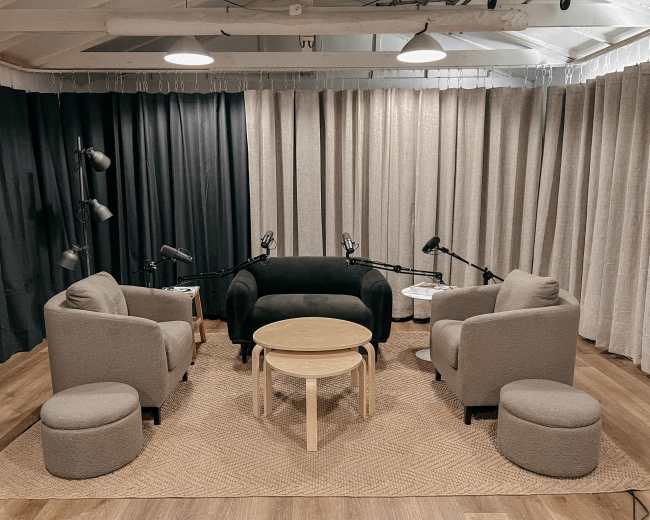
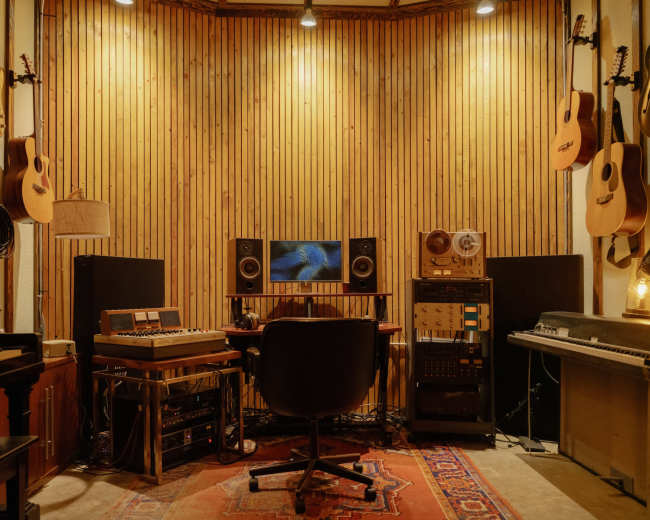
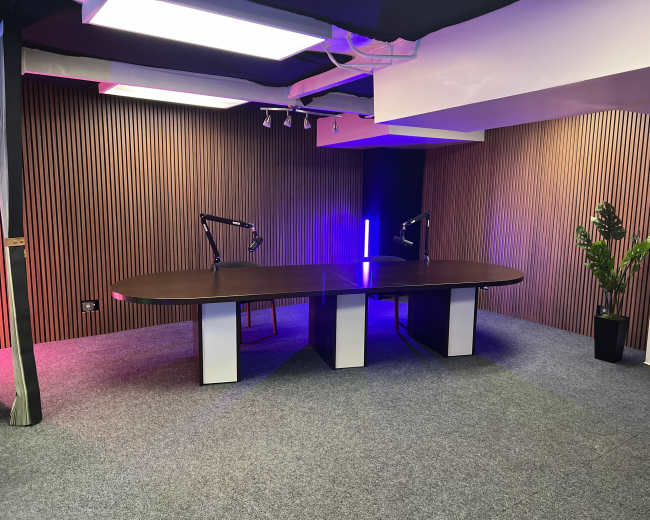
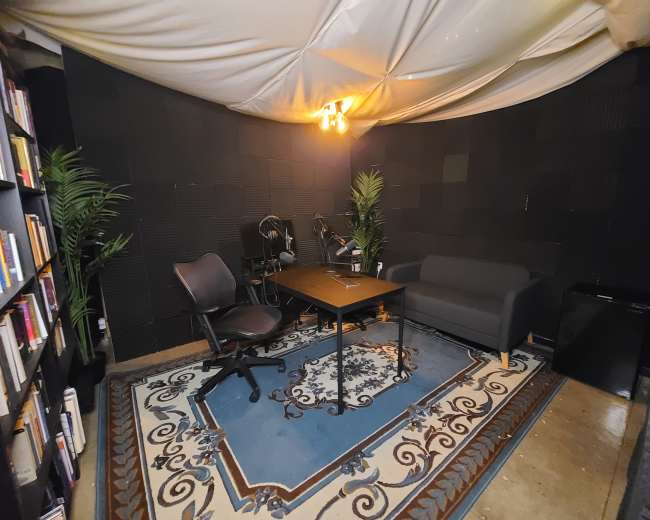
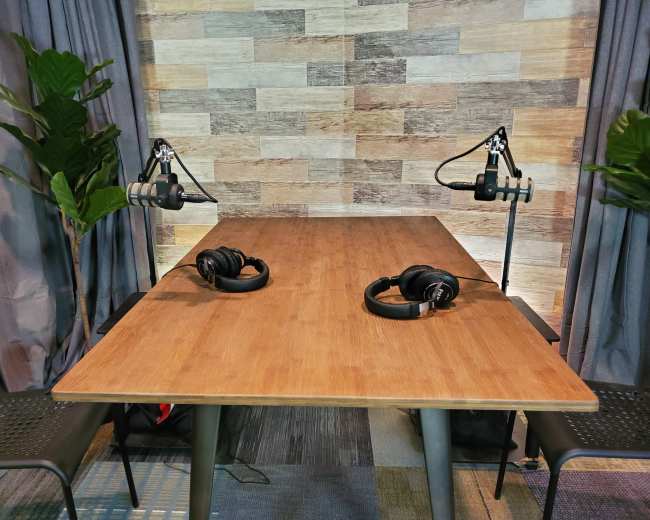
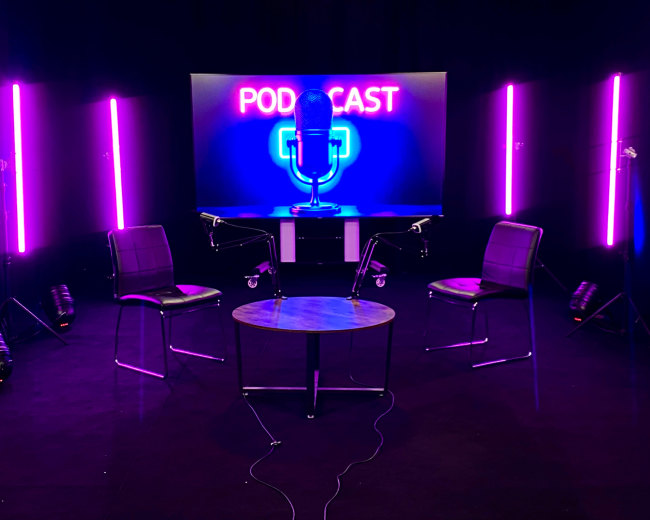
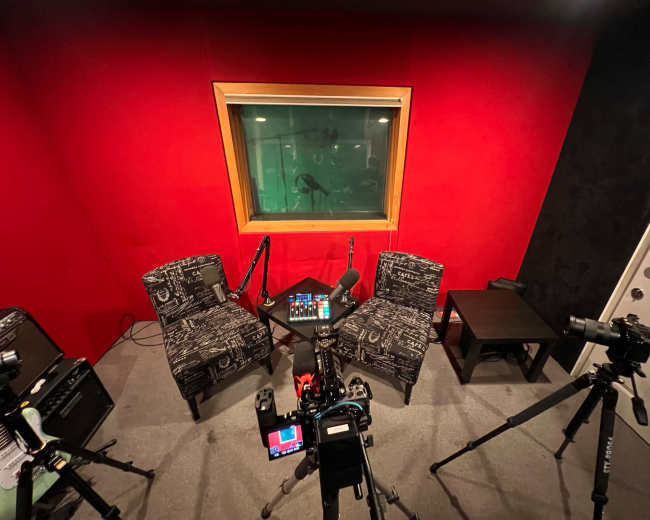
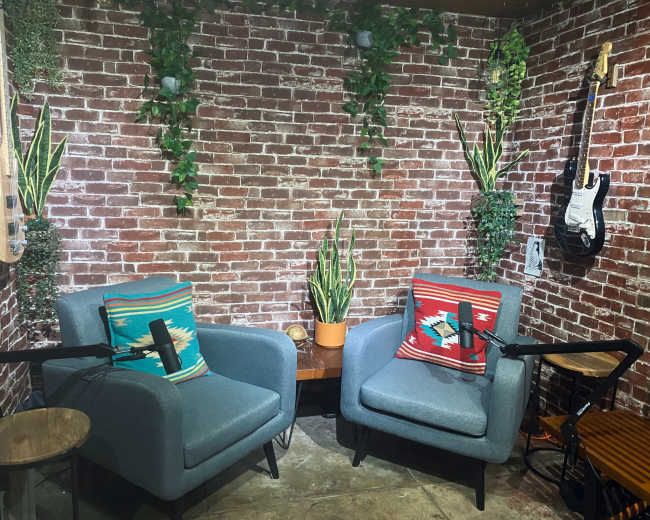
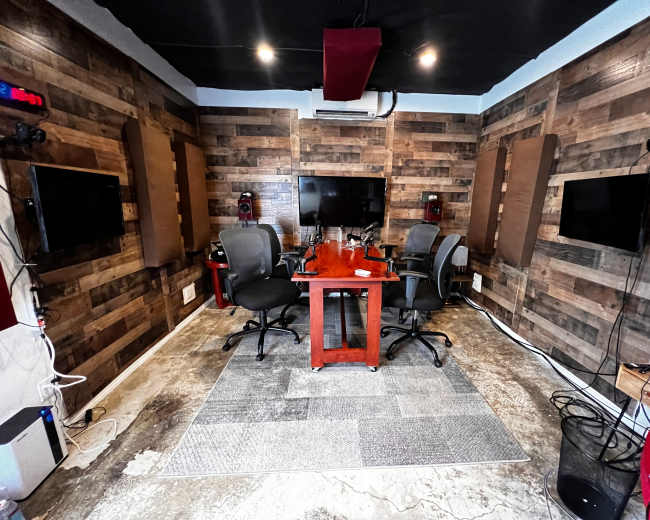
Rent a podcast studio in Anaheim, CA

Discover thousands of unique podcast studios for rent for your next recording.

Enter your activity
Anaheim, CA

How podcast rooms work on Peerspace

Peerspace is the easiest way to book unique for all kinds of productions including photo shoots, film shoots and music videos. We also have spaces for meetings and events.

The most locations

Every day we uncover new, inspirational spaces, including podcast rooms, perfect for your activity.

Professional hosts

Our network of helpful hosts respond quickly, and are well-versed in accommodating all types of productions, including film and photo shoots.

Hire by the hour

Only pay for what you need. Pay by the hour for your podcast room location without worrying about hidden fees or overtime.

Popular podcast studios

How much does a podcast studio cost per hour in Anaheim?

A podcast studio in Anaheim typically costs about $38 to $250 per hour. There's not one fixed local rate, so the most accurate answer is a range. Most Anaheim-area options fall into three practical pricing tiers:
  • Budget tier: About $38 to $75 per hour for audio-first sessions, simple interviews, solo recording, or smaller teams that can handle some setup themselves.
  • Mid-range tier: About $90 to $130 per hour for stronger sound treatment, better lighting, improved sets, and more polished video podcast capability.
  • Premium tier: About $175 to $250 per hour for turnkey recording, advanced video setups, premium aesthetics, larger crews, or some level of producer or engineering support.
If you book in blocks, that range usually works out to:
  • Two hours: About $76 to $500
  • Four hours: About $152 to $1,000
  • Half-day feel: Usually somewhere in the $500 range total, depending on gear, staffing, and production support
The hourly rate for a podcast studio changes most based on what's included:
  • Audio or video: Audio-only rooms are usually cheaper than fully video-ready studios.
  • Gear setup: Pre-wired and pre-tested equipment saves time and usually raises the rate.
  • Staff support: An engineer or producer often increases cost, but can reduce recording stress.
  • Set design: A polished on-camera background can push pricing higher.
  • Session length: Longer bookings may unlock discounted hourly pricing.
  • Guest count: More people usually means more microphones, more cameras, and more setup complexity.
The smartest way to compare Anaheim podcast studio listings is not by hourly rate alone. Compare price per finished episode. A lower hourly rate can become expensive if you still need to bring lights, troubleshoot audio, or spend the first 45 minutes figuring out file routing. A higher-priced studio can deliver better value if you can walk in, record four episodes, and leave with usable content. A good place to start is by browsing studio options in the area to compare what different spaces include at each price point. A practical booking approach looks like this:
  • Format first: Decide whether you need audio only, audio plus video, or full production help.
  • Batch plan: Estimate how many episodes you want to record in one session.
  • Inclusions check: Ask exactly what's included before judging the rate.
  • Discount search: Look for four-hour or half-day deals if you want to lower the effective cost.
The right podcast studio isn't always the cheapest one. It's the one that gets you from browsing to recording with the least friction and the fewest surprises.

What gear should already be set up in a video podcast studio?

A video podcast studio should be ready to record when you arrive. If you're paying for studio time, the core technical setup should already be in place. According to CSU Long Beach, a credible studio baseline includes purpose-built podcast hardware, acoustic treatment, and professional studio arms. For a bookable podcast studio in Anaheim or nearby Orange County, that usually means:
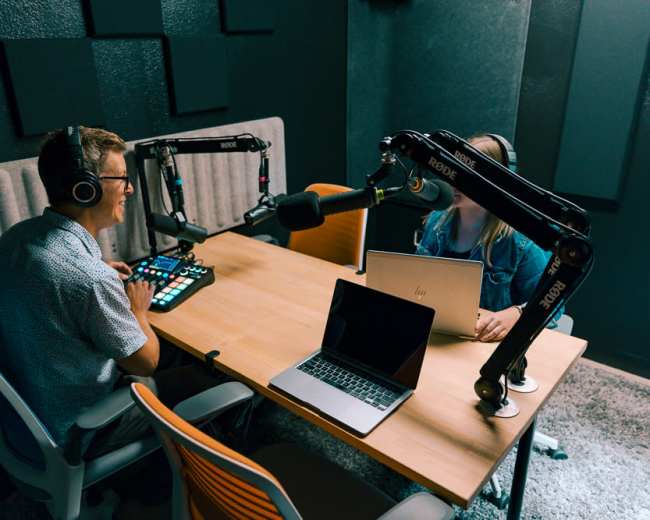
  • Audio chain: Quality microphones, mic arms, headphones, and an audio interface or podcast mixer that can monitor issues before they ruin the take
  • Video chain: At least one properly positioned camera, with multiple camera angles if the space is marketed as a video podcast studio
  • Lighting: Soft, flattering lighting designed for faces rather than basic overhead room lighting
  • Acoustics: Sound treatment that reduces echo, roominess, and outside noise
  • Recording workflow: A clear process for capturing audio and video, naming files, and delivering footage after the session
  • Furniture and framing: Comfortable chairs, a stable table, and a background that looks intentional on camera
If a studio is described as turnkey, you should also expect:
  • Microphones ready: Mics should already be mounted and positioned.
  • Camera framing tested: The framing should match the number of guests you booked.
  • Lighting adjusted: Lights should be set for eyelines and skin tones.
  • File delivery explained: SD card, drive, and transfer expectations should be clear before the session.
  • Internet available: The connection should be strong enough for livestreaming if livestreaming is offered.
  • Help on-site: A host or engineer should be available if something clips, hums, or drops out.
For a two- to four-person video podcast, the ideal setup usually includes:
  • Microphones: Three or four matching microphones
  • Cameras: Two or more cameras
  • Lighting: Soft key lighting and fill lighting
  • Monitoring: Headphone monitoring for hosts or crew
  • Recorder or mixer: A system that can capture multiple speakers cleanly
  • Sound treatment: Acoustic panels or other real treatment
  • Set design: A branded or visually polished set
Watch for a few common red flags:
  • Aesthetics over function: The listing focuses on decor, but says little about audio quality.
  • Missing technical details: There's no clear mention of microphones, mixer, cameras, or file delivery.
  • Unclear setup status: The host says gear is available, but not whether it's connected and tested.
  • Reflective room: The space looks large and echo-prone, with no visible acoustic control.
  • Weak support: You have to ask multiple basic questions just to confirm recording is possible.
A simple test works well: if you can't walk in, sit down, and start recording within 10 to 15 minutes, it's probably not a truly turnkey podcast studio. If video quality is a top priority, you may also want to explore video shoot locations in Anaheim to compare spaces built specifically for on-camera production.

Why do Anaheim searches show Irvine and Costa Mesa studios?

Anaheim studio searches often show Irvine and Costa Mesa because the real shopping area is larger than Anaheim city limits. In practice, people searching for a podcast studio in Anaheim are often shown options across Orange County, including Irvine, Costa Mesa, and sometimes Long Beach. That happens for three main reasons.
  • Local inventory is fragmented: Anaheim has some true podcast studios, some recording studios that also support podcasting, and some broader creator spaces. Search engines widen the radius so users have enough relevant options to compare.
  • Quality often beats city lines: Nearby Orange County studios actively compete on turnkey, video-first features like multi-camera setups and professional lighting. Search engines recognize that many users will drive farther for a better setup.
  • Creators shop regionally: In Southern California, Irvine or Costa Mesa is often a practical drive from Anaheim if the studio offers better gear, easier parking, stronger visuals, or less setup stress.
So when neighboring cities appear in Anaheim results, it usually means one of these things:
  • Fewer exact-match options: There may be fewer Anaheim-only listings than expected.
  • Stronger nearby competitors: Studios in nearby cities may have better reviews, authority, or production features.
  • Regional search behavior: Search engines may treat Anaheim podcast studio shoppers as part of a broader Orange County market.
The practical takeaway is straightforward:
  • Urgent booking: Search Anaheim first, then expand to Orange County quickly if availability is limited.
  • Video quality focus: Don't over-prioritize city boundaries if production quality matters most.
  • Guest logistics: Balance drive time against setup quality and parking convenience.
  • Neighboring city results: Treat them as a market signal, not a dead end.
Anaheim is often the starting point, not the boundary. That wider search approach usually gives you a better shot at finding the right podcast studio for your format, budget, and brand. If you want to start with local results, search podcast recording spaces and filter by the features that matter most to your show.

What should I ask a host before booking a recording session?

Before booking a podcast studio, ask questions that protect you from three expensive mistakes: choosing the wrong room, underestimating the time you need, and assuming support is included when it's not. A good shortlist to send before you book includes:
  • Gear included: What exact equipment is included in the hourly rate?
  • Microphones and cameras: How many microphones and camera angles are already set up?
  • On-site support: Is an engineer or producer present during the session?
  • Acoustics and noise: Is the room acoustically treated, and how much outside noise should you expect?
  • Room capacity: How many people can comfortably record in the space?
  • Access timing: How early can you enter for setup?
  • File delivery: What file formats do you receive, and how are files delivered?
  • Storage needs: Do you need to bring your own hard drive or memory card?
  • Parking: Is there parking for guests and crew?
  • Amenities: Is there a waiting area, restroom, or green room?
  • Internet reliability: Is the internet strong enough for livestreaming or remote guest monitoring?
  • Overtime policy: What happens if the session runs long?
  • House rules: Are there rules about food, drinks, music, or branding on set?
  • Rescheduling: What's the cancellation or reschedule policy?
Then ask format-specific questions based on your show:
  • Interview shows: Can the set support natural eye contact and clean framing for two people? If your show relies heavily on guest conversations, look into interview filming locations that are designed for that format from the start.
  • Roundtables: Can all speakers be mic'd individually?
  • Branded content: Can you swap decor, signage, or monitor graphics?
  • Remote productions: Can the studio support screen feeds, virtual guests, or live switching?
  • Batch recording: Can the set stay in place between episodes, or does it need to be reset each time?
You should also pay attention to how the host answers. These are common warning signs:
  • Vague replies: "We have everything you need" without specifics
  • No file clarity: No clear answer on what you leave with
  • No acoustic detail: Little or no mention of sound treatment
  • Timing ambiguity: No answer on access windows or overtime
  • Weak communication: Great photos, but poor responsiveness
Pro tip: If you're booking through Peerspace, message the host before you commit instead of guessing from the photos alone. That gives you a simple way to confirm logistics, keep communication in one place, and avoid one of the most common booking mistakes: underbooking time for setup and teardown.

Is a paid studio worth it versus recording at home or a park?

Yes, a paid podcast studio is usually worth it if your goal is consistency, stronger production quality, and less technical stress. A home setup can work when you're testing an idea, recording solo, or keeping costs close to zero. A park can work when the location itself is part of the concept. But for most creators looking for a podcast studio in Anaheim, the need is usually more specific: better sound, better video, less friction, and a more credible brand presentation. Recording at home often means dealing with:
  • Noise control: Echo, HVAC sound, pets, roommates, or street noise
  • Gear spending: Buying equipment piece by piece over time
  • Setup time: Losing time to setup, troubleshooting, and cleanup
  • Background quality: Hoping the space looks polished enough on video
  • Guest comfort: Feeling unsure about inviting guests into a makeshift setup
Recording in a park creates a different set of problems:
  • Wind: Outdoor audio can become unusable quickly.
  • Background noise: Traffic, people, and ambient sound are hard to control.
  • Visual interruptions: People can walk into frame without warning.
  • Lighting changes: Outdoor light shifts constantly.
  • Power limits: Charging and powering equipment is harder.
  • Privacy issues: Sensitive conversations are harder to manage.
  • Guest experience: Outdoor recording is usually less comfortable and less predictable.
A paid podcast studio becomes especially valuable when you want:
  • Batch recording: Several episodes in one day
  • Guest readiness: A smoother, more professional experience for interview guests
  • Video clips: Stronger visuals for YouTube, reels, and social media
  • Brand polish: A setup that looks credible for sponsors and partnerships
  • Less self-production: Fewer technical tasks on your shoulders
Some regional providers extend that value beyond the room itself. Sunset 17 TV & Podcasts highlights support services like recording, editing, distribution, coaching, and marketing. That matters because the real comparison is often not just studio versus home. It's do-it-yourself workflow versus a faster path to publishable content. Creators who need a more flexible production environment may also want to consider content houses in Anaheim where they can record podcasts alongside other content formats in a single session. A paid studio may not be the best first move if:
  • Early testing: You haven't published any episodes yet and are still finding your format.
  • Audio-only simplicity: Your show is strictly audio and already sounds good in a treated home space.
  • Budget pressure: Studio costs would make it harder to record consistently.
  • Low production needs: You don't need guests, video, or brand polish yet.
A simple rule works well:
  • Home: Best for experimentation
  • Paid studio: Best for growth, guest experience, and consistency
  • Outdoor setup: Best only when the location is part of the content itself
If you keep thinking, "I just want to show up and record," that's usually the point when a paid podcast studio starts to make sense.
Which Anaheim neighborhoods are best for booking a studio space?

The best neighborhood for a podcast studio depends less on prestige and more on the kind of recording day you want to create. Based on Anaheim-area inventory patterns, these are the most practical areas to consider:
  • Downtown Anaheim: A strong choice if brand vibe matters most. This area often suits interview shows, creator-led content, and podcasts that want more personality on camera.
  • Northeast Anaheim: A good place to look for music-production crossover spaces or broader recording facilities that also support podcasting. This area can work well for creators who prioritize sound quality and flexibility. If acoustics are your main concern, you can also browse sound stages for spaces built with professional-grade sound control.
  • Platinum Triangle: Often the best fit when logistics matter most. It tends to work well for teams with guests coming from different parts of Orange County, or anyone who wants easier freeway access and a polished, modern setting.
  • Anaheim Hills: A smart option for a quieter, more polished, lifestyle-oriented look. This can be a strong match for visually driven or brand-forward shows.
  • Southwest Anaheim: Useful when convenience is the priority, especially for guests staying near the resort corridor or teams combining a recording session with meetings or business travel.
The easiest way to narrow it down is to match neighborhood to priority:
  • Brand personality: Start with Downtown Anaheim.
  • Production flexibility: Check Northeast Anaheim first.
  • Access and parking: Focus on Platinum Triangle.
  • Polished visuals: Look at Anaheim Hills.
  • Guest convenience: Consider Southwest Anaheim.
One more point matters: if you're not finding the right podcast studio in Anaheim proper, don't force the search to stay inside city lines. Many Anaheim shoppers end up comparing nearby Orange County options because the regional market often offers stronger turnkey video setups and fuller production support. A practical approach is simple:
  • Start local: Begin with the Anaheim neighborhood that matches your priorities.
  • Expand fast: Widen the search if local options don't meet your technical, logistical, or visual needs.
The best neighborhood is the one that makes your recording day easier to reach, easier to run, and easier to turn into content you are proud to publish.
Updated July 6, 2026Our data is refreshed in real time using booking trends, verified guest reviews, and direct partner updates — with additional quality checks from our team.