Hire a Projector and Screen for Your Next Event
-

Contributing Writer
- March 10, 2026
- 14 min read
- Events
Source: Peerspace
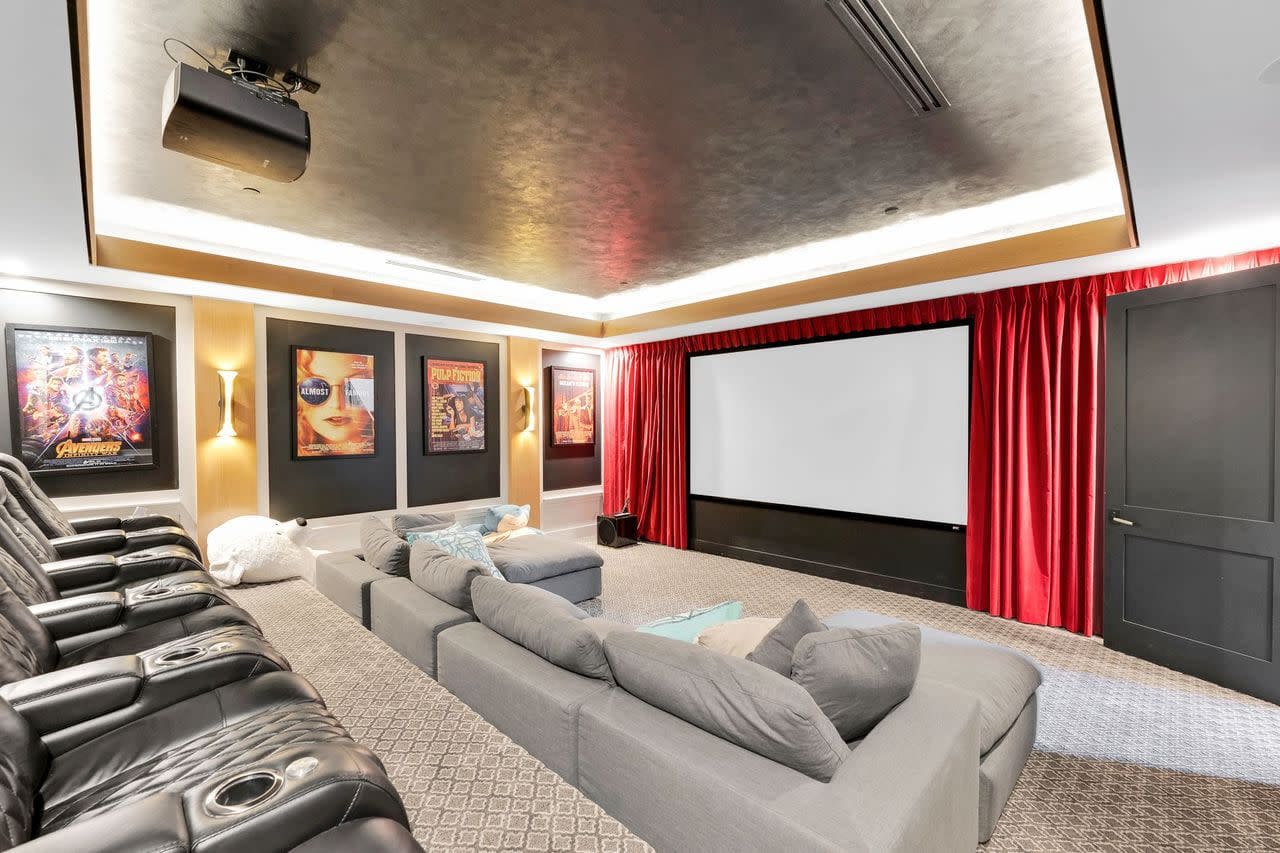
A clear image on a big screen can make or break certain events. From the wedding slideshow that keeps guests glued to their seats to the client pitch where visuals carry the message, the difference is obvious. Even a garden cinema night, where 30 people gasp at the same moment, depends on getting it right — and that usually begins with searching for how to hire a projector and screen.
What most people discover fairly quickly is that the projector itself is the easy part. The harder question is everything around it: Does this projector have enough brightness for my room? Will it work with my laptop? What about sound? And not to forget: do I even have a venue sorted yet?
That last question changes the whole equation. If you’re still looking for a space, hiring equipment separately and then finding a venue on top creates two parallel planning problems. Hiring a venue that already has a projector and screen built in solves both at once. This guide walks through both routes so you can decide which makes more sense for your event.
Short on time? If you already have a venue confirmed and just need the equipment, skip ahead to ‘what affects projector and screen hire pricing’. If you’re still deciding on hiring an event space, the ‘comparison’ section is where you want to start.
What do people hire projectors and screens for?
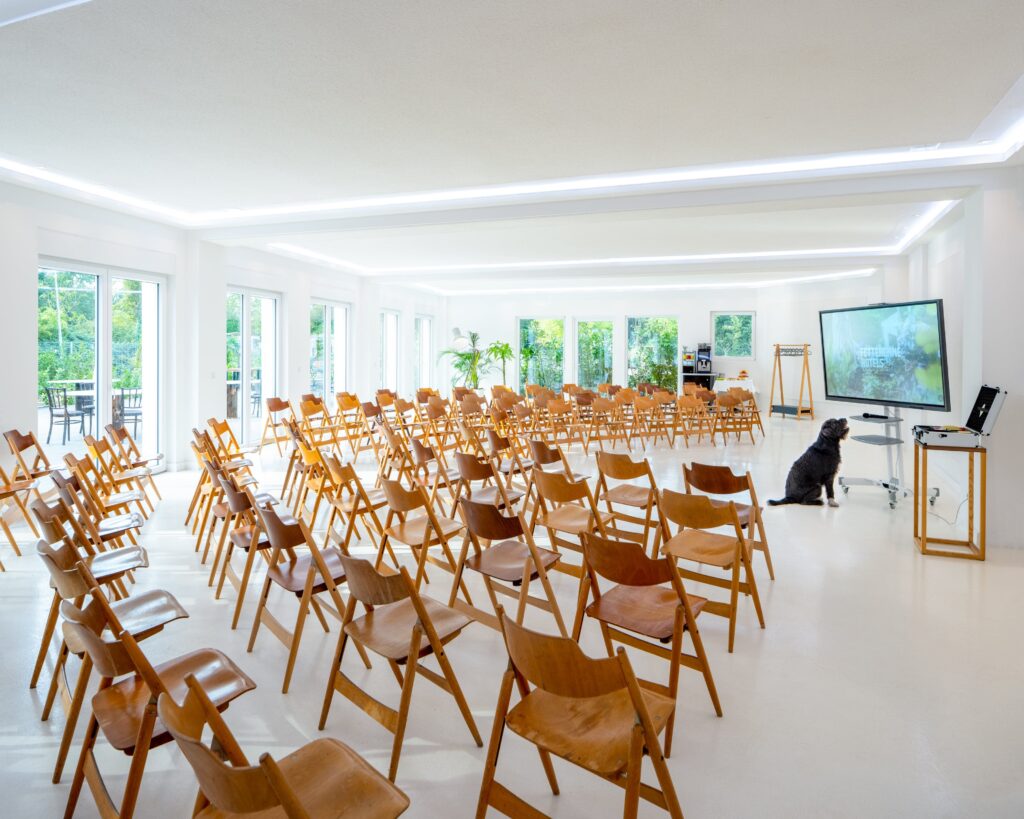
People hire projectors and screens for anything that needs a large, shared visual, often for events. From formal corporate presentations to someone projecting Mario Kart onto a bedsheet at a birthday party, the occasions vary widely. The most common uses:
- Weddings and reception: Photo montages, video messages from absent guests, ceremony backdrops. Reception venues typically need a projector with at least 3,500 lumens and a 100–120-inch screen to stay visible once the lights dim for dinner.
- Corporate presentations and away days: Client pitches, quarterly reviews, training workshops. The spec depends on the room: a bright boardroom with floor-to-ceiling windows needs 5,000+ lumens, while a blacked-out conference space works fine with 3,000.
- Garden and outdoor cinema: Film nights, sports screenings, community events in a garden venue. This is where hire gets expensive fast, because outdoor projection needs serious brightness (5,000–7,000 lumens at dusk), a large screen (150 inches minimum for a group), and usually a separate sound system.
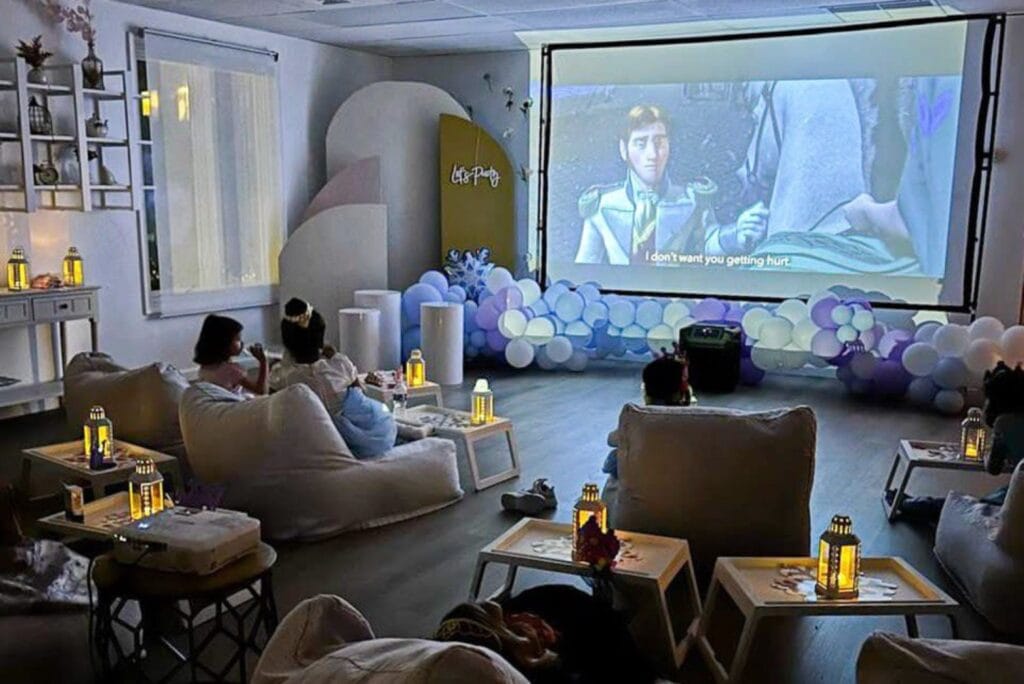
- Birthday parties and celebrations: Karaoke, gaming tournaments, photo slideshows, themed movie marathons. Often the most fun events to set up, and the easiest to underspec. People forget about sound until 25 guests are squinting at a silent film.
- Screenings and preview events: Short film premieres, documentary showings, content reviews. These need the most cinema-like setup: high resolution, good contrast, proper audio, and ideally in a screening room designed for watching.
For most of these, the projector is part of a larger puzzle. The venue, the seating, the atmosphere, the logistics — they all need to work together. That’s the tension at the heart of this guide: hire the equipment and the space separately, or find a space where it’s all already there?

How much does it cost to hire a projector and screen?
The cost of hiring a projector and screen depends on equipment spec, service level, and how many extras you need — and you’ll be surprised at how the extras can stretch most budgets. As a rough guide, standalone projector hire starts from around £60–£200 per day depending on brightness, with screens adding £30–£130 on top.
The hidden costs
But the headline hire rate is rarely the final number. The screen is usually priced separately, with delivery and collection coming on top. A technician to set up and calibrate is extra. And the thing nobody budgets for: sound. Built-in projector speakers rarely exceed 10 watts, which is fine for a meeting room with six people, but useless for a screening or any event with audio. External speakers mean another hire, another cable run, another item on the invoice.
Most hire companies also charge a minimum 24-hour period, even if your event only runs for a few hours. Some companies offer half-day rates, but they’re the exception. So when you factor in delivery, a basic sound setup, and a separate venue booking on top, the total rarely stays near the headline projector rate. That’s worth keeping in mind when comparing standalone hire against venues where the AV is already included.
What affects projector and screen hire pricing?
Several practical factors shape the final cost for hiring a projector and screen. Understanding them helps you avoid overpaying for spec you don’t need or underspecifying and ending up with a washed-out image on the night.
Brightness (lumens)
This is the single biggest price driver. Brightness is measured in ANSI lumens, and the right number depends on ambient light and screen size:
- Dark room, screen up to 100 inches: 3,000 lumens is usually enough.
- Room with windows or ambient light: 5,000+ lumens. This covers most real-world event settings.
- Outdoor screening at dusk: 5,000–7,000 lumens minimum.
- Outdoor screening in daylight: 10,000+ lumens. At this point, an LED screen is often a better option.
ViewSonic’s projector brightness guide walks through this in more detail and is worth reading before committing to a spec.
Screen size and throw distance
A projector’s throw distance needs to match the room. Short-throw projectors produce a large image from around 0.9–2.4 metres (3–8 feet); standard models need 2.4–4.5+ metres (8–15 feet). If you’re hiring the equipment before confirming the venue, you risk a projector that doesn’t fit the space — too close and the image overshoots the screen, too far and it’s dim and small. Bigger screens also spread light thinner, so they need a brighter (and pricier) projector to compensate.
Hire duration and location
Multi-day or weekly rates cut the effective daily cost significantly if your event includes setup or rehearsal time. London hire rates tend to run 15–30% above the rest of the country, particularly for delivered-and-setup packages. Availability tightens during peak months (June through September for outdoor events, November through December for corporate year-end). Booking a few weeks ahead is sensible.
Connectivity and sound
HDMI is standard, but most modern MacBooks need a USB-C adapter, and some older venue systems still use VGA. A £10 missing adapter has been known to delay corporate presentations by 45 minutes while someone sprints to a nearby electronics shop. Sound is the other consistent blind spot. If your content has audio and your audience is more than about 15 people, external speakers are essential.
Comparison: Standalone hire vs. booking a venue with AV included
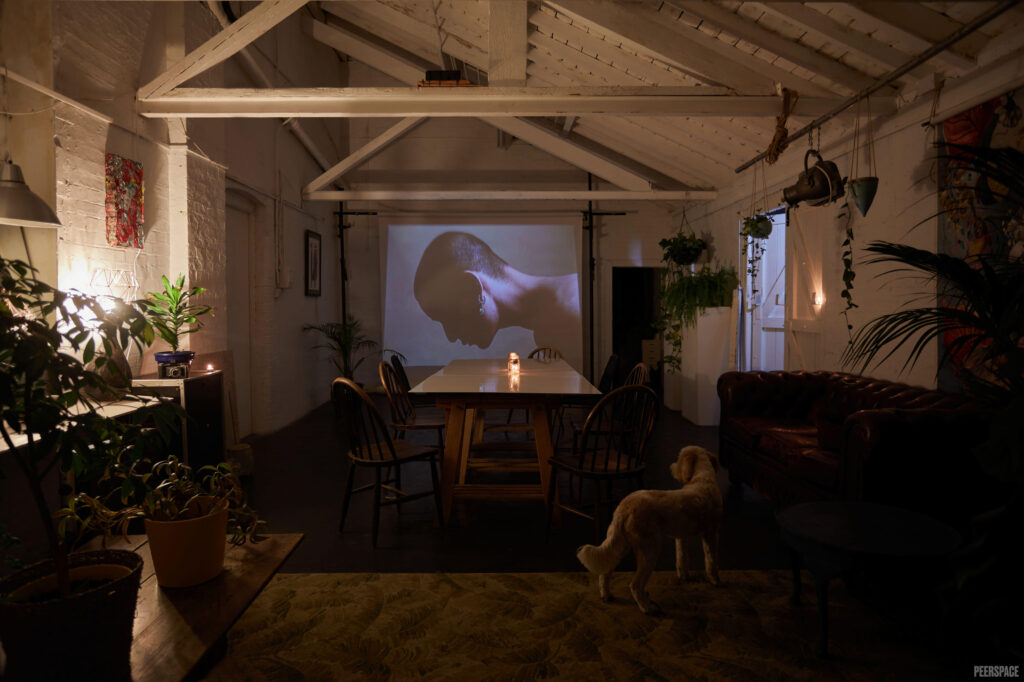
Hiring a projector and screen separately works well in some situations. When the venue is already confirmed, the team has AV experience, or you only need a basic setup for a quick presentation, standalone hire is your best bet. For experienced event producers with an established workflow, coordinating equipment and venue separately is routine.
But for many occasions that prompt people to search for a ‘projector and screen hire near me’, the projector is just one part of the bigger picture. From weddings to film nights, the venue, seating, acoustics, lighting, and often catering all need to come together too.
The cost comparison
Standalone equipment hire in London typically runs from around £180–£500 per day for a projector and screen package with delivery. Venues with AV built in charge by the hour (usually £50–£120/hour depending on size), which for a typical four-hour event often works out similar or less — and without the logistics overhead.
Common challenges with standalone hire
With standalone hire, a few things tend to catch people out:
- Compatibility: The projector’s throw distance and brightness need to match a room you may not have finalised yet. Getting this wrong means a blurry, undersized, or washed-out image.
- Insurance and liability: Hired equipment that gets damaged during your event is your problem. Most companies charge a deposit (typically 10–25% of hire value) and may offer damage waivers for an additional fee. Confirm that the hired kit has been PAT tested, especially if the venue requires proof of electrical safety.
- Coordination overhead: Aligning delivery windows with venue access times, arranging next-day collection, making sure there’s parking for the hire van, testing everything before guests arrive. All manageable, but all costs time — time that could go toward the event itself.
None of this is unmanageable for experienced planners. But for someone organising a one-off screening or milestone celebration, the coordination overhead is real. This is where venues that already include projection equipment become a genuinely simpler alternative.
Why booking a venue with AV included is often easier
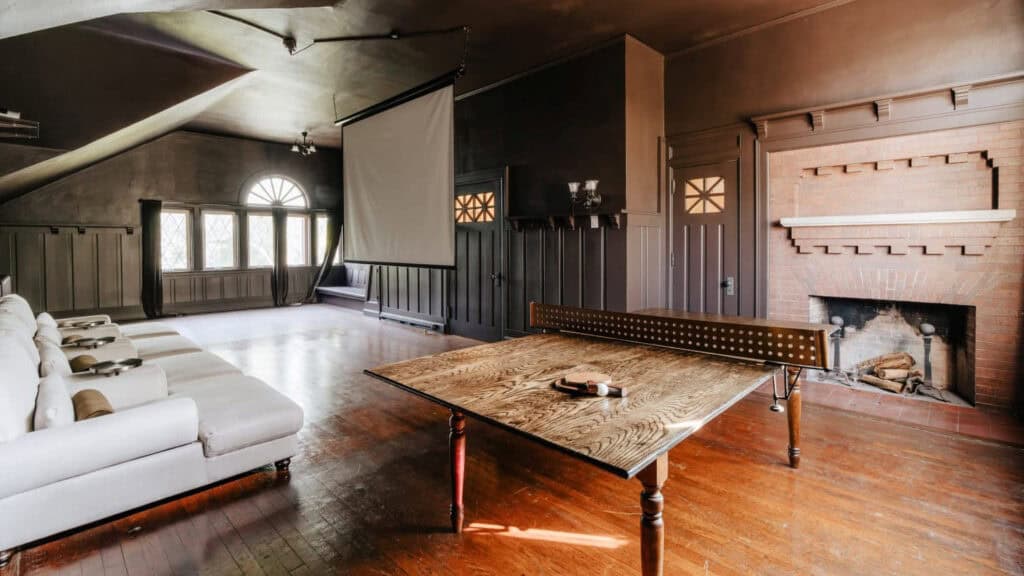
When you book a venue that already includes a projector and screen, most of the complications above disappear. The equipment is installed, matched to the room’s dimensions and lighting, and someone on-site knows how it works. The equipment is installed, matched to the room’s dimensions and lighting, and someone on-site knows how it works.
A few things that make this route noticeably smoother:
1. The equipment fits the room
A projector in a purpose-set venue is already calibrated: the right throw distance, the right brightness, and the right screen size. You don’t need to calculate any of it.
2. Audio is usually included
Many venues with projectors also include speakers, PA systems, or at least audio outputs. Screening rooms in particular tend to have surround sound as standard.
3. Hourly booking gives you flexibility
Instead of paying a 24-hour equipment hire minimum, you hire an event venue by the hour. Your four-hour event costs you four hours, not a full day.
4. You only get one invoice
Venue, projector, screen, and often extras like Wi-Fi, seating, and climate control are all part of a single booking. This is cleaner for personal budgets and corporate expense reporting alike.
5. You work with hosts who’ve done this before
Peerspace hosts are accustomed to events. They can walk you through the AV on arrival, troubleshoot if something isn’t working, and recommend layouts that work best for projection in their particular room.
This doesn’t mean standalone hire is never the right choice. If the venue is locked in and it doesn’t have AV, hiring equipment makes perfect sense. But if you’re still in the planning stage and the space isn’t confirmed, searching for a venue with projection built in saves a surprising amount of time, cost, and coordination.
Types of venues with projectors and screens
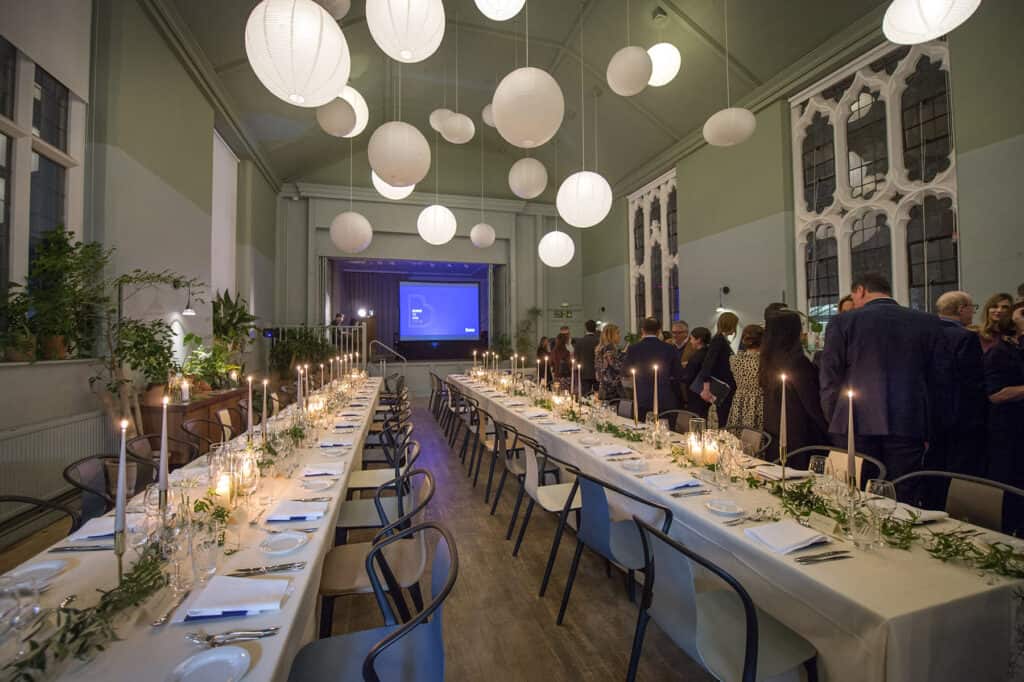
The right venue type depends on what you’re projecting and who’s watching. Here’s where to start:
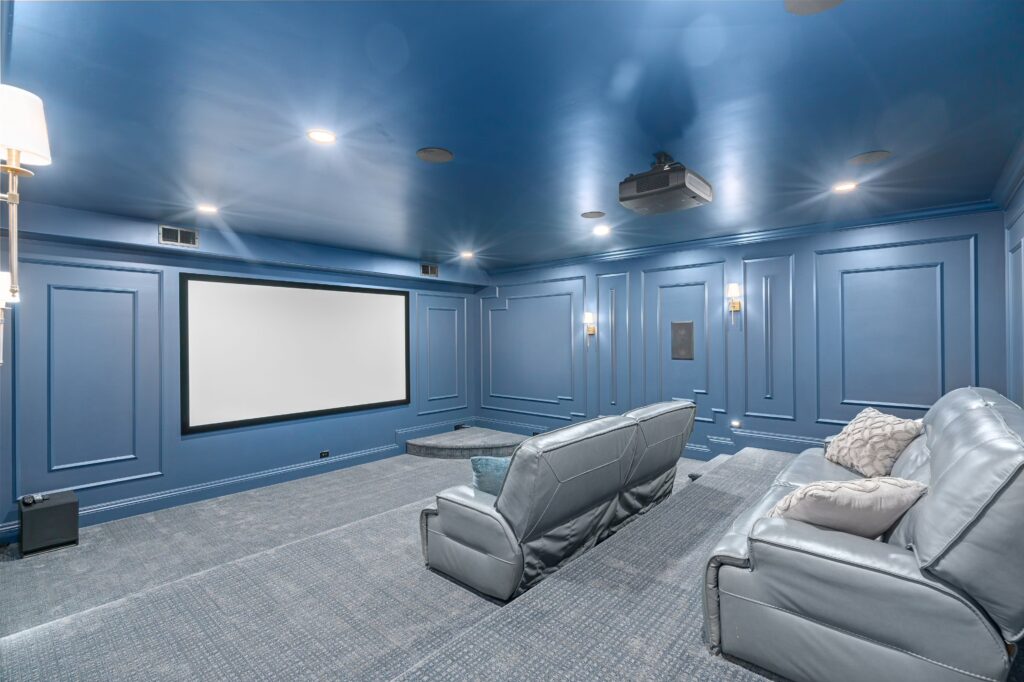
- Screening rooms: The closest thing to a private cinema. HD or 4K projectors, surround sound, tiered or lounge seating, blackout curtains. Built for watching. Browse screening rooms in London, from intimate lounges to complete theatres.
- Meeting rooms and boardrooms: Projectors, screens, video conferencing, Wi-Fi, and whiteboards as standard. The workhorse venue for presentations, pitches, and training sessions.
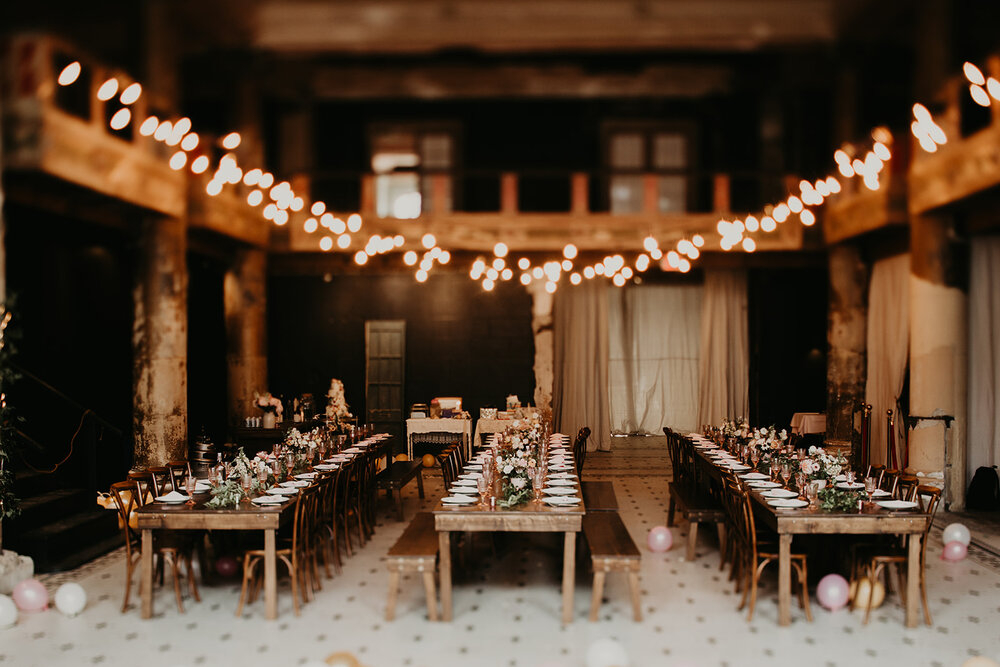
- Event spaces: Versatile rooms for birthdays, launches, networking, and parties where a projector adds visual texture — slideshows, montages, live social feeds. Pick between corporate event venues or spaces for private events like wedding reception venues in London.
- Studios: Photo, video, and podcast studios with projection for mood boards, client presentations, or creative projects.
- Conference spaces: Built-in AV, PA systems, and often on-site tech support. Designed for seminars, panels, and full-day events.
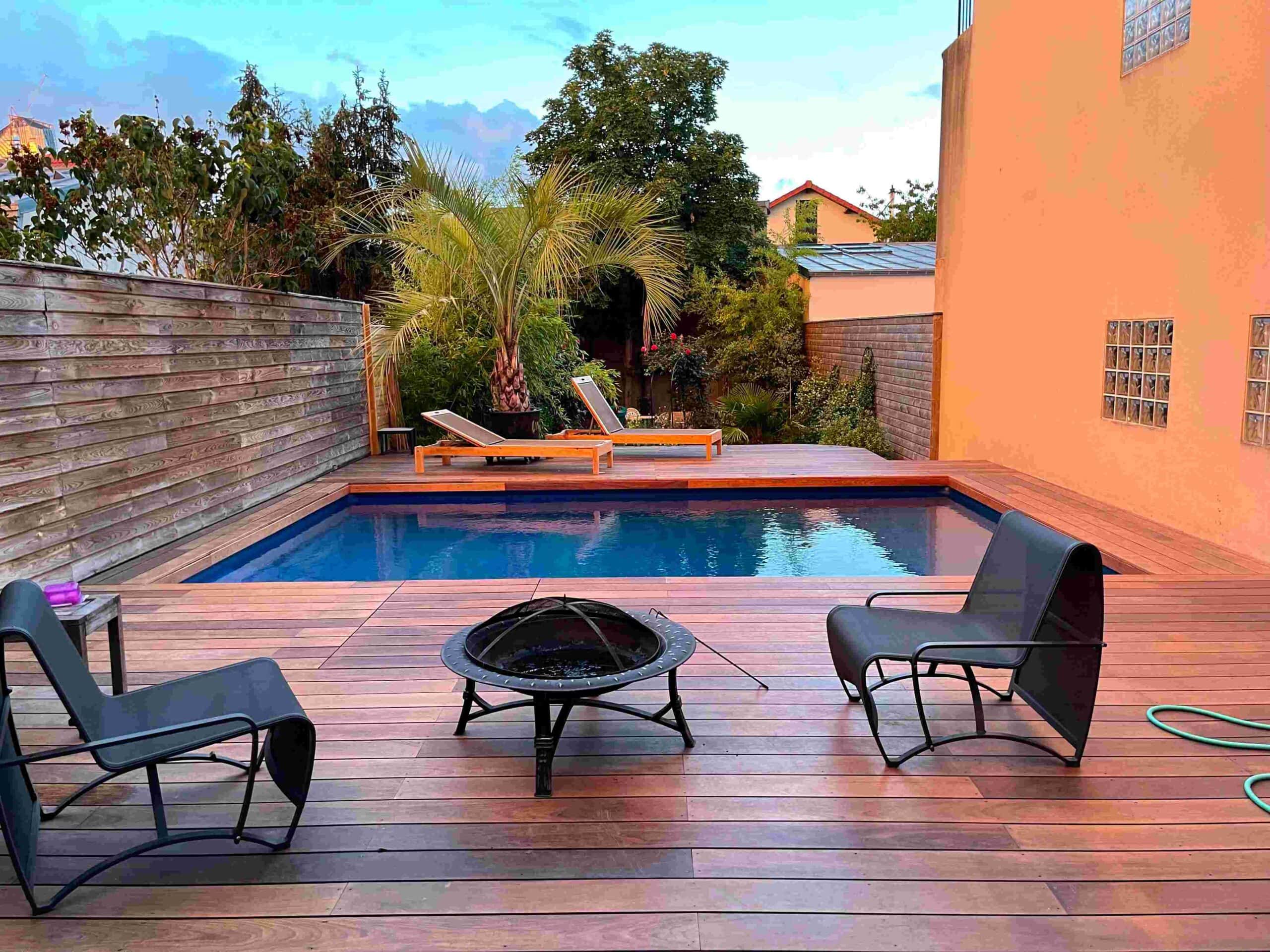
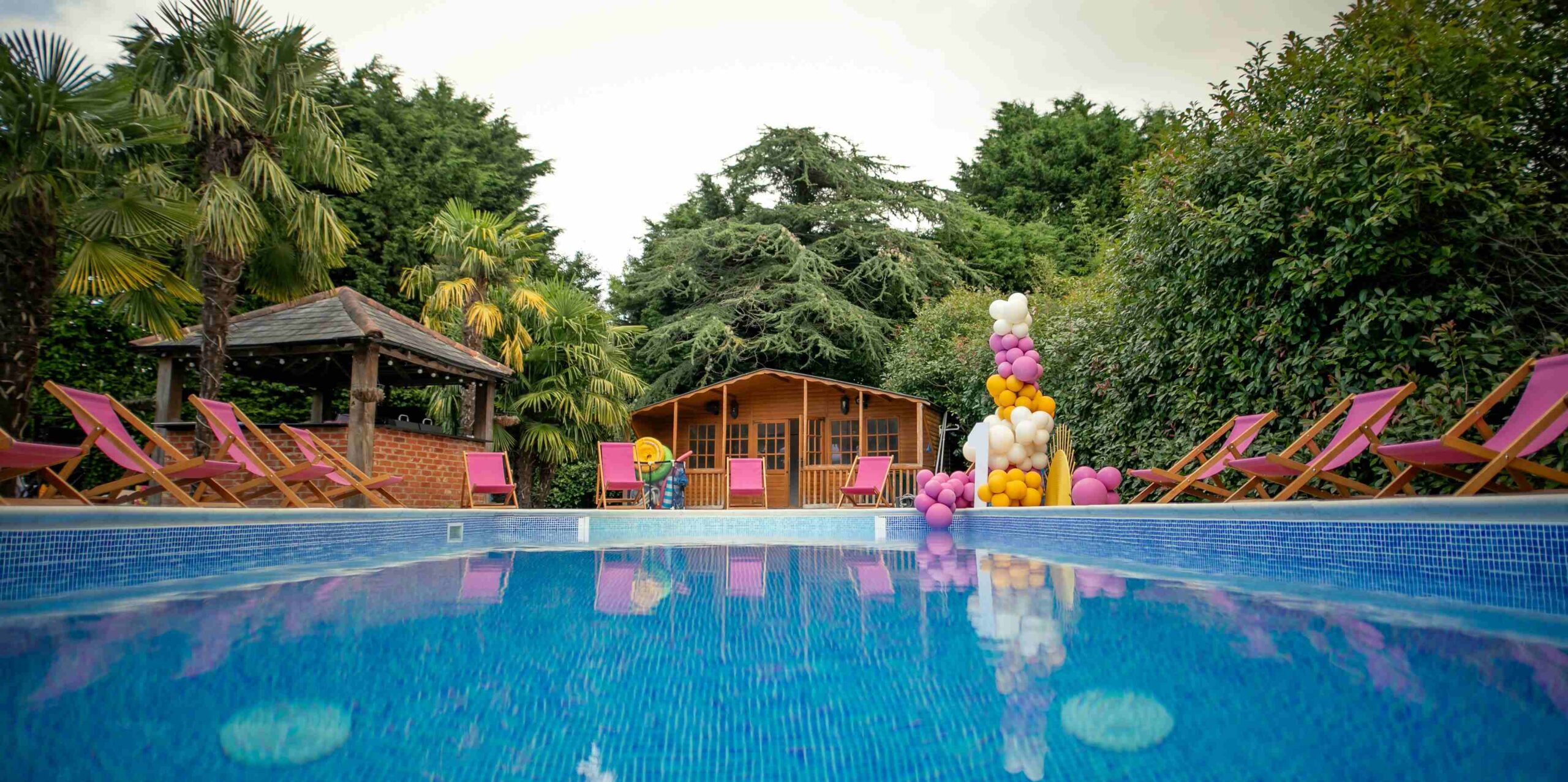
- Gardens and outdoor spaces: Private garden hires, courtyards, and terraces with space for outdoor cinema setups. Perfect for summer film nights, sports screenings, or al fresco presentations. Many come with weatherproof power access and flexible screen mounting options.
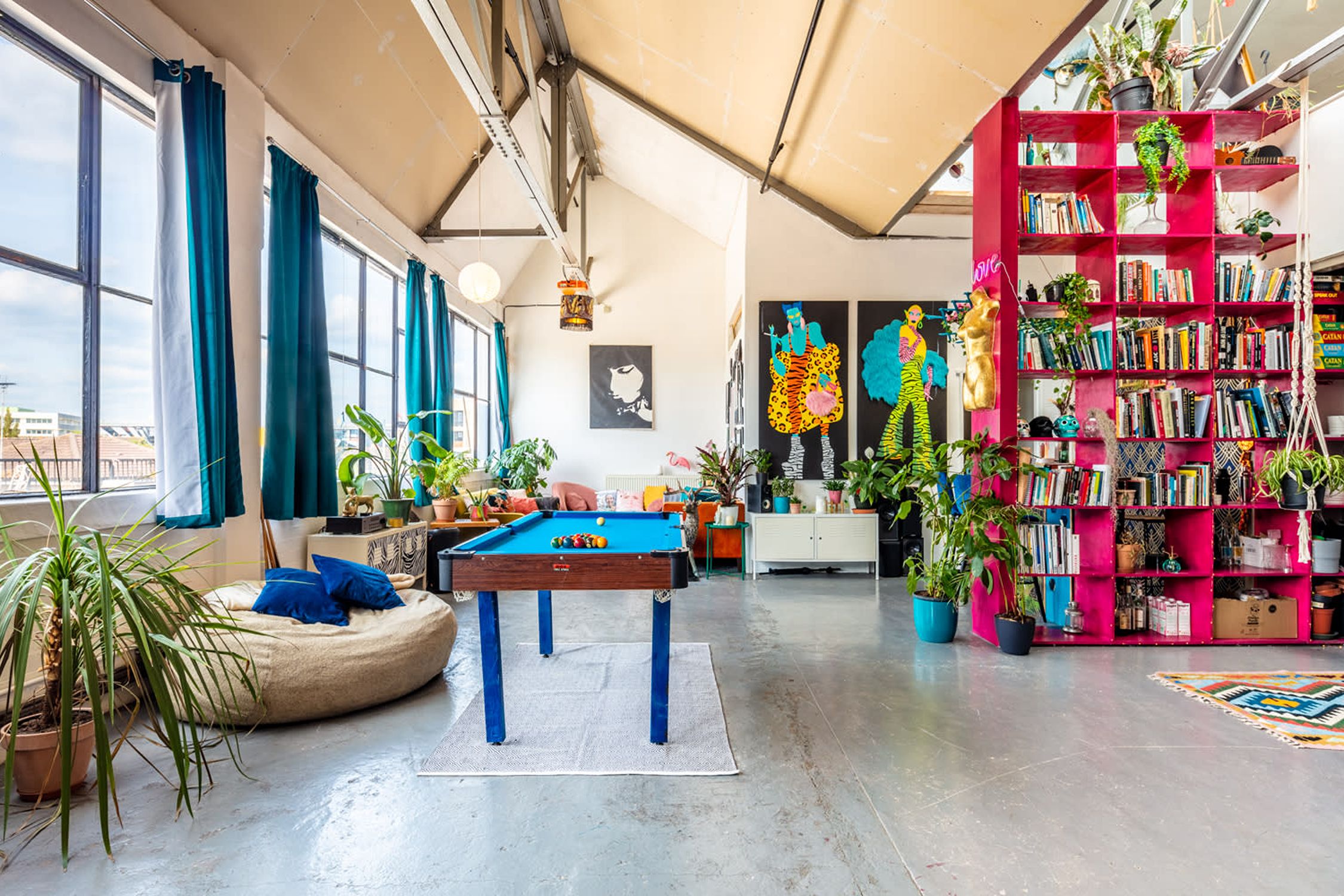
- Creative lofts and warehouses: Blank-canvas spaces with projection walls and characterful backdrops. Popular for immersive events, brand activations, and even weddings. Learn how to find the ideal warehouse venues in London or check industrial spaces closer to you.
- Art galleries: Exhibition spaces with a creative feel. Sophisticated settings with projection capabilities for product launches, brand events, or visual presentations that benefit from gallery-quality lighting control.
- Production spaces: Film sets, warehouses, sound stages with professional-grade projection for pre-visualization, client reviews, or screenings during production work.
How to find a venue with a projector and screen on Peerspace
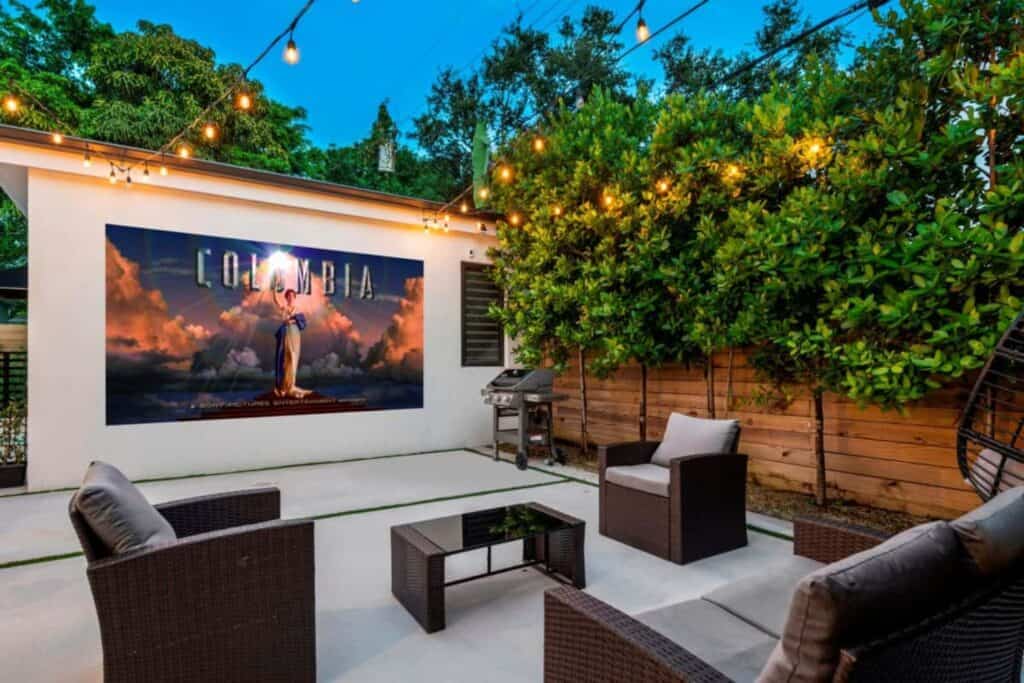
Finding a venue with a projector and screen already installed takes most of the equipment logistics off your plate. Here’s how to search effectively:
- Browse venue hire platforms: Enter your city, event type, and date on Peerspace via the website or app (Apple App Store / Google Play Store) to bookmark favourites on the go.
- Filter for AV: Use the amenity filters to show only venues with projectors, screens, or full AV setups. Typing ‘projector’ or ‘screen’ into the keyword search narrows results further.
- Read the listing carefully: Every venue page shows photos, hourly pricing, amenity lists, and reviews. Check whether projection is included in the base rate or listed as an add-on. Reviews from previous guests often mention AV quality — worth reading.
- Message the host with specifics: Not every venue will have cinema-grade equipment. Ask the host about brightness (lumens), screen size, connectivity (HDMI, USB-C, wireless casting), sound, and room lighting. A projector that works beautifully for an evening screening may wash out in a room flooded with afternoon sun.
- Book the hours you need: Confirm for your actual event duration. No day-rate minimums, no paying for overnight you’ll never use.
FAQs: Hire a projector and screen
How much does it cost to hire just a projector screen?
Screen hire on its own typically ranges from £30 to £130 per day depending on size and type. Portable tripod screens (72–80 inches) are cheapest and easiest to self-setup. Pull-up screens (100–120 inches) are the most popular for events. Fast-fold screens (150+ inches) cost more and usually need a technician to assemble. Peer-to-peer platforms sometimes list basic screens for less, but typically without delivery support, tested equipment, or insurance cover.
Is it worth hiring a proper projector screen?
Almost always, yes — it’s worth hiring a proper projector screen for any event beyond a handful of viewers. Projecting onto a plain wall works in a pinch, but walls are rarely smooth, white, or evenly lit enough for a clean image. Coloured walls tint the projection. Textured plaster breaks up the picture. Without a bordered edge, the image bleeds into the surrounding surface, which looks noticeably less polished. This is particularly important for client-facing events or celebrations where people are actually watching the screen.
A matte-white screen reflects light more evenly, produces better colour accuracy, and gives the image a defined frame that holds attention. For anything involving video, professional content, or more than about 15 viewers, the difference is immediately visible.
What are cheap alternatives to a projector screen?
For informal settings, a few low-cost alternatives to a projector screen can work. A clean, smooth white wall is the simplest, so just check for picture hooks, discolouration, or textured plaster in the projection area. A white bedsheet pinned taut to a frame is a common workaround, though wrinkles distort the image badly. Purpose-made portable projection fabric (under £25 online) is a step up and folds down small for transport.
These are fine for a casual film night at home or a team huddle in an office. For anything with a larger audience or a professional context, a proper screen — whether hired or included with a venue — makes a visible difference.
Final thoughts: Focus on the event, not the equipment
Standalone projector hire works well if the venue’s locked in and you’ve done this before. But if you’re planning a one-off event, don’t have AV experience, or just don’t fancy spending three days coordinating delivery slots and adapters — book a venue where it’s already set up. The projector’s there, the screen’s the right size, and the host knows how to fix things if they go wrong. The best part? One booking instead of three, one invoice instead of five, and your energy goes into planning the actual event, not chasing hire companies.
In this article
- What do people hire projectors and screens for?
- How much does it cost to hire a projector and screen?
- What affects projector and screen hire pricing?
- Comparison: Standalone hire vs. booking a venue with AV included
- Why booking a venue with AV included is often easier
- Types of venues with projectors and screens
- How to find a venue with a projector and screen on Peerspace
- FAQs: Hire a projector and screen
- Final thoughts: Focus on the event, not the equipment
In this article
- What do people hire projectors and screens for?
- How much does it cost to hire a projector and screen?
- What affects projector and screen hire pricing?
- Comparison: Standalone hire vs. booking a venue with AV included
- Why booking a venue with AV included is often easier
- Types of venues with projectors and screens
- How to find a venue with a projector and screen on Peerspace
- FAQs: Hire a projector and screen
- Final thoughts: Focus on the event, not the equipment
Get together somewhere better
Book thousands of unique spaces directly from local hosts.
Explore SpacesShare your space and start earning
Join thousands of hosts renting their space for meetings, events, and photo shoots.
List Your Space