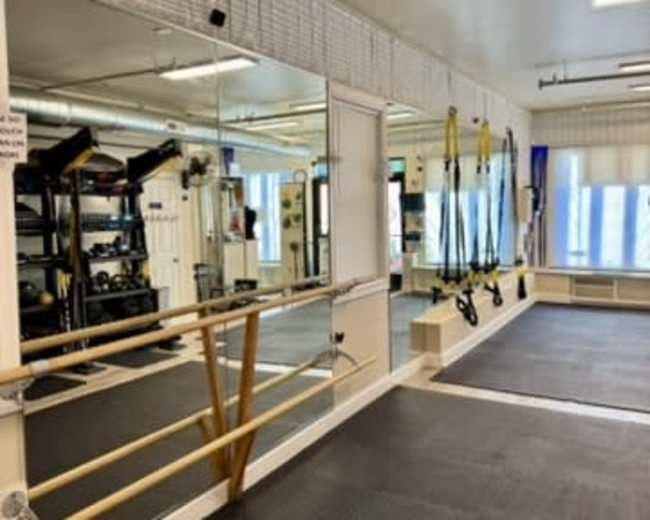
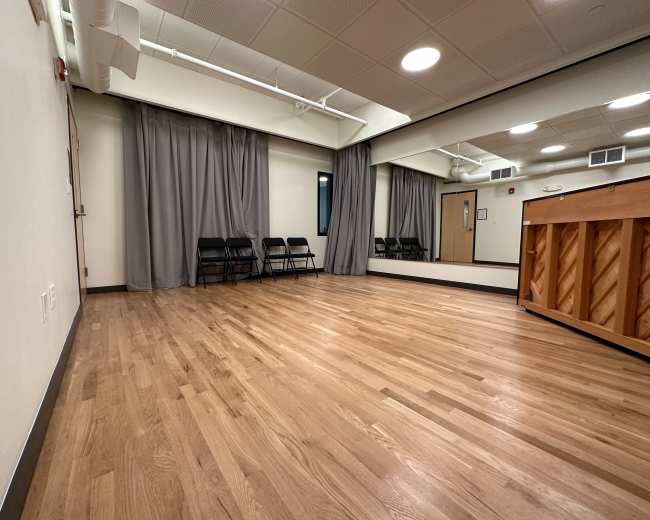
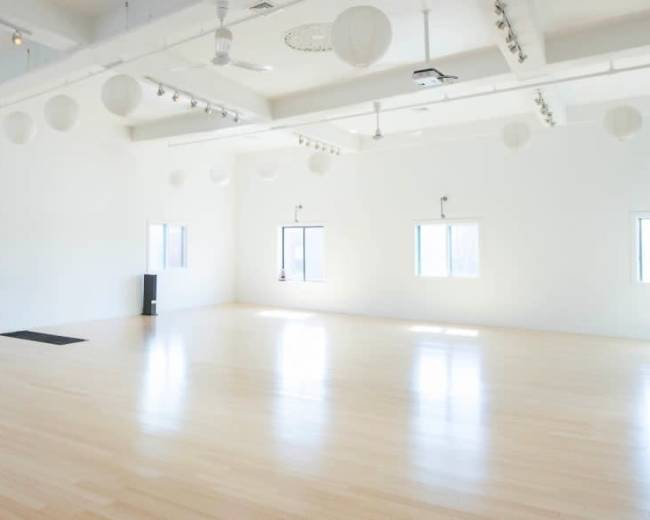
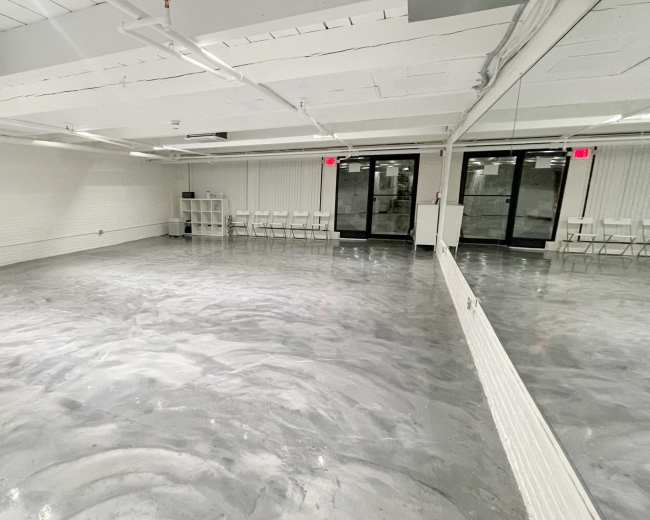

Rent a dance studio in Boston, MA

Discover thousands of unique dance studios for rent perfect for your event.

Enter your activity
Boston, MA, United States

How dance class spaces work on Peerspace

Peerspace is the easiest way to book unique dance studios for parties, weddings, meetings, productions and more.

Discover Spaces

Unique venues

Every day we uncover new, creative spaces, including dance class spaces, perfect for your activity.

Honest pricing

Our dance studios are priced to fit your budget. Hire by the hour without worrying about hidden fees.

Smooth bookings

No more messy contracts. We build the tools to make booking dance class space venues as easy as the click of a button.

Popular dance studios

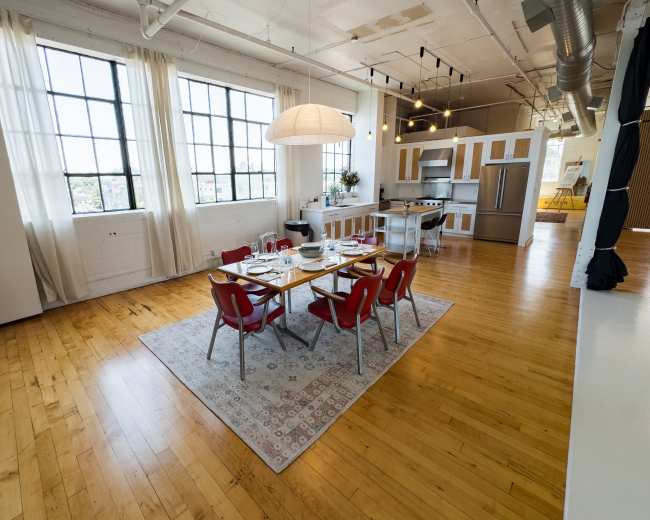
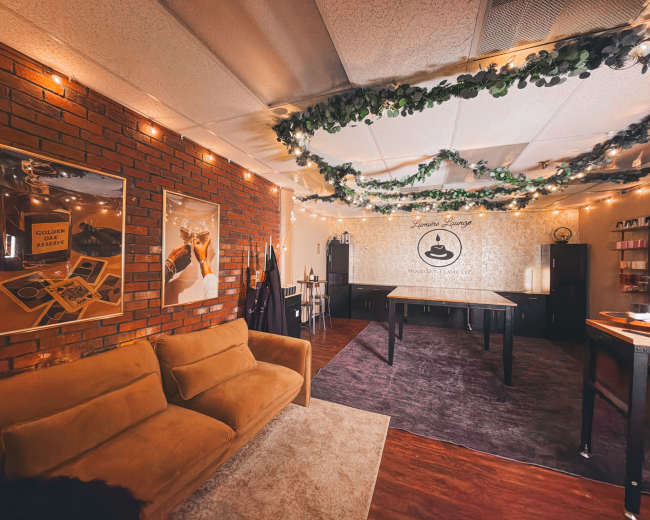
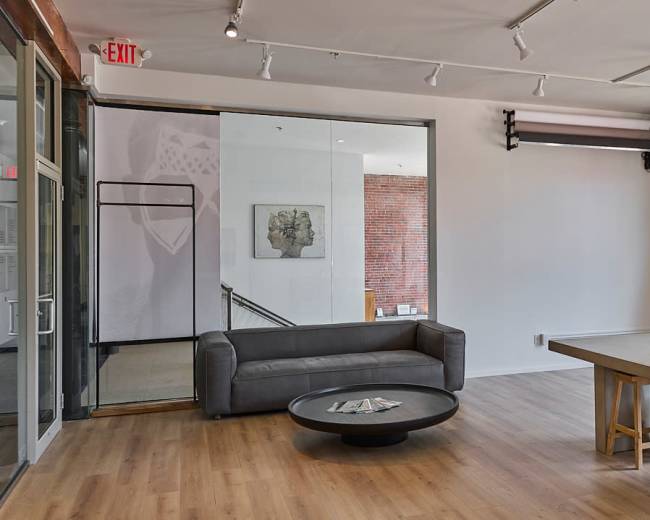
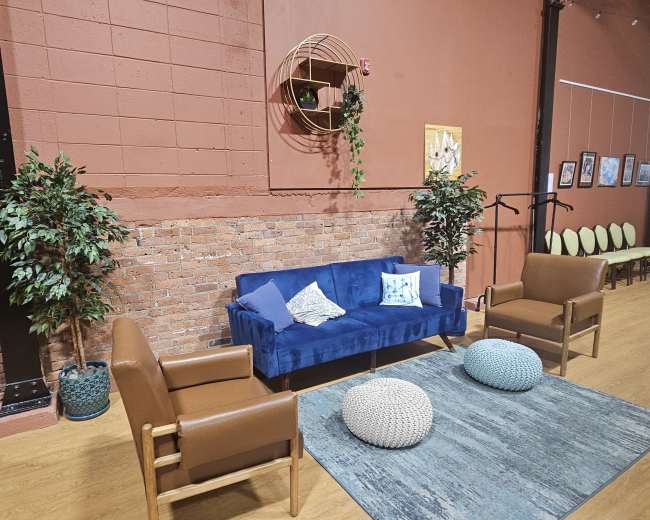
Explore all 30+ dance studios in Boston. See All ›

Frequently Asked Questions

Pricing and popularity information in this section is based on proprietary Peerspace booking data, reflecting recent booking activity and the latest data available through September 2026.

How much does a dance studio cost to rent in Boston?

Dance studios in Boston average $95 per hour to rent, but it’s easy to spend less or more depending on what you’re looking for. For a space on the smaller side, expect to spend closer to $146, whereas larger venues run about $845 per hour.

How long do people rent dance studios in Boston?

Most dance studios are scheduled for 7 hours, with 12 people in attendance. You’ll find the most Dance Studios starting between 10:00 AM and 11:00 AM.

How popular are dance studios in Boston?

Our local hosts have welcomed 1449 people into their dance studios with reviews averaging 4.85 stars. Most even said they would book again -- about 93%.

What's the best day to rent a dance studio in Boston?

Saturdays are the most popular day for booking dance studios in Boston. For those seeking a deal, consider booking Sunday and Saturday as these days are 13% cheaper on average.

What floor type should I look for in a Boston dance space?

For a Boston dance studio rental, the safest all-around floor is a true sprung floor with a dance surface such as Marley. That setup usually gives dancers the best mix of shock absorption, traction, and consistency for rehearsals, classes, workshops, jumps, turns, and floorwork. If you're comparing options, focus on the actual subfloor, not just the surface appearance. A room can look polished in photos and still be hard on ankles, knees, and backs if the floor sits directly over concrete. When evaluating your options, browse studios and compare floor details and amenities across listings. Here's a practical breakdown by dance style:
  • For ballet and contemporary: Look for a sprung floor with Marley or a well-maintained wood surface. You want enough give to protect joints without making balance work feel unstable.
  • For jazz and commercial choreography: A sprung floor with moderate grip is usually best. If the floor is too slick, dancers slide. If it's too sticky, turns become difficult.
  • For hip-hop and open-style rehearsal: Prioritize evenness, traction, and enough room for directional travel. A smooth studio floor can work well, but it should not be a hard concrete base under a thin surface.
  • For heels: Confirm that heels are allowed and that the floor is designed to handle them. Some attractive rental spaces aren't built for that kind of wear.
  • For tap: Never assume tap is permitted. Ask whether tap is allowed, whether the floor is tap-safe, and whether portable tap boards are required.
Before you book a dance studio rental, ask these questions:
  • Floor construction: Is this a true sprung floor, or is it a hard floor over concrete?
  • Surface condition: Are there seams, soft spots, uneven panels, or slick areas?
  • Cleaning and traction: How is the floor cleaned, and does it get slippery during longer sessions?
  • Use rules: Are street shoes, heels, or tap shoes allowed?
  • Movement fit: Has the space been used for the specific style you are teaching or rehearsing?
Watch for these red flags:
  • Hard surfaces: Concrete, tile, or laminate with no sprung support
  • Photo-first spaces: Rooms marketed for shoots or events that happen to be empty, but aren't designed for movement
  • Vague answers: Hosts who can't explain the subfloor or surface
  • Visible wear: Curling Marley, gaps, warped boards, or rugs covering problem spots
If you're choosing between a prettier room and a safer room, choose the safer room. In any dance studio rental, the floor isn't a minor amenity. It's the foundation of safety, performance quality, and long-term comfort.

How much does hourly rehearsal space cost in Boston?

In Boston, hourly rehearsal space usually falls between about $20 and $250 or more per hour, depending on location, floor quality, room size, amenities, and booking time. For most dancers searching for a dance studio rental, the practical working range is about $50 to $100 or more per hour. A simple way to think about Boston dance studio rental pricing is to group options into three bands:
  • Budget-friendly range: Around $20 to $40 per hour for smaller, more community-oriented, or off-peak studio inventory
  • Typical working range: Roughly $50 to $100 and up per hour for centrally located studios with mirrors, speakers, and a more professional dance setup
  • Premium range: Around $100 to $250 and up per hour for larger studios, production-friendly spaces, prime evening slots, or rooms that can also function as shoot or event venues
When you compare options, separate must-haves from nice-to-haves. For most rehearsals and classes, safe flooring, mirrors, sound, and enough room to travel matter more than decorative finishes. Your total cost is also rarely just the posted hourly rate. Before you confirm a dance studio rental, ask about:
  • Minimum booking length: A lower hourly rate can still cost more if the studio requires a multi-hour minimum.
  • Peak pricing: Evenings and weekends are usually more competitive and more expensive.
  • Setup and breakdown time: Stretching, check-in, cleanup, and filming prep should be included in your booking window.
  • Cleaning or add-on fees: Larger groups and workshop-style bookings may trigger extra charges.
  • Insurance requirements: Some venues require renters to carry their own coverage.
  • Attendee limits: A rehearsal for six people is priced differently from a class for 30.
A useful budgeting shortcut is this: if you're booking solo practice, duet work, or a small rehearsal, optimize for hourly value. If you're booking a workshop, audition, or intensive, optimize for total experience. Once you get into a 50-person workshop or something closer to a 100-person showcase-style gathering, you're paying for more than floor space. You're also paying for restrooms, circulation, check-in flow, and building logistics. If you want to keep costs down, the best levers are usually:
  • Off-peak timing: Midday and weekday bookings are often more affordable.
  • Smaller footprint: Book only the room size you actually need.
  • Simpler tech needs: A basic rehearsal usually costs less than a rehearsal with filming or production support.
  • Flexible geography: Expanding your search across Boston and Cambridge can open up better value.
One of the biggest pain points in this market is pricing opacity, so ask for the full cost before you commit. A strong host should be able to explain the real total clearly. If you're ready to compare rates, search for rehearsal spaces and filter by your budget and session needs.

Which South End studios welcome outside choreographers?

If you're looking for South End studios that appear publicly open to outside choreographers, two strong verified starting points are Urbanity Dance and Boston Center for the Arts. Both provide clear public signals that independent renters are part of their audience. Urbanity Dance is especially useful if you want flexibility in a South End dance studio rental. Its public rental information shows three South End studio locations, hourly pricing that starts around $20 to $40, and use cases that include master classes, video shoots, and events. That's a strong sign that outside choreographers, guest teachers, and independent producers are welcome. Boston Center for the Arts is a strong fit if you want a more rehearsal-focused environment. Studio 414 is presented as a South End rehearsal room with a 750-square-foot footprint, sprung floors, curtained mirrored walls, and Bluetooth sound. Those details matter because they show the venue understands movement needs, not just general room rental. More broadly, here's how to tell whether a South End studio really welcomes outside choreographers:
  • Public rental language: The studio has a dedicated rentals page, not just a class schedule.
  • Transparent terms: You can see hourly pricing, package language, or a clear inquiry path.
  • Outside-use signals: The venue explicitly mentions rehearsals, master classes, workshops, shoots, or events.
  • Technical detail: The listing includes floor type, mirrors, sound, light, and room size.
  • Operational clarity: There's a clear booking contact path, not just a general front-desk email.
Before you announce a class or rehearsal, ask these questions:
  • Teaching rights: Can outside instructors teach under their own name or brand?
  • Use type: Is the booking for rehearsal only, or can you hold a public-facing workshop?
  • Attendance rules: Is there a cap for students, guests, or parents waiting outside the room?
  • Music and timing: Are there volume limits or time blocks that affect your format?
  • Insurance and waivers: What needs to be in place before the date is confirmed?
In this part of the Boston dance studio rental market, clarity matters. A studio that clearly says yes to outside choreographers is usually more valuable than one that only looks good on social media.

Is a home or park a better fit than a rented studio?

Usually, no. For most paid, group, or technique-heavy sessions, a dance studio rental is a better fit than a home or park because it offers safer flooring, more consistent conditions, and a more professional experience. A home or park can absolutely work for the right purpose, but once other people are involved, money changes hands, or technical dance needs matter, a rented studio usually becomes the stronger choice. A simple way to decide is to match the space to the session:
  • Home use: Best for private coaching, self-tapes, choreography cleanup, duet rehearsal, or very informal practice
  • Park use: Best for site-specific work, community gatherings, casual movement jams, and natural-light content
  • Studio use: Best for classes, workshops, auditions, filmed combinations, or anything that needs mirrors, reliable sound, controlled flooring, and privacy
The biggest difference is infrastructure. Nontraditional spaces often create issues with power, capacity, restrooms, weather, noise, and permissions. What feels cheaper upfront can cost more in effort, stress, and setup. Before you choose a home or park instead of a dance studio rental, ask yourself:
  • Floor safety: Will the surface protect dancers during turns, jumps, and repeated movement?
  • Bathroom access: Do participants have a practical restroom and changing option?
  • Sound reliability: Will music carry clearly without wind, traffic, or public noise getting in the way?
  • Privacy needs: Will public interruption affect focus, filming, or student comfort?
  • Professional expectations: Are you charging people or presenting the session as a formal experience?
  • Permission requirements: Do you need permits, homeowner approval, or building permission?
Choose a home or park when the session is intentionally informal and low-tech. Choose a studio when you need:
  • Physical protection: Better flooring and fewer injury risks
  • Predictability: No weather issues, public interruption, or neighbor tension
  • Professional polish: Better conditions for guest teachers, paying students, and filmed content
  • Clear logistics: Easier arrival, better sound, and better teaching conditions
A good rule of thumb is simple: if dancers need to turn full-out, jump repeatedly, or focus deeply, a real studio usually earns its cost. If you're planning a filmed session, you can book a dance shoot location designed for both movement and camera work.

Which Boston neighborhoods work best for dance workshops?

For workshops, the strongest starting point is the South End. It's the clearest local cluster for dance-friendly inventory, arts infrastructure, and centrally located dance studio rental options. If your goal is to find a workshop space that feels creative, accessible, and credible for both teaching and rehearsal, the South End is usually the first neighborhood to check. Here's how the local landscape breaks down:
  • South End: Best all-around choice for workshops, master classes, movement intensives, and dance content creation because it combines arts energy with practical access
  • Downtown and North Station area: Good for commuter-heavy groups, one-off rehearsals, and workshops where attendees are coming from across Greater Boston. You can explore workshop venues in Downtown Boston to see what's available in that area.
  • Boston and Cambridge corridor: Worth considering if your group cares more about the right room than the city line, since Cambridge often appears in the same search market for dance-specific rentals
The right neighborhood also depends on your workshop format:
  • Under 15 people: Prioritize room quality over neighborhood prestige. A better floor and cleaner layout matter more than the zip code.
  • 15 to 30 people: Prioritize transit access, restroom flow, and whether there's enough lobby or hallway space for staggered arrivals.
  • 30 to 50 people: Look beyond the studio itself. You need entry flow, check-in space, and enough separation from neighboring rooms.
  • Approaching 100 people: You may need a hybrid venue, event space, or multi-room arts facility rather than a standard dance studio rental. At that scale, it's worth looking into performance venues in Boston that can handle larger audiences and more complex logistics.
If your workshop includes filming, guest faculty, or a full-day schedule, neighborhood choice becomes even more practical:
  • Transit access: Often matters more than trendiness
  • Food nearby: Helps on longer teaching days
  • Pickup and drop-off: Reduces late arrivals and confusion
  • Building access: Matters if people are carrying speakers, mats, cameras, or merchandise
The short version is this: South End is the most dependable answer for dance workshops, downtown works well for accessibility, and the broader Boston-Cambridge corridor is worth considering if your top priority is the right room.

What should I plan for parking and load-in near the venue?

In Boston, parking and load-in can make or break a dance studio rental. A room can have great mirrors, a fair rate, and a solid floor, but if dancers, instructors, or gear can't get in smoothly, the session starts with avoidable stress. Plan access as seriously as you plan choreography. Before you book, get clear answers on these points:
  • Arrival route: Which entrance should people actually use?
  • Unload strategy: Is there a legal curbside unload option nearby?
  • Vertical access: Are there stairs, a passenger elevator, or a freight elevator?
  • Gear movement: Can rolling cases, speakers, tripods, or portable barres move through the building easily?
  • Waiting space: Is there a lobby or hallway where people can gather without blocking circulation?
  • Timing restrictions: Are there building hours or door-lock policies that affect early arrival or late breakdown?
If your dance studio rental is in a dense area such as the South End or downtown core, assume street parking will be limited and tell attendees that in advance. Even when parking exists, it may be metered, scattered, or inconvenient for all-day workshops. Send your group this information before the day of the booking:
  • Exact entrance instructions: Share more than just the street address
  • Best transit option: Public transportation is often easier than parking
  • One parking backup plan: Include a nearby garage or side-street option
  • Arrival buffer: Tell people to arrive early enough to find the building and get upstairs
  • Packing guidance: If load-in is difficult, remind dancers to pack light
If you're bringing production gear or event materials, build in more buffer than you think you need. Speakers, signage, water, check-in supplies, and filming equipment take longer to move through older urban buildings than many renters expect. Take these red flags seriously:
  • No specifics: The host says parking is easy, but can't explain where.
  • Upper-floor access: A studio with no elevator can be difficult for dancers and brutal for gear,
  • No load-in plan: This is especially risky for workshops with filming, merch, or amplified sound.
  • Tight turnover: If one group exits as another enters, setup stress increases quickly.
Pro tip: If you book through Peerspace, keep every access and load-in detail inside the platform message thread and reserve enough time for setup and breakdown inside the booking itself. That's one of the simplest ways to avoid overtime charges and last-minute confusion. If you're still narrowing down your options, plan a dance class in a bookable studio to find spaces with clear access details and host communication built into the process. The best venues do more than look good in photos. They help people arrive calmly, get upstairs efficiently, and start on time. In Boston, that kind of operational ease is part of the value of a strong dance studio rental.

Reviews for dance studios

Stephanie A.
Urban industrial Multipurpose Space
really enjoyed this studio to shoot our dance video! The host was really friendly and accommodating and we hope to use it again in the future! Thank you...
Jessie A.
Multi-disciplinary Studio Space in Fort Point
This space was perfect for my dance class! Large enough for a big group, mirrors along two walls, and access to the street which allowed a much needed breeze as the class got packed. Working with Aileen and with PeerSpace was amazing. Will definitely book again...
Cheryl B.
Private Bright Dance Studio
Excellent experience! Extremely friendly and welcoming. Very clean and updated space. Used the studio to record videos for theater auditions— Singing and dancing. Great acoustics! Look forward to returning...
Kiley B.
Production Studio with Vast Cyc Wall and Recording Booth in Suburbs
An amazing studio to use! Mike went above and beyond for us and I can't recommend this place enough! Definitely will be back to film more dance covers...
Tracy C.
Renovated Mill Studio with great lighting and exposed brick
This studio was BEAUTIFUL! The lighting was incredible, and perfect for the dance shoot that was filmed here. It's an open space, and the owners were so kind. I am planning on booking this again in the future. I highly recommend...
Kara C.
Spacious Dance Studio in Downtown Framingham
Our dance group has rented this studio twice now, and we will definitely return when we need to film again! The studio is spacious and the host is so lovely...
Kara C.
Production Studio with Vast Cyc Wall and Recording Booth in Suburbs
booked this studio for a 2-person dance video shoot and our experience was wonderful! The space is awesome and the staff members were great to work with. We will definitely be back in the future...
Tarikh C.
Huge, flexible, and beautiful loft-like Allston studio
Nile's studio was very well suited to my rental's purpose of shooting a conceptual dance video. The props were useful and the space SAS comfortable. Would book here again...
Doug H.
Peaceful Private Space for Dance, Creative, or Healing Arts
The studio was perfect for my photoshoot. It was clean and orderly. There is a wall of mirrors that I first shot with, opening the blinds and curtains for some natural lighting. Then I drew their black curtain to cover the wall of mirrors for a different look. And finally...
Doug H.
Peaceful Private Space for Dance, Creative, or Healing Arts
Wonderful photoshoot in Kieran's dance studio. I used the black curtain as my backdrop. I brought my own lighting. Perfect place for what I was looking for...
Brighton H.
9,200 SF Dance, Fitness, Event, Performance Space
Rented for a small-cast theatrical production in their blackbox style studio on the lower level! Thankfully it is/was summer, which is generally the dance Academy’s off-season, excepting private lessons upstairs during the day. We were left to do our thing for the most part with Craig on...
Brian I.
Film & Recording Studio (5500 sq ft)
We recently held a party here and the vibes of Studio NH were perfect for our needs. Communication was stellar throughout the entire booking process and beyond. Any special requests were handled almost immediately. The space is so large that there were plenty of areas for people to exist in...
Elise M.
Natural Light Loft Studio on Top Floor. 360˚ Views of Downtown Worcester.
Gorgeous space, used one side for a dance class and the moms loved hanging out in the kitchen area on the other side. Definitely not what this space is “meant for” but they were super helpful in making it work for what I needed and it ended up being perfect...
Elise M.
Ten 21 Studios - Wide Open Smith Hill Studio with Expansive Gorgeous Natural Light & Exposed Brick
very helpful in planning, helping us find our way in to the space, and loading in and out. I used the space for a dance class and there was plenty of room to move and it was safe for the dancers. The space is exactly as it looks in the...
Smita N.
Huge, flexible, and beautiful loft-like Allston studio
Nile Scott studios is gorgeous and a beautiful studio that I had used last year for one of my dance project! Nile was wonderful to work with, he had everything available in his studio, which made the entire process extremely smooth. Even though he wasn’t physically there for the...
Elly N.
Amazing Dance/Theatre Studio Space
Beautiful, spacious, and clean studio!! The host of the studio was very friendly, quick to respond, and extremely helpful! Wonderful place to film our dance video. Highly recommend this studio...
Anne P.
Dance Studio in a Historic Converted Fire Station
ideal for the session I was holding. It was a one-on-one class, however, I look forward to other opportunities to hold future classes here! Providence Ballet is a great space to hold dance classes, and I can't wait to book again...
Tay R.
Production Studio with Vast Cyc Wall and Recording Booth in Suburbs
We filmed a nine person dance video here, and it was one of the most enjoyable studio experiences we have had! The space was beautiful and clean, the hosts were so nice and help, and the lightening was impeccable. It wasn’t not too cold or too hot, even after...
Danielle T.
3,300 square foot Dance Fitness Studio
The hosts were incredibly kind and helpful, and the studio was incredibly spacious and great to use. There are a few loose flooring panels towards the center of the room, so be aware of those when dancing or moving quickly...
Richard Y.
Private Bright Dance Studio
Amazing space! The owner was super nice and helped with everything I needed! Super cute space for dance classes, recommend 15/20 ppl if hosting a class! Thank you Deomon...

Find dance studios near Boston, MA

Updated August 28, 2026Our data is refreshed in real time using booking trends, verified guest reviews, and direct partner updates — with additional quality checks from our team.