What’s Like an Airbnb for a Farm in New York? (2026)
-

Contributing Writer

- July 8, 2026
- 17 min read
- Events
Source: Peerspace
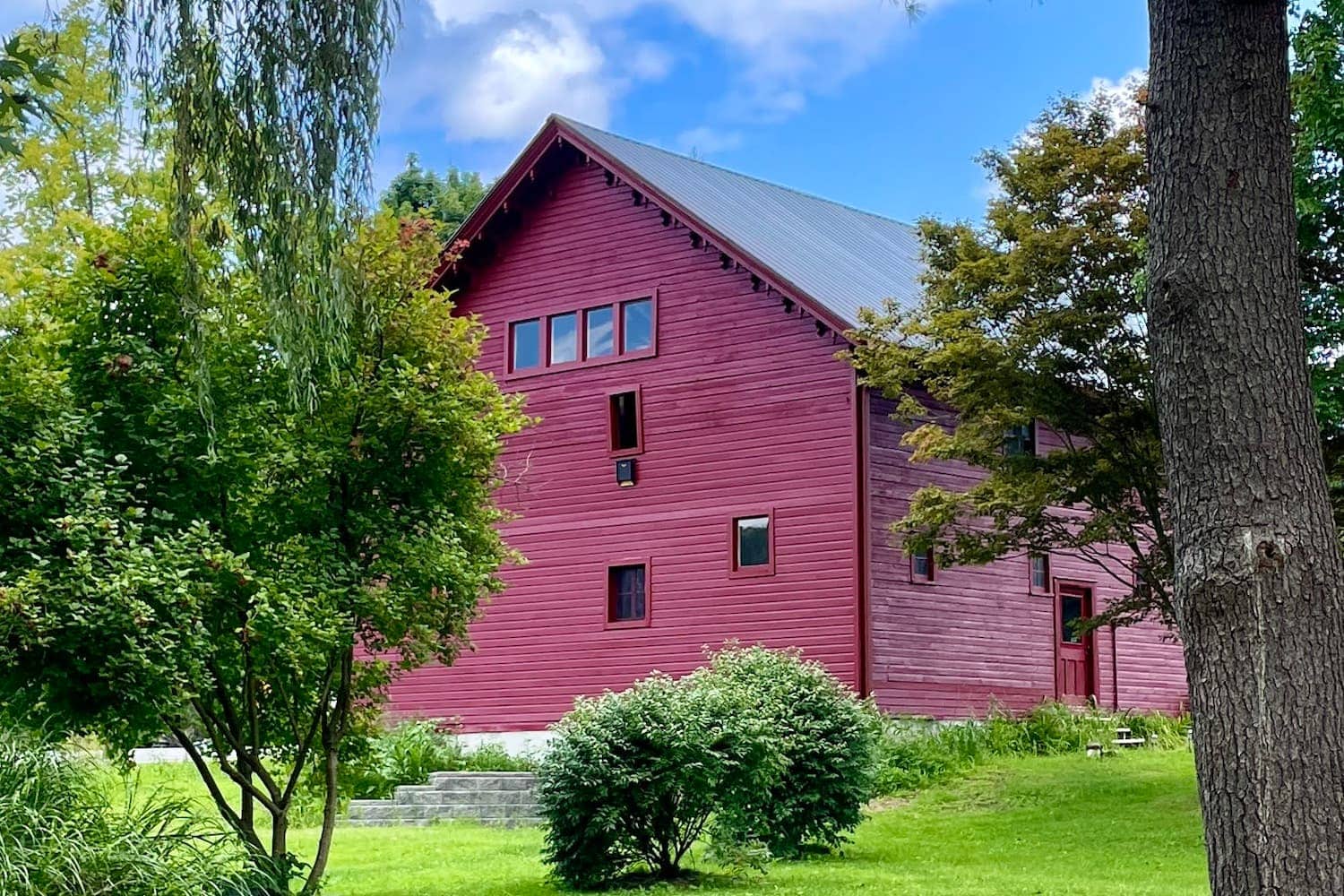
New York has more farmland than its notorious skyline suggests. The Hudson Valley has apple orchards and estates with Catskill views. The Finger Lakes are lined with vineyards. Western New York, near Buffalo, has working barns across open country. Most of this land is a short trip from a big city. That’s why so many people drive out for a day or a weekend.
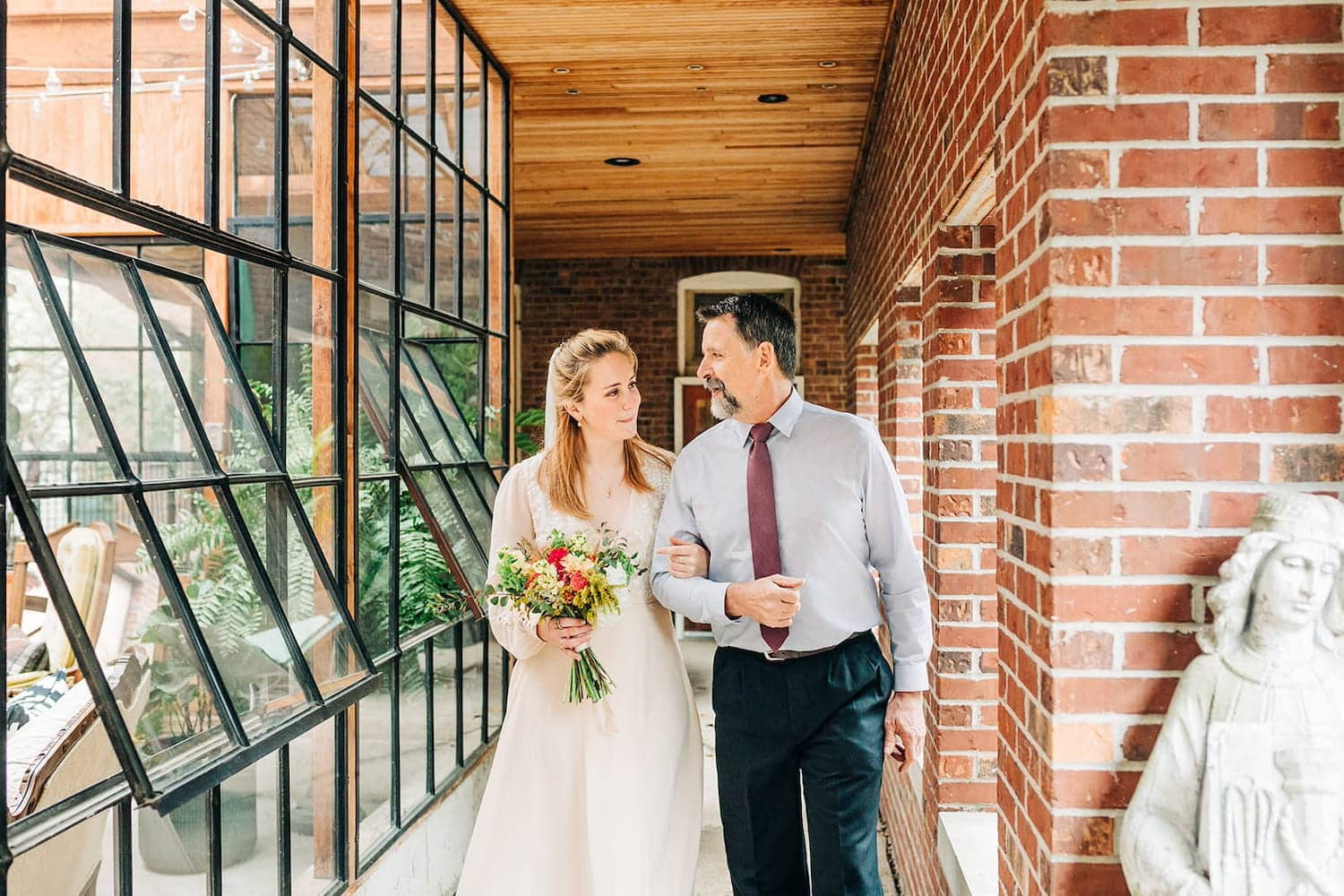
People rent farms for all kinds of reasons. Some want a relaxed weekend with friends. Others want to host a small wedding under the maples or shoot a brand campaign in the fields. Family reunions, dinners under the stars, and team offsites outside of the typical hotel conference room are common, too. Each of these needs something different, and not every booking platform handles all of them well.
This guide covers where Airbnb works for renting a New York farm, where it falls short, and how to find the right property for what you have in mind.
Can you use Airbnb to rent a farm in New York?
Quick answer: It depends on what you’re planning.
If you want a quiet, rural, overnight getaway, Airbnb works. If you want to use the farm for an event like a wedding, brand shoot, family reunion, or corporate retreat, Airbnb gets risky fast.
Airbnb bans parties at every listing in the world. The rule covers any “disruptive gathering,” and it’s enforced by anti-party technology that reads signals on each booking. Even small farm events can get caught.
“I understand they don’t want people to throw parties, but I don’t know why I was flagged as a party risk.” — Reddit user, r/AirBnB thread “Your reservation couldn’t be completed. Can anything be done?”
New York adds its own layer on top. Hosting weddings and public events in farms counts as agritourism, which usually needs a special use permit from the town planning board. A regular farmhouse listed on Airbnb seldom carries that permit, which means a town can still shut down your event.

Where Airbnb falls short
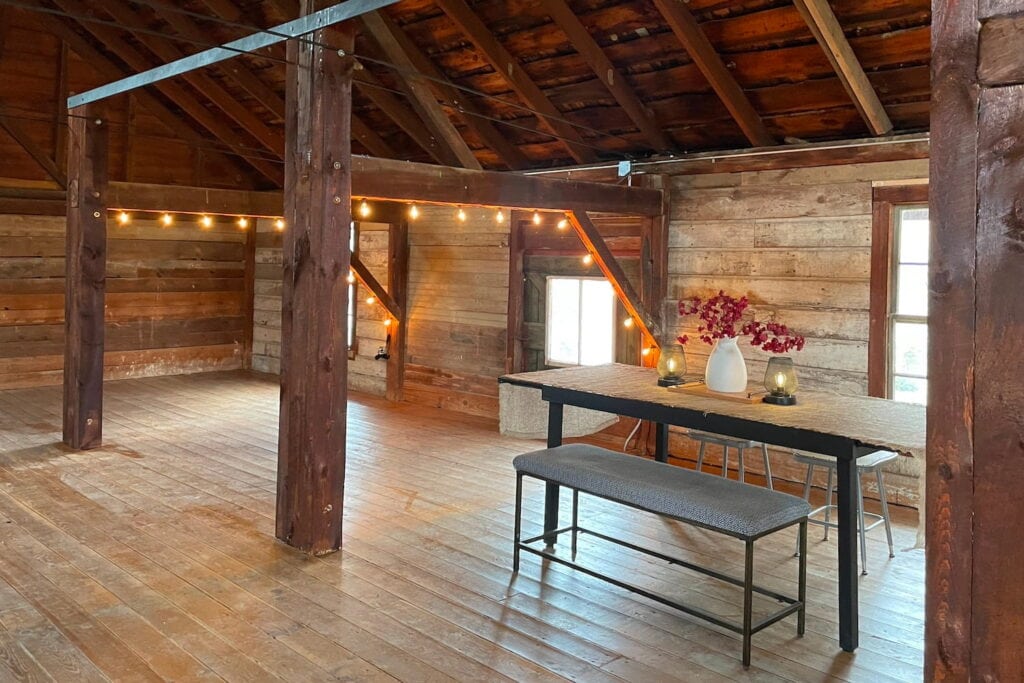
Airbnb is built for overnight stays, not event-use bookings or gatherings. For a New York farm event, that mismatch shows up in specific ways.
You can only book by the night
Airbnb charges by the night, so the booking is a full 24 hours for a farm event that may only last a few hours.
Also, most New York farm Airbnbs in popular rural areas (the Hudson Valley during fall foliage season, the Finger Lakes during harvest) also have two-night minimums on weekends.
That means paying for two full nights when you only need it for an afternoon. And the booking can still get blocked by Airbnb’s anti-party screening before or after it’s confirmed.
Some farms aren’t licensed for gatherings
New York protects working farms in certified agricultural districts, but each town decides which properties can host events and which can’t. For instance, the Town of Clarkstown in Rockland County passed an agritourism law that limits which farms can run events based on acreage and road access.
A residential farmhouse listed on Airbnb usually isn’t a registered farm, which means the host’s confirmation doesn’t necessarily give the property legal authority to host your wedding, retreat, or shoot.
The county can step in even after you’ve booked, and the people most exposed are the guests who already paid for the venue.
Your booking offers no real guarantee
Airbnb hosts can cancel the booking anytime, since the platform gives them freedom to do so for any reason.
“Airbnb gives its property owners a LOT of freedom to cancel on guests, so realize that a property owner can say yes right now, but then decide at any time that they don’t want to rent to you.” — Laura, Wedding Wire thread “Airbnb Wedding?“
For a quiet stay, that’s a headache for one or two people. For a farm event, a cancellation hits everyone tied to the date: the guests who already booked flights and hotel rooms, the vendors who blocked off the day, and the couple or team who built the whole event around that one property.
One person makes the booking, but the fallout lands on the entire guest list.
Commercial shoots need permission
New York’s rural landscapes are a magnet for film, TV, and brand work. Farms are a big part of that draw. From feature films like Materialists to runway fashion shows, New York farms draw a wide swath of brands for shooting and hosting.
The problem is, Airbnb has tight rules for shooting brand campaigns or lifestyle editorial on their properties, as outlined on their website: “Guests should not participate in film or photography that is intended for commercial use or profit, without documented permission from the host.”
A regular farmhouse listing doesn’t come with that permission. A farm that lists itself for events often does, and the host expects the crew, the gear, and the schedule.
“They instant booked and informed me that they are making a film and wanted to stay one night not the required two. Using airbnb as a platform to rent a film location is completely unethical. No permits, no insurance. No production fee. We are lambing right now on our farm and have six very vigilant livestock guardian dogs protecting the property. The film crew would create stress for the ewes trying to give birth and for the dogs trying to protect them. I called airbnb and asked them to cancel the guest and to tell them why so it sends a message to the guest that he can’t use airbnb as a platform for booking a film location. — Stonesthistle, Airbnb Host Forum thread “‘Guest’ instant booked our farm to make a film”
A working farm has animals, neighbors, and a daily rhythm a film crew can upend, so a host who never agreed to a shoot has every reason to cancel on the spot. A farm that already lists itself for productions takes that risk off the table.
How to find a New York farm for your event
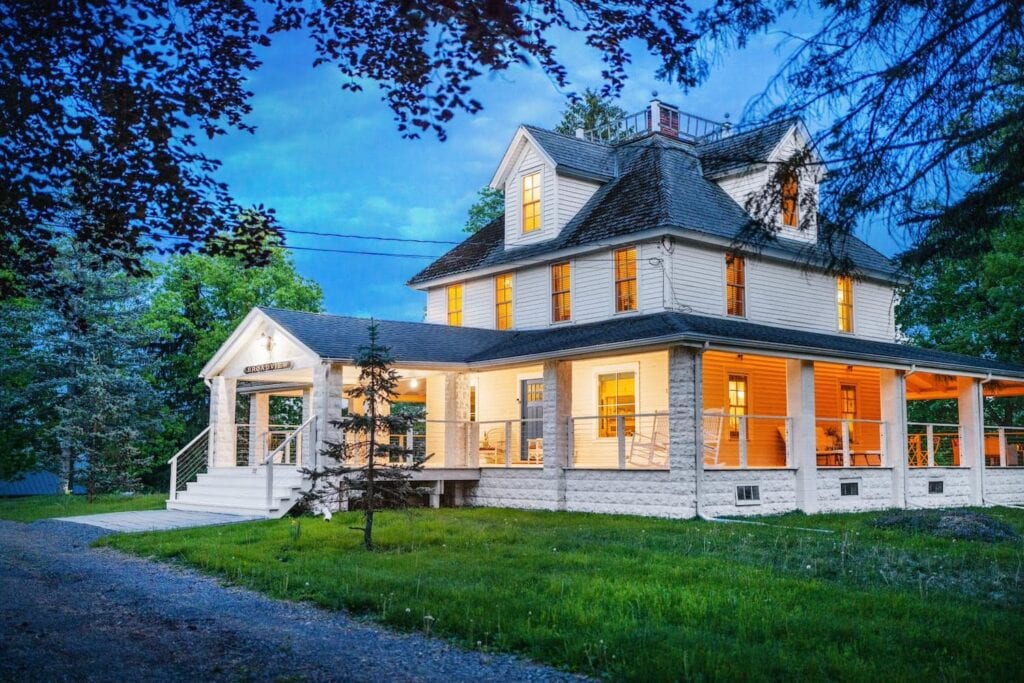
New York’s farm country isn’t all the same. The region you pick shapes the look, the logistics, and the price. The right region depends on what you’re hosting.
Pick the New York farm region that fits
Each region attracts a different kind of event.
Hudson and Columbia County
Farm wedding venues in Hudson cover the rolling pasture and restored barns spread across Columbia County, with Catskill views in the background. Outdoor spaces nearby handle ceremonies on the lawn and brand shoots among the rows. Best for fall weddings under the foliage, harvest-season family reunions, and shoots that want real farmland.
The Catskills and Sullivan County
Farm venues in Eldred anchor the Sullivan County side of the Catskills, with more farm fields around Mongaup Valley and Woodridge. Mountain farms, animal sanctuaries, and rustic barns set the tone, and barn spaces around Kingston cover the Ulster County side. Best for relaxed weddings, foraging workshops, and reunions that prefer cool mountain air.
New York City green pockets
Farm-style wedding venues around the city cover the garden estates, rooftop greenery, and barn-adjacent terraces the metro area still has. Outdoor event spaces in New York offer gathering spaces for those who want a country feel without the two-hour drive. Best for shorter, farm-like events and city couples who can’t travel far.
Buffalo and Western New York
Barn venues near Buffalo cover the working farms and rural acreage spread across the western edge of the state. Rates run lower than the Hudson Valley, which helps when the budget has to cover catering, tents, and lodging, too. Best for larger weddings, family reunions, and team off-sites on a tighter budget.
Rochester and the Finger Lakes edge
Barns around Rochester sit near the northern edge of Finger Lakes wine country, where vineyards and lakeside farms shape the day. Best for smaller weddings, vineyard shoots, and harvest gatherings in late summer and fall.
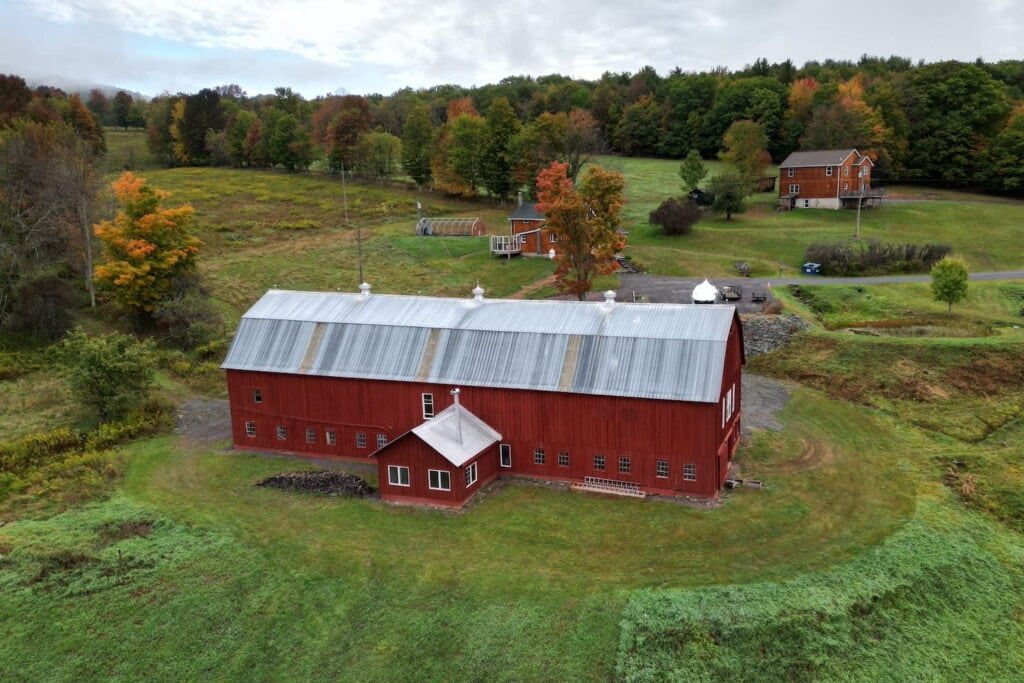
New York farm styles to consider
New York’s mix of Hudson Valley estates, Catskill mountain farms, Finger Lakes vineyards, and Western New York pasture gives you more options than a regular event hall.
- Outdoor wedding venues with pasture or orchard backdrops (Hudson Valley)
- Rustic event spaces with weathered-wood character (statewide)
- Photo-shoot locations for brand and lifestyle work (Hudson Valley)
- Mansions and estates with grounds for full-property takeovers (Hudson, Columbia County)
- Garden venues for seated outdoor ceremonies (Hudson Valley)
These are just starting points. Across New York, you’ll find farm venues ready for events at every price point and size.
Confirm capacity, parking, and weather backup
Rural New York farms need things most city venues don’t have to think about. Before you book, ask about specifics:
- Standing vs. seated capacity (a farm tent seats differently than an indoor barn)
- Parking for 10+ cars (farms with long gravel driveways can bottleneck fast)
- Weather backup (Hudson Valley spring rain and summer thunderstorms hit hard)
- Restrooms (working farms may not have enough)
- Sound limits and end times (rural neighbors enforce these rules)
“Gail was a wonderful and kind host and made us feel welcomed as we hosted our wedding. The space comfortably held our 50 guests, and everyone enjoyed interacting with the farm’s therapy animals. Gail gave us clear explanations for all of our needs. The barn space had an abundance of outlets, and there was ample parking available. We had a perfect wedding, and we would highly recommend this space…” — Nate R., Hudson Barn Wedding Venue Peerspace review
Standing and seated capacity are usually different. Ask the host what makes sense for your specific group. A higher hourly rate with everything included usually beats a cheaper space where extras pile up.
Tap into New York farm know-how
New York’s farm-event scene runs deep, and a lot of the vendors already work with our hosts. From lifestyle to event photographers in NYC, the talent pool is large, and many of them know the farms in their region by name.
“Oakholm Farm Estate is a beautiful location. As a photographer, I am always looking for new places to visit with my clients. There is an abundance of gorgeous locations on the property. Christina was lovely and easy to communicate with when it came to setting up a schedule…” — Sarah F., Farm Wedding Venue Peerspace review
A Hudson Valley orchard owner has a short list of caterers to recommend. A Catskills farm host knows which photographers shoot the mountain light well. When you message a host before booking, ask which vendors they recommend. Their short list beats scrolling through a search engine, especially when you’re planning from the city.
Plan the drive and the timing
New York is bigger than it looks, so plan the drive. From New York City, the Hudson Valley (Hudson, Columbia County) and the Catskills (Kingston, Ulster County) are both about two hours north. The Finger Lakes around Rochester run five to six hours, and Western New York around Buffalo is about six-and-a-half hours, or a short flight.
Cell service can drop in the deep-rural Catskills and the Finger Lakes back roads. Sunset timing matters for outdoor ceremonies, since November sunsets in upstate New York land near 4:30 p.m. Fall foliage weekends in October pull heavy traffic onto the Taconic and the Thruway, so message guests to make extra time if needed.
How much does it cost to rent a farm in New York?
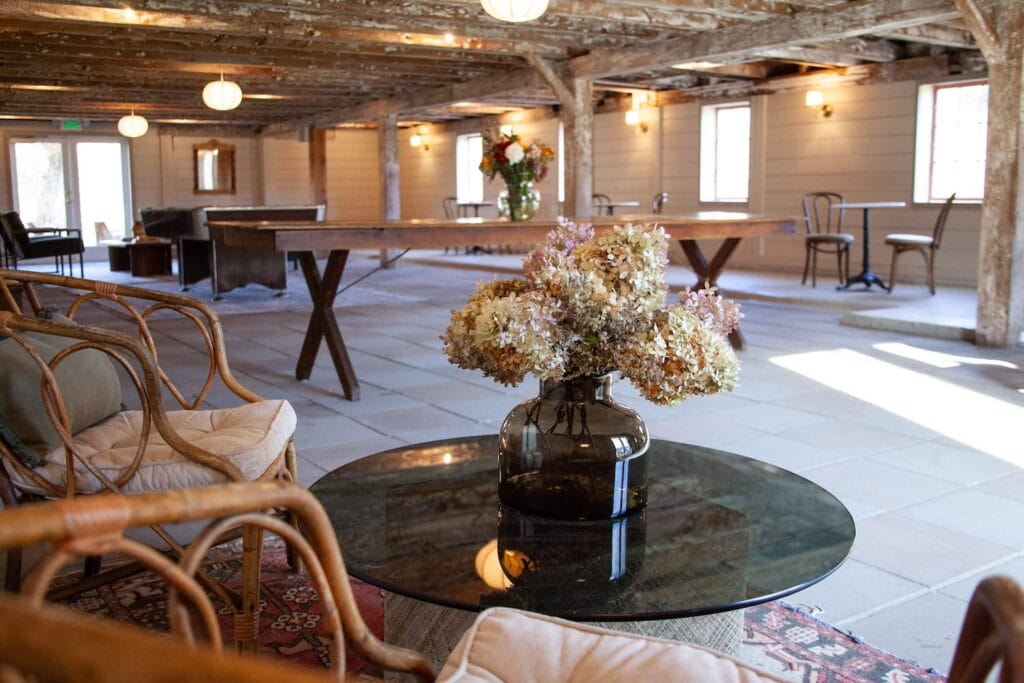
According to our booking data, farm wedding average $304 per hour nationally. That number covers a mix of restored barns, working farms and full-estate takeovers in different regions. Where you book matters a lot.
Farm wedding rates per hour vary widely across New York:
- Hopewell Junction: Average $90/hour
- Brooklyn: Average $188/hour
- New York City: Average $232/hour
- Woodridge: Average $260/hour
- Pine Bush: Average $328/hour
The spread runs more than 3x from the cheapest market (Hopewell Junction) to the priciest (Pine Bush). Farm spaces near Yonkers run cheaper. Demand from city couples pushes Hudson Valley and Hamptons rates up. If your date is flexible, weekday and off-season bookings cost less. Barn rentals upstate near Buffalo and Rochester run lower still, which helps when the budget also has to cover catering and lodging.
Group size drives the price
Headcount changes the price too. A 15-person farm-to-table dinner at a Catskills farm costs far less than a 70-person wedding in a Hudson Valley orchard.
Based on our booking data, most Pine Bush farm bookings host around 54 guests over multi-hour windows. That’s on the larger end for this kind of event.
Cutting your guest list from 70 to 30 opens up more farms at lower rates. For smaller groups, a micro-wedding venue usually has nicer finishes and more host attention than a big farm built for 100.
Setup, cleanup, and weather buffer count too
Hourly bookings cover the whole time you have the space, not just when guests are there.
For a New York farm event, plan in three parts:
- Setup (1 to 2 hours): Unloading rentals, arranging seating, vendors loading in
- The event (4 to 8 hours): Ceremony, dinner, shoot, dancing, whatever you came for
- Cleanup (1 to 2 hours): Breakdown, packing rentals, restoring the space
Planning buffer time ahead helps you avoid overtime fees when a Hudson Valley afternoon thunderstorm pushes the schedule.
How Peerspace works better for a New York farm event
Airbnb is built for sleeping. We’re built for events. You book hours on farms designed for what you’re using them for: a focused window for a ceremony, dinner, shoot, retreat, or workshop. In a state where towns draw a hard line between regular farmhouses and licensed agritourism sites, that difference matters.
Hosts expect events
Our hosts in New York list their farms specifically for gatherings, including weddings, outdoor photoshoots, retreats, and corporate off-sites. They expect groups, vendors, and music. That’s the whole point.
“We got married at Mallorybrook Farm this Saturday and the property is absolutely magical. The view from the deck overlooking the catskills mountains is just breathtaking. Deana is the sweetest person we have ever met.” — Rinny C., Pine Bush Farm Wedding Venue Peerspace review
In Pine Bush alone, our hosts have welcomed more than 15,000 guests to their farm wedding venues with a 5.0-star average and a 100% rebook rate. Those numbers come from hosts who actually understand how farm events unfold.
Hourly booking and clear pricing
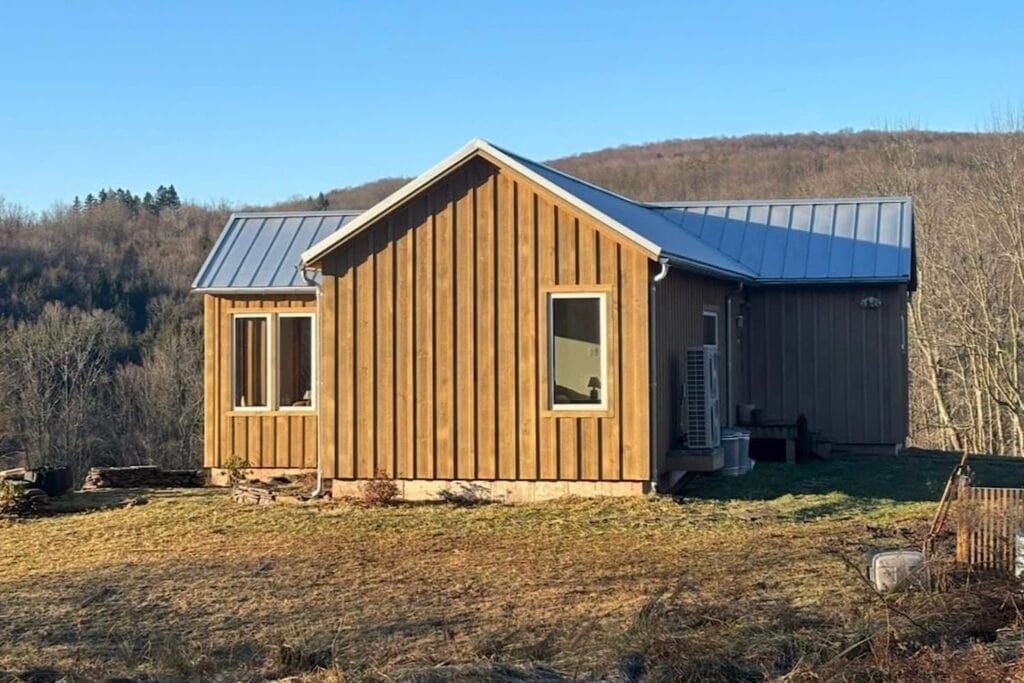
Our hourly pricing model means when you book, you pay for the hours you use: the hourly rate plus any cleaning fee or extras the host has set, all shown before you book. Also often in the pricing are included amenities you won’t find in a platform not built for events.
“This venue was everything we dreamed our wedding would be. It had every amenity we could have wanted, even down to farm-fresh eggs in the morning. The dock and lake made a stunning backdrop for our photos against the changing colors of the leaves and the campfire.” — Cassie F., Farm Wedding Venue Peerspace review
See the farm before you book
Our hosts can set up a visit before you book. You walk the farm, review the parking, see the rain plan, and figure out where the rentals will load in. All before paying anything.
Airbnb doesn’t work this way. Their policy tells hosts to say no when guests ask to see the place first: “If someone asks to visit your place prior to booking, let them know it’s not possible.”
For a farm event with vendors counting on a clear setup, it’s a lot to commit to without ever seeing the property. A quick walkthrough is the easiest way to know if a farm really fits your day.
Hosts who know farm logistics
A good farm host comes with connections: caterers who know the kitchen, photographers who know the light, rental companies who’ve delivered down the same country road before. That network saves a lot of cold outreach when you’re planning from out of town.
“I have been to the farm twice already, both times for a photo shoot and we couldn’t have asked for better hospitality. The ground keeper was super attentive and the owner was really quick with her response to any of our questions…” — Jean P., Barn Wedding Venue Peerspace review
That kind of responsiveness is the opposite of an algorithm deciding your booking looks like a party. When a host answers fast and knows the property cold, the day comes together instead of falling apart three days out.
Event-friendly tools built in
We built our platform around events. Our filters let you narrow down by what actually matters for a farm event: kitchen access, outdoor space, parking, sound systems, AV, and weather backup.
“A super easy way to find/rent space in any location. An easy booking process and transparency on all costs/add-ons makes event planning/budgeting a breeze.” — Josephine Haft., Trustpilot Review
Once you book, our invites tool lets you share one link with the whole group (address, time, parking, what to bring) so the group chat can stick to outfit pics instead of, “Wait, where is the farm again?”
How to find a New York farm on Peerspace
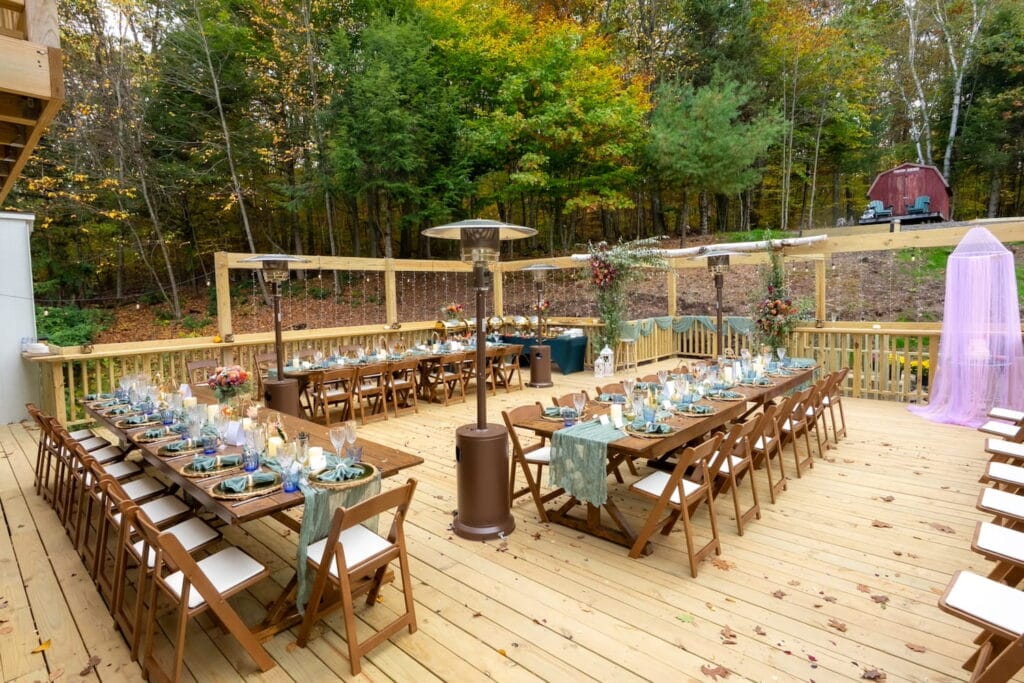
Here’s how to find and book a farm on Peerspace for your event in New York:
1. Open the website or app.
Go to Peerspace.com or download the app (Apple App Store | Google Play Store).
2. Search by location and use case.
- Type “Hudson,” “Brooklyn,” “Buffalo,” or your specific New York city
- Type what you’re hosting/looking for. “Farm wedding,” “barn,” “brand shoot,” “farm-to-table,” or just “farm” will all return relevant venues
3. Filter by group size, date, and budget.
- Guests: Be honest with the count. A space for 25 will feel cramped with 40.
- When: Check if it’s free for your specific window, including setup and cleanup.
- Price: Set a range that works for your full event budget.
4. Use filters to narrow it down.
- Space type: Barn, farm, garden, mansion, photo studio
- What’s included: Kitchen, outside alcohol, speakers, tables/chairs, parking
- Outdoor: Pasture, orchard, garden, terrace, pavilion
- Style: Rustic, modern, vintage, bright, country
5. Read reviews from similar events.
Scroll through reviews looking for farm weddings, brand shoots, or family reunions. These tell you how the farm actually works on the day, not just how it looks in photos.
6. Message the host before booking
A quick message helps you check the details. Questions worth asking on a New York farm:
- “We’re planning a [wedding/shoot/reunion/off-site] for [X] guests on [date]. Is your farm a good fit?”
- “What’s the parking layout? How many cars can fit?”
- “What’s your weather backup plan?”
- “Any restrictions on outside catering or BYOB?”
- “What’s the load-in road like for vendors?”
7. Book and confirm.
Once you’ve found the right farm, book through the platform. Before your event:
- Confirm arrival time and how to get in.
- Send your guests the invite with all the details.
- Reach out to the host with any last-minute questions.
Find your New York farm
New York earns its spot on the farm-event map by giving groups several different rural backdrops in one state: a Hudson Valley orchard ceremony where the maples frame the vows, a Catskills barn reception with the mountains as a backdrop, a Finger Lakes vineyard brand shoot at harvest, and a Western New York pasture reunion with room for every cousin.
An Airbnb farmhouse works for sleeping. For an event on a farm where the host expects groups, the permit is on file, and the parking actually fits your guest list, anything is possible.
In this article
Get together somewhere better
Book thousands of unique spaces directly from local hosts.
Explore SpacesShare your space and start earning
Join thousands of hosts renting their space for meetings, events, and photo shoots.
List Your Space