What’s Like Airbnb for a Recording Studio in Los Angeles? (2026)
-

Content Marketing Manager -

Lead Editor & Publisher
- February 14, 2026
- 11 min read
- Events
Source: Peerspace
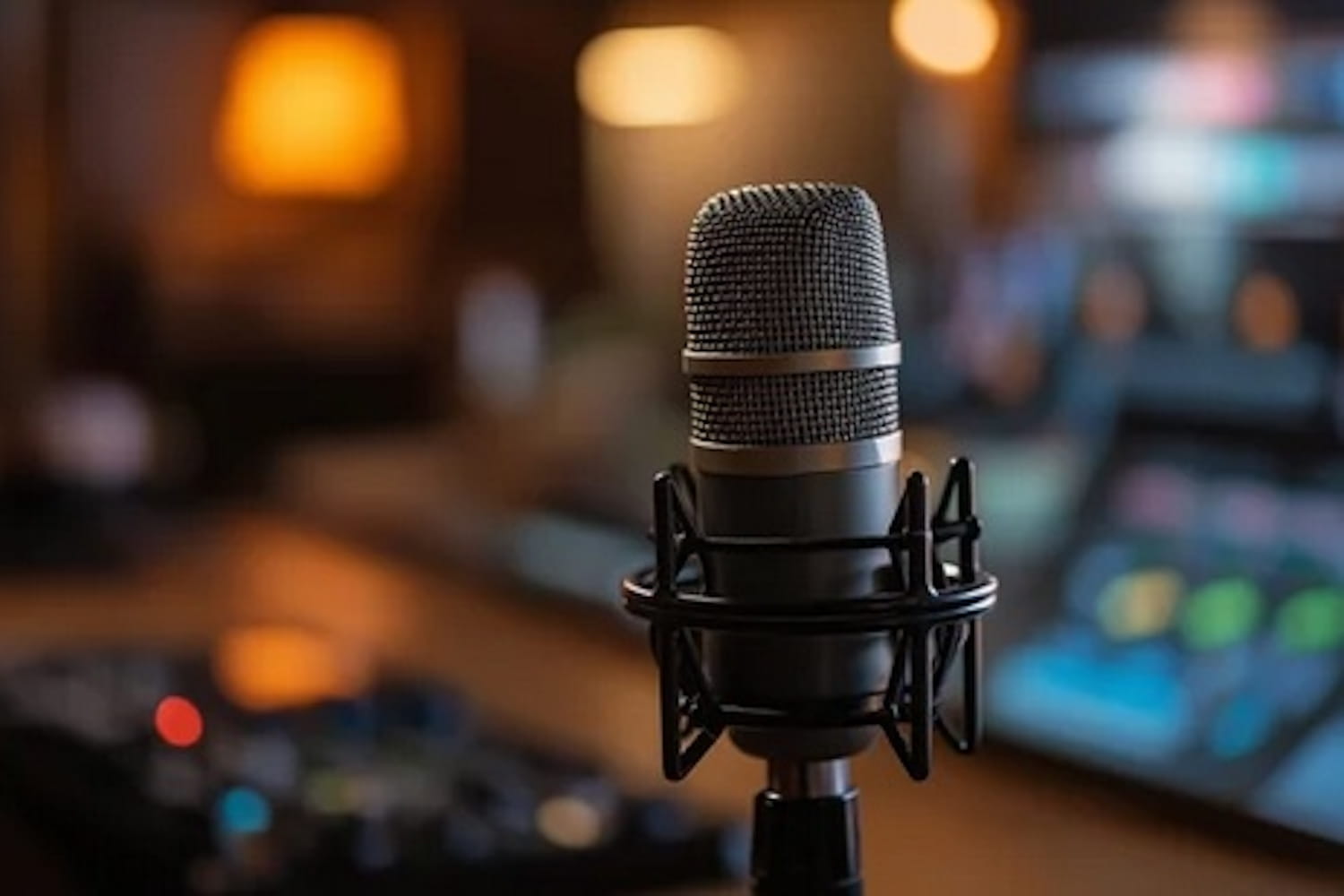
Quick Answer: Peerspace is the closest thing to an Airbnb if you’re looking for a recording studios in the LA area. It lets you book acoustically treated, gear-equipped studios by the hour—with no party-ban restrictions or overnight pricing.
You’ve got a track ready to lay down, a vision for your sound, and a tight budget—but when you search “Airbnb recording studio Los Angeles,” you’re met with overnight rental spaces that weren’t designed for production work. Airbnb banned all parties in 2020, making the ban permanent in 2022 for all spaces worldwide. Recording sessions with multiple collaborators fall squarely into restricted territory, so your reservation could be flagged or canceled mid-session.
Peerspace works like an Airbnb for recording studios—a marketplace of production-ready spaces where you can rent a recording studio in Los Angeles by the hour, many with isolation booths, pro-grade interfaces, and hosts who know professional gear inside and out. This guide breaks down how to find, vet, and book the right LA recording studio without home-based rental headaches or traditional studio gatekeeping.
Can you use Airbnb for a recording studio in Los Angeles?
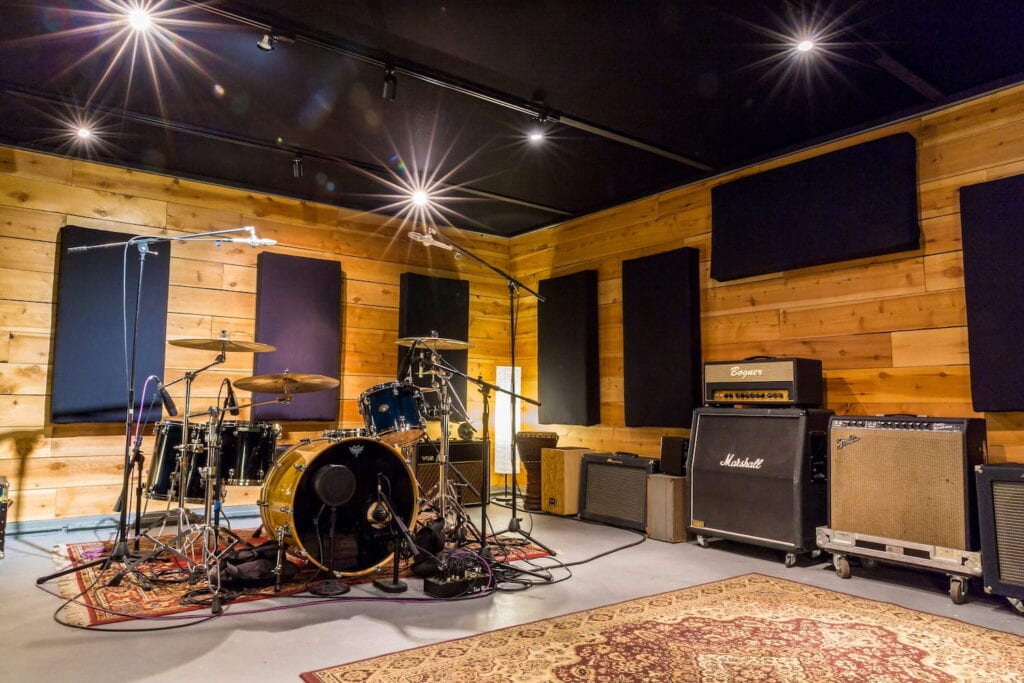
The short answer: it’s not a reliable option. Airbnb explicitly prohibits commercial activities and disruptive gatherings under its party ban policy—and recording sessions with producers, engineers, and featured artists qualify.
Disruptive gatherings are prohibited regardless of size. Airbnb’s Community Disturbance Policy bans disruptive parties, open-invite gatherings, and other community disturbances during stays or Experiences.
And, enforcement is getting stricter. Airbnb is activating heightened anti-party technology as part of their investment in upholding the global ban. In five years since introducing this policy, they’ve seen an over 50% decrease in the global rate of party reports.
Airbnb spaces are optimized for sleeping, not sound isolation. You’re paying overnight rates for spaces without acoustic treatment, proper electrical capacity, or commercial liability coverage.

Where Airbnb falls short for recording studio rentals in LA
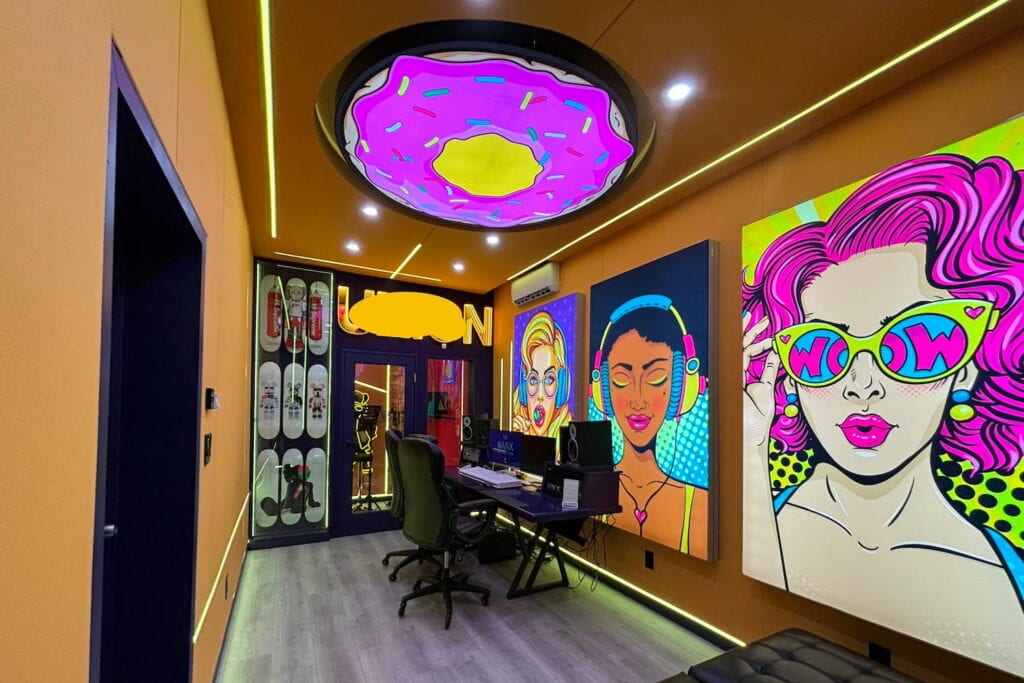
Airbnb’s blanket event restriction means any session involving your producer, engineer, featured artist, or even a small crew technically violates their terms. Recording is inherently collaborative—you can’t create professional music in isolation.
Guests who violate the Airbnb party policy face consequences including account suspension, removal from the platform, and legal action. Imagine booking a Silver Lake Airbnb for a weekend tracking session with your band, only to have the host receive a noise complaint on day one. The reservation gets canceled, you lose your deposit, and you’re paying rush fees at a traditional studio to meet your release deadline.
Home-based spaces lack pro-level acoustic treatment
Airbnb spaces showcase hardwood floors, exposed brick, and floor-to-ceiling windows—all nightmare acoustics for recording. Untreated rooms produce flutter echoes, standing waves, and frequency buildup that make mixing impossible. You’ll spend hours in post trying to salvage muddy recordings, or need to re-track everything at a proper studio.
Studios invest tens of thousands of dollars in bass traps, diffusers, and acoustic panels strategically placed based on room dimensions. That “vibey loft” with concrete floors might look Instagram-ready, but it’ll make your vocals sound like you’re recording in a parking garage.
Overnight pricing wastes money on hours you won’t use
Airbnb charges per night—$150–$400 in LA—meaning you’re paying for 24 hours when you may only need 4–6 hours of actual recording time. A $300/night Airbnb looks affordable until you realize your effective hourly rate is $50/hour for a space without pro-level gear or acoustics.
Most tracking sessions run 4–8 hours. Mixing and mastering sessions rarely exceed six. Paying for overnight access when you need afternoon hours is like buying a whole pizza when you want two slices.
Residential noise restrictions kill late-night creativity
Creative energy doesn’t follow a 9-to-5 schedule. Under the Los Angeles noise ordinance (LAMC §112.01), loud noises should be kept to a minimum between 9 p.m. and 7 a.m. Late-night sessions—when many artists feel most inspired—become impossible in residential zones.
Even daytime recording can trigger complaints in dense neighborhoods like Echo Park or West Hollywood. Apartment buildings with shared walls aren’t exactly a recipe for clean recordings. Domestic spaces simply can’t guarantee uninterrupted creative time.
How to find a venue for recording in LA
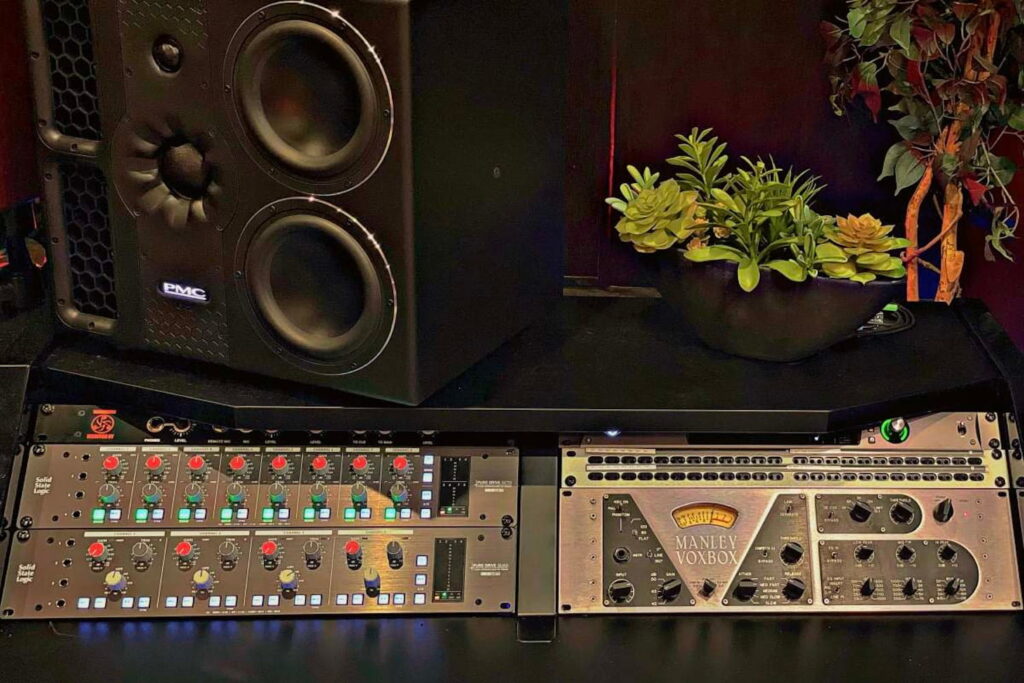
Verify acoustic treatment before booking anything
Acoustic treatment is non-negotiable for production-caliber sound. Without it, you’re recording in a glorified bedroom, regardless of what gear is present. Proper treatment includes bass traps in corners (where low-frequency buildup occurs), diffusers on parallel walls (to prevent flutter echo), and absorption panels at reflection points.
Ask hosts for photos showing acoustic panels, not just gear. Request a brief audio sample recorded in the space—a simple voice memo reveals room tone immediately. If the host can’t provide this, they’re not running a real studio.
Confirm electrical capacity and gear availability
Professional recording equipment draws significant power, and residential electrical systems weren’t designed for consoles, multiple monitors, and rack-mounted processors running simultaneously. Blowing a circuit mid-session doesn’t just interrupt your workflow—it can damage equipment and corrupt unsaved project files.
Before booking, send the host a list of your gear and ask if the electrical system can handle the combined load. If they can’t answer confidently, find another space.
Evaluate the host’s production experience
A host who’s actually recorded music understands session flow, troubleshooting, and the difference between a “good take” and a “usable take.” Hosts with production backgrounds can offer technical support, suggest mic placement, and troubleshoot signal flow issues.
Check the host’s profile for production experience, client testimonials mentioning specific projects, or links to work recorded in their space. Ask directly: “What’s the most recent project recorded here, and can I hear it?” Legitimate studio hosts will proudly share their work.
Assess neighborhood logistics and parking
LA traffic can add 45–90 minutes to any trip, and many recording sessions involve transporting gear, collaborators, or instruments. Downtown Los Angeles, North Hollywood, and Hollywood are popular locations with famous studios and creative energy. North Hollywood and Burbank offer the best studio-to-freeway access with abundant free parking. Silver Lake and Echo Park are also great options, but parking is typically more tough to find.
Confirm commercial use permissions
If you’re recording music for commercial release—streaming, licensing, sales—you’re conducting business. Spaces without proper commercial permissions or liability insurance put you at legal and financial risk.
Ask explicitly: “Is this space zoned and insured for commercial recording?” Request proof of liability insurance covering client activities. If the host hesitates or says, “it’s fine, don’t worry,” that’s a red flag. Commercial recording requires commercial insurance and proper zoning—no exceptions worth risking.
How much does it cost to rent a recording studio in LA?
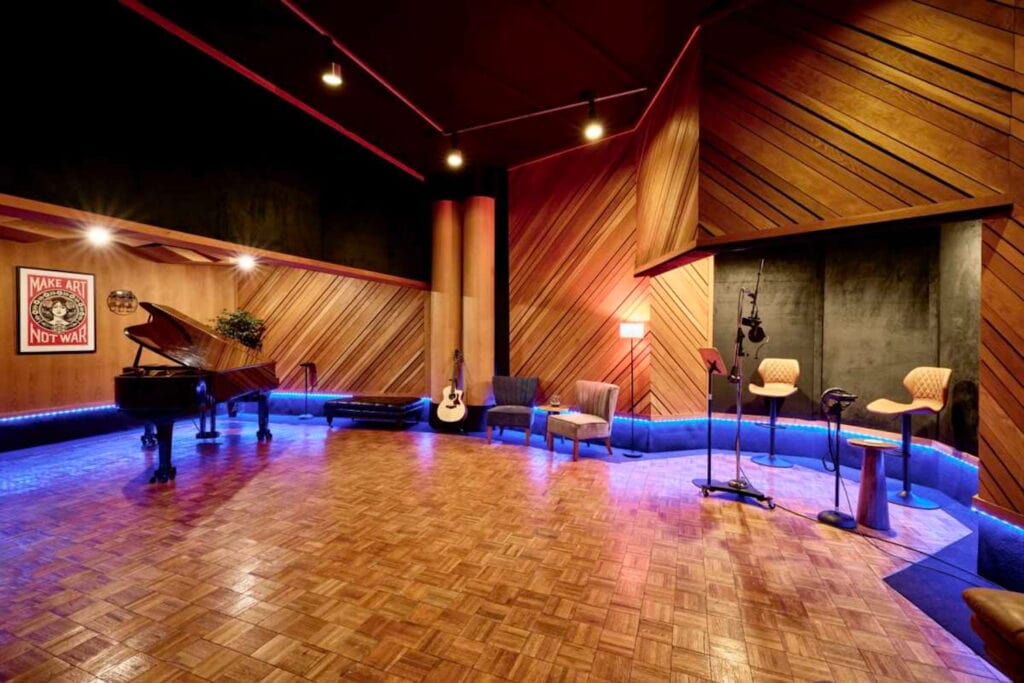
Recording studios in Los Angeles average $108 per hour to rent, though rates vary widely. The average cost of studio time in Los Angeles ranges from $35 to $150 per hour, depending on the studio and whether a sound engineer is included.
Studio tier and equipment quality affect pricing
Match your project to the right tier:
- Entry-level ($35–$75/hour): Basic interfaces, condenser mics, and treated rooms suitable for demos, podcasts, or songwriting
- Mid-tier ($75–$125/hour): Pro-grade preamps, multiple mic options, and proper monitoring environments
- High-end ($125–$200+/hour): SSL or Neve consoles, vintage outboard gear, and acoustically optimized rooms
A podcast doesn’t need a $150/hour SSL room, but a major-label single shouldn’t be tracked in a $50/hour bedroom setup. Calculate total project cost, not just hourly rate—a higher-quality studio that delivers better raw recordings often costs less than a cheaper space requiring extensive post-production fixes.
Neighborhood location can significantly impact pricing
If you’re considering renting a professional studio, the three main areas are Hollywood, Burbank, and Santa Monica. Hollywood and Santa Monica offer wide selections of both established studios and smaller spaces. Burbank is the more affordable option, with great rates on services and equipment rentals.
Session length and off-peak timing stretch your budget
Most studios offer hourly minimums (2–4 hours) and discounted rates for full-day bookings. For larger projects, booking a six or 12-hour block is the most cost-effective way to maximize your time. Studios often offer reduced rates for weekday daytime sessions—ask about off-peak rates explicitly, as many studios don’t advertise these discounts, but offer them to fill empty calendar slots.
How Peerspace compares to Airbnb for recording studio rentals in LA
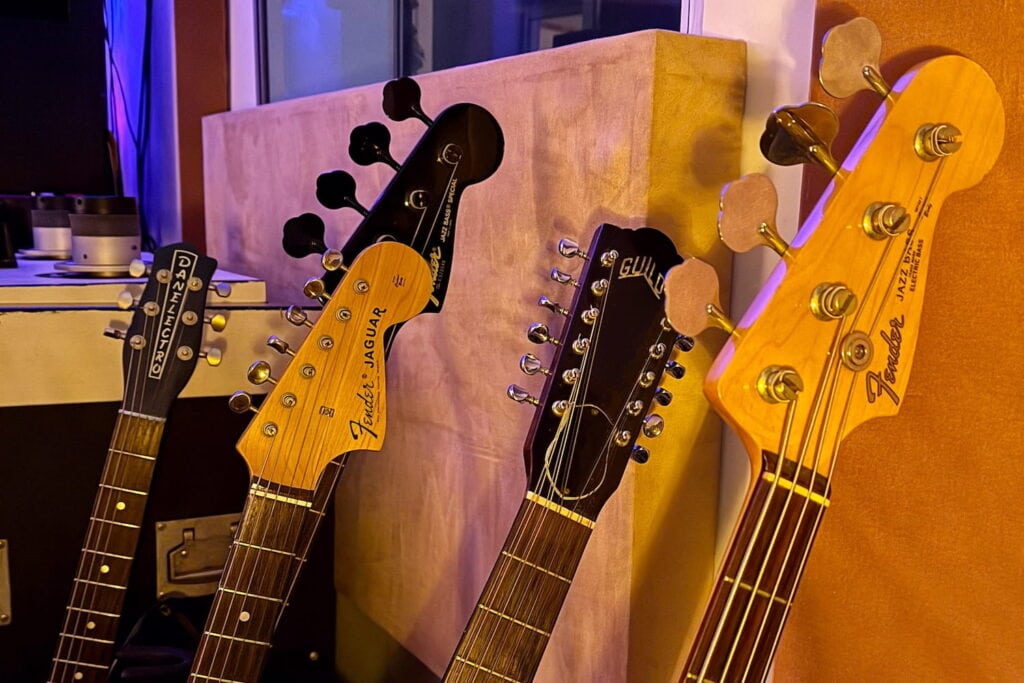
Peerspace addresses each shortcoming with purpose-built studios, hourly booking, commercial-use permissions, and transparent pricing.
Hourly booking eliminates paying for unused time
Peerspace operates on an hourly model designed for production work—you pay only for the 4–8 hours you’re actually recording instead of Airbnb’s 24-hour overnight blocks. Most recording studios are scheduled for 7 hours, with 11 people in attendance. The most popular start times fall between 12 p.m. and 1 p.m. Hourly booking makes professional studios accessible to independent artists who can’t justify overnight rates.
Spaces are purpose-built for recording
Most Peerspace recording studios are designed for audio production—featuring acoustic treatment, professional interfaces, quality microphones, and monitoring systems.
Filter by your equipment needs and verify a space has exactly what your project requires before booking.
Commercial use is explicitly welcomed
Peerspace hosts understand and encourage commercial recording, mixing, and production work—it’s one of our core purposes. Bring your full team without worrying about occupancy limits or event restrictions. Run sessions late without residential noise complaints. You’re conducting legitimate business in a space designed for exactly that, with hosts who carry appropriate coverage.
Transparent pricing and host expertise
Peerspace venues clearly state what’s included in the hourly rate: specific microphones, interfaces, monitors, instruments, and amenities like parking and WiFi. You can accurately budget your total session cost without surprise equipment rental fees or hidden cleaning charges.
Many Peerspace studio hosts are working audio professionals who can troubleshoot technical issues. You’re not just renting a room; you’re accessing their production knowledge. Peerspace’s local hosts have welcomed 48,299 people into their recording studios with reviews averaging 4.9 stars.
How to find a recording studio on Peerspace in LA
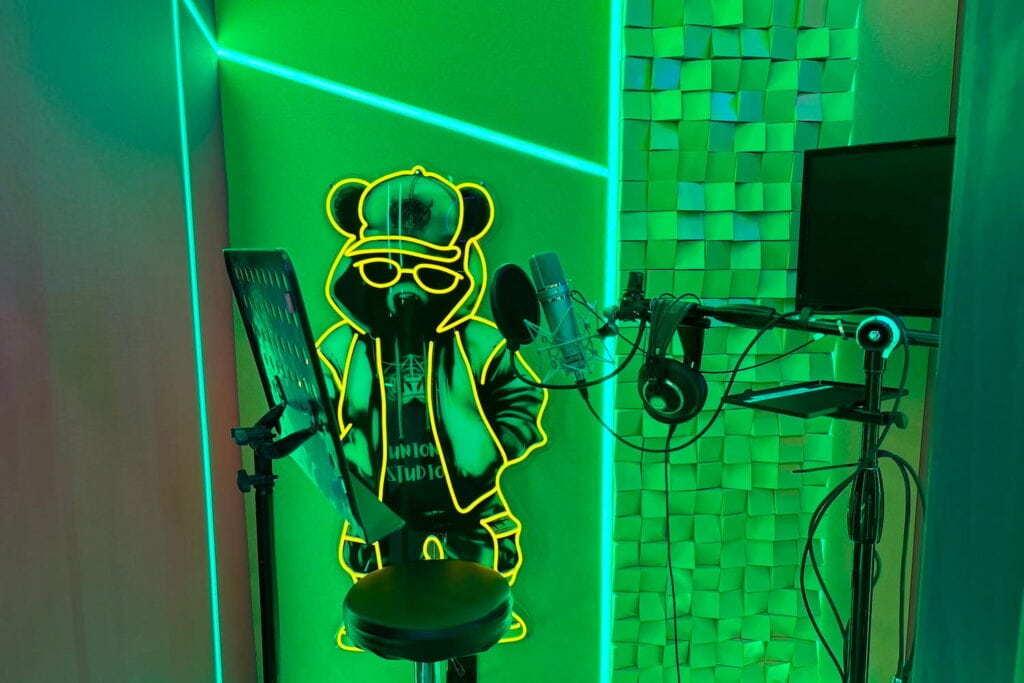
Follow these steps to find and book the right LA recording studio on Peerspace:
- Download the Peerspace app: (Apple App Store / Google Play Store) or visit peerspace.com on desktop for advanced filters.
- Enter “Los Angeles” in the location search: Select “Recording Studio” from the space type dropdown. Narrow by neighborhood (North Hollywood, Silver Lake, Downtown LA) to reduce travel time.
- Apply essential filters:
- Price range: Set your maximum hourly budget.
- Amenities: Filter by specific gear.
- Capacity: Ensure the space accommodates your full team.
- Availability: Select your preferred date and time.
- Use “Instant Book” for studios you can reserve immediately.
- Review spaces carefully:
- Read the full equipment list to verify everything you need.
- Check photos for visible acoustic treatment (foam panels, bass traps, diffusers).
- Look for host credentials in the “About the Host” section.
- Read recent reviews from other musicians, focusing on sound quality and host responsiveness.
- Studios with 20+ five-star reviews from verified music projects are safer bets than newly added spaces.
- Message the host with production-specific questions:
- “Can you confirm the studio has [specific mic] and [specific interface]?”
- “What’s the room’s noise floor, and is there external noise bleed?”
- “Do you offer technical support, or is it a dry hire?”
- “Can I bring my own engineer?”
- Book and confirm logistics: Select your exact hours (most studios have two-hour minimums), add optional services, and confirm parking instructions. Book 30 minutes longer than you think—setup and breakdown always take more time than expected.
- Arrive prepared: Bring all files, stems, and session notes organized. Have your signal flow planned. Communicate your creative vision clearly. The most successful sessions happen when artists arrive with clear goals and realistic expectations about what’s achievable in the booked time.
Book your LA recording studio and skip the Airbnb headaches
Finding a professional recording space in Los Angeles doesn’t require navigating Airbnb’s residential restrictions or paying overnight rates for hourly work. Here’s what to remember:
- Airbnb’s permanent party ban makes booking home-based spaces for recording sessions a real risk—your reservation, your money, and your session timeline are all on the line.
- Hourly booking models save money and match your actual creative workflow.
- Purpose-built studios with acoustic treatment, professional gear, and knowledgeable hosts produce better results than any domestic space—regardless of its Instagram aesthetic.
https://www.peerspace.com/venues/los-angeles–caReady to record? Find and book a recording space in LA on Peerspace and get back to what actually matters—making music that sounds exactly the way you hear it in your head.
In this article
- Can you use Airbnb for a recording studio in Los Angeles?
- Where Airbnb falls short for recording studio rentals in LA
- How to find a venue for recording in LA
- How much does it cost to rent a recording studio in LA?
- How Peerspace compares to Airbnb for recording studio rentals in LA
- How to find a recording studio on Peerspace in LA
- Book your LA recording studio and skip the Airbnb headaches
In this article
- Can you use Airbnb for a recording studio in Los Angeles?
- Where Airbnb falls short for recording studio rentals in LA
- How to find a venue for recording in LA
- How much does it cost to rent a recording studio in LA?
- How Peerspace compares to Airbnb for recording studio rentals in LA
- How to find a recording studio on Peerspace in LA
- Book your LA recording studio and skip the Airbnb headaches
Get together somewhere better
Book thousands of unique spaces directly from local hosts.
Explore SpacesShare your space and start earning
Join thousands of hosts renting their space for meetings, events, and photo shoots.
List Your Space