Information reflects the Peerspace and Tagvenue experiences as of October 2026.
Party planning today rarely looks like it used to. People expect more than cookie-cutter venues and rigid booking processes. They may want to split costs with their group, bring in extras like a mobile bar, photo backdrop, or dance floor, or pull an event together at the last minute. With the event world evolving, convenience and flexibility are increasingly important parts of choosing where to book, and it’s one of the biggest differences between Tagvenue and Peerspace.
Peerspace and Tagvenue both connect people with spaces to people booking spaces for events, but this guide breaks down how they compare so you can pick the one that best fits your plans.
A note on transparency: We’re Peerspace, so we have a stake in this comparison. We’ve aimed to keep it fair and factual by relying on published, cited information. Throughout the article, you’ll also see clearly labeled “Peerspace tips” where we share our perspective.
Key differences
Peerspace is built around flexible, hourly bookings and unique spaces, while Tagvenue leans more heavily toward traditional venues, packages, and minimum-spend bookings.
Peerspace offers a more direct online booking experience, including Instant Book on eligible spaces; Tagvenue primarily uses an inquiry-based model, with venues given up to two business days to respond.
Peerspace puts more booking details upfront, including pricing, amenities, cancellation terms, verified post-booking reviews, and visual tools like videos and 3D floor plans.
For hosts, they have different cost structures: Peerspace charges a 20% host service fee with no monthly fee, while Tagvenue generally charges 10–15% commission and offers optional paid software plans.
Peerspace is designed to help hosts monetize shorter or off-peak availability, while Tagvenue places more emphasis on managing and following up with venue inquiries.
Peerspace for one-of-a-kind, Tagvenue for one-size-fits-all
Deciding to book through Peerspace vs. Tagvenue depends on your vision, timeline, and budget.
Peerspace at a glance
On Peerspace, you can search unique and unexpected spaces and book by the hour rather than committing to a full day. From there, you can shape the booking around what your event actually needs, with features like Instant Book for last-minute plans, the option to schedule a tour before booking, photos from real events hosted in the space, all inclusive venues that bundle food, drinks and more, and flexible payment and cancellation options. It’s similar to Airbnb or VRBO in that you can search venues, message hosts, and make an instant booking all on a single platform.
Booking terms are also laid out clearly, so you don’t have to dig through the fine print to understand what’s included. Peerspace is headquartered in San Francisco, with a U.S.-based team that understands American event norms, insurance requirements, and local regulations firsthand.
Tagvenue at a glance
Tagvenue is a Polish company, headquartered in Kraków, Poland, and much newer to American consumers and businesses. It offers more traditional event venues like ballrooms, restaurants, and banquet spaces suited to standard occasions. Its booking experience can also feel more traditional, with fixed food-and-beverage packages or minimum spends more common.
Unlike Peerspace (and Airbnb or VRBO), it offers an inquiry-based model that makes it less convenient for those seeking an online shopping and instant booking experience. Guests don’t pay a service fee. Payment depends on the type of booking: some bookings are paid online through Tagvenue, while full-service or minimum-spend venues may invoice guests directly and pay Tagvenue commission after the event. Details like cancellation terms or exactly what’s included in the booking may also require more digging.
Planning an event on Peerspace vs. Tagvenue
Now let’s get specific. Here’s what booking on Peerspace versus Tagvenue looks like from a guest’s point of view.
Searching for venues
For the detail curator
If you want to customize every detail of your event, both platforms offer tools to help you visualize the space.
Tagvenue includes capacity and seating-layout information to help you picture how a venue could work for your event. It offers a simple, no-frills user interface, and a handful of venues in most cities outside of London.
Peerspace goes further when the space itself is part of the vision. You’ll find thousands of distinctive options ranging from immersive theaters and chateau-style historic spaces to mountain retreats and other architectural standouts that you won’t find elsewhere. Add-ons can also extend well beyond food and drink, helping you build a more unique, experience-driven event. From there, high-quality listing photos, video tours (check out the example below), and 3D floor plans help you picture the event in the space before you book and confirm that it fits what you have in mind.
Example Peerspace space tour
For the simplicity seeker
If you prefer the simplicity of bundling your venue with food and beverage planning, both platforms offer options.
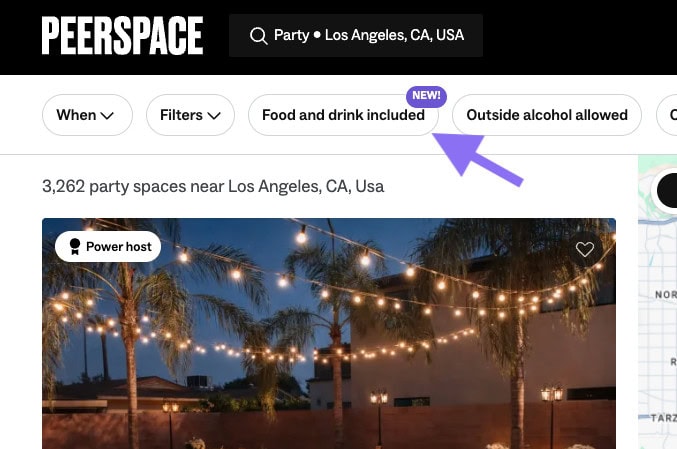
On Tagvenue, package-based and minimum-spend venues, where catering, staffing, or other services are bundled into the booking, are common. Peerspace offers a similar option through its All Inclusive Venue filter, which surfaces spaces with food and drink packages included. The main difference is that many full service venues on Peerspace are instantly bookable online, whereas those on Tagvenue require inquiries and several back-and-forth phone calls before booking.
Example of All Inclusive Venue Filter on Peerspace.com
Narrowing your options
Once you’ve got a shortlist, the details matter.
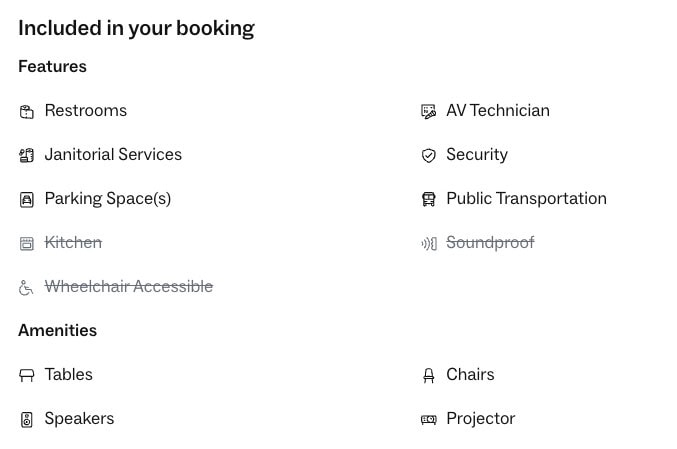
On Peerspace, listings clearly show what you’re getting, with detailed photos of the space, images from real events hosted there, reviews from actual customers, itemized amenities, and event-specific FAQs so you can compare options more easily. You can also save listings to Boards, organize them by event or theme, and collect votes and comments from everyone you’re planning with.
Example of Details and Amenities on Peerspace Listings
On Tagvenue, what’s included can be less obvious upfront. With fewer filters for simple amenities like tables or chairs, you may need to have more of a back-and-forth with the host to understand exactly what comes with the booking. Tagvenue offers a Shortlist for saving favorite venues, but it’s more limited than Peerspace Boards, with no built-in voting or commenting for group planning.
Reading reviews
Reviews are supposed to save you the guesswork, but only if they reflect what actually happened at the venue.
On Peerspace, every review comes from a verified guest who completed an actual booking at that specific space via Peerspace. You can read the full review directly on the listing.
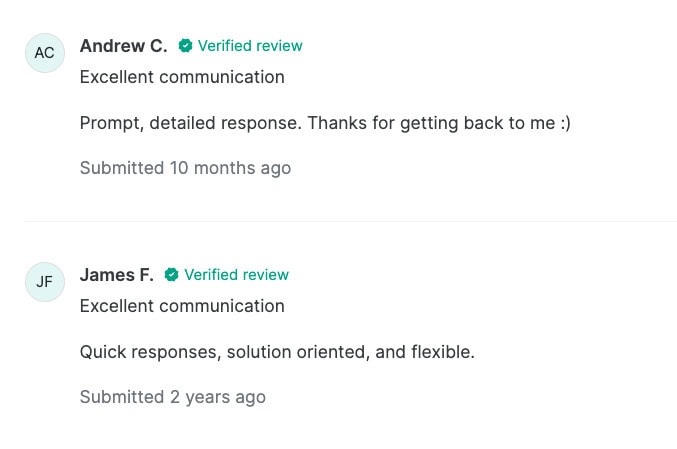
On Tagvenue, it’s worth looking closer at what’s behind a review score before you rely on it to make a decision. On some listings, Tagvenue asks guests “How would you rate communication with this manager?” right after the host replies to a pre-booking inquiry, and before any booking has actually occured. That “communication rating” can then be published on the listing as part of the venue’s overall review score. This can be confusing if you think you’re reading 5-star reviews about actual events that have been held, when in reality you’re just reading reviews about past online messages.
Example of a “communication rating” on Tagvenue
Communicating with hosts
Talking to a host early saves headaches.
Tagvenue lets you send batch inquiries to multiple favorites at once. Venues then have up to two business days to respond, and Tagvenue offers automated reply and follow-up tools that can help speed things along.
It’s worth noting that if you use Tagvenue’s own “help us find a venue” contact option rather than messaging a specific listing directly, Tagvenue’s terms allow a Tagvenue representative to select multiple venues and send your enquiry to them on your behalf. This can be an unexpected surprise for some users:
“Deeply unhappy. Sent a few enquiries to specific places through their site, received all sorts of responses from random other places. Your data is clearly not safe with these clowns. Disgraceful.”
— Andrew Roberts, 1-star Tagvenue review sourced from TrustPilot
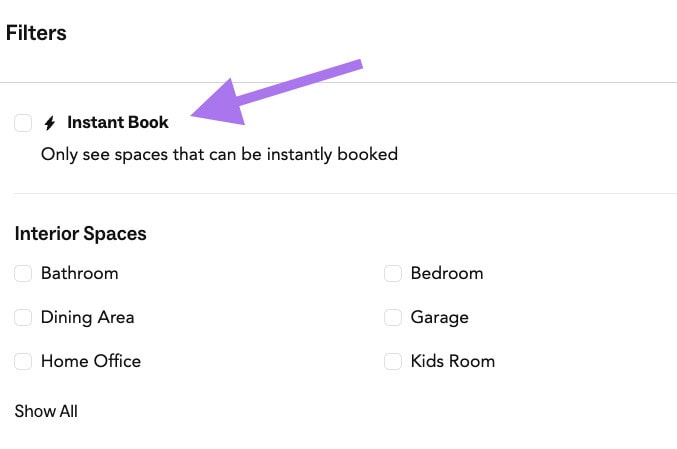
On Peerspace, you can also message a host before booking with no financial commitment, though there’s no option to batch messages and no hidden surprises. If you’d rather skip the back-and-forth altogether, many spaces can be booked immediately through Instant Book without waiting for a host response. Because Tagvenue only supports an inquiry-based model, it does not offer a similar Instant Book capability.
Where to Find the Instant Book Filter on Peerspace.com
Booking & paying for a space
Peerspace gives guests more ways to control both the total cost and when they pay. Listings show hourly pricing, event-specific rates, and what’s included upfront, making it easier to compare options against your budget. Because many non-traditional spaces can be booked by the hour, you’re not necessarily paying for more venue time than you need. And when an hourly model isn’t the best fit, such as for higher-priced or multi-day events, hosts can create custom offers with pricing tailored to the bookin
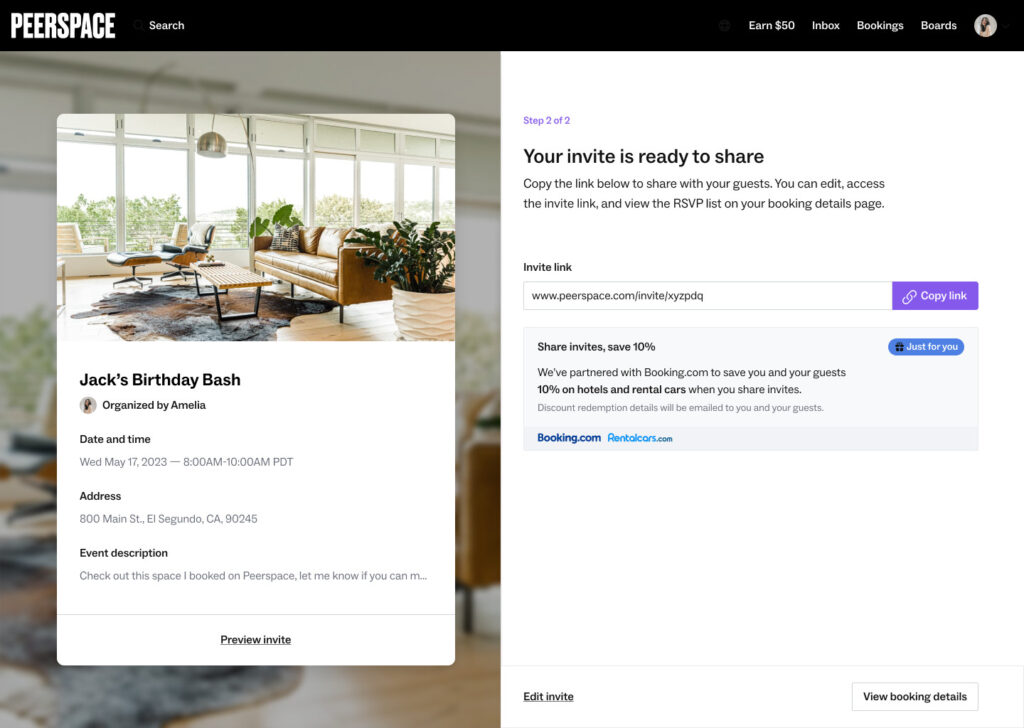
Payment options are flexible, too. Eligible bookings may qualify for $0-down, a 50/50 split payment, or installment options through Klarna. Peerspace also holds your funds, so the host isn’t paid until after your booking takes place. Once you’ve booked, it’s easy to share key booking details with attendees through Invites, so everyone has the information they need in one place.
Example Event Invite on Peerspace.com
Tagvenue uses an inquiry-based model, giving venues time to respond before a booking is finalized. How payment works depends on the venue. Some bookings are paid online through Tagvenue, while full-service or minimum-spend venues may invoice the guest directly. In those cases, the venue reports the final spend after the event and Tagvenue charges its commission to the host separately. Security deposits may also be coordinated directly with the venue.
It offers a best-price guarantee, which can provide reassurance that you’re not paying more than the venue advertises elsewhere. Unlike Peerspace, Tagvenue does not offer flexible payment options like $0-down, 50/50 split payments, or Klarna.
What guests say about listing accuracy and pricing
Price and availability only help you plan if you can count on them holding up once you actually reach out.
On Peerspace, the pricing and availability shown on a listing reflect what the host has set for their own calendar, and you can request a booking or use Instant Book directly against it.
On Tagvenue, guest reviews describe a less consistent experience. One 2-star Tagvenue review reports that a guest contacted five venues and only one ever replied, adding that “most of the venues on the site aren’t actually active.” Another 1-star Tagvenue review describes a quoted price that changed twice after the reviewer submitted a booking request, and called it a “bait-and-switch.”
“Okay front end experience, but have requested around 20 quotes at this point and every single quote is misadvertised on Tag Venue. Not even close to the true cost…”
— JFH, 2-star Tagvenue review sourced from TrustPilot
Cancellation terms
Plans change, so cancellation terms matter. Both platforms use tiered cancellation policies, but they differ in how easy those terms are to understand before you book.
On Peerspace, hosts select from standardized cancellation tiers, and the applicable policy is shown clearly on the listing so guests know the terms upfront. Cleaning fees are also refunded if the space isn’t used.
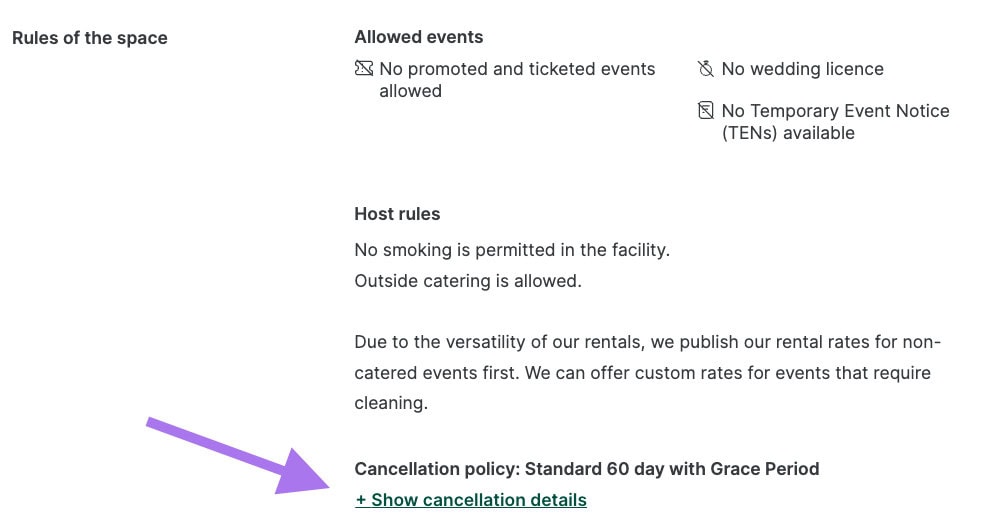
Tagvenue also offers multiple cancellation tiers, including Very Flexible, Flexible, Standard 30 Day, and Standard 60 Day options. However, the policy that applies to a specific venue can be harder to find because it appears within the venue’s “Rules of the space.”
Cancellation Rules Location on Tagvenue.com
Hosting your space on Peerspace vs. Tagvenue
If you’ve got a space to fill, here’s what each platform means for your calendar and your payouts.
Getting started and listing your space
Both platforms are free to list, so there’s little upfront risk in trying either.
On Peerspace, getting started is free and straightforward, with no monthly fees or long-term commitment. The hourly booking model can also help hosts monetize off-peak times or weekday gaps that might otherwise go unused. Most hosts receive their first inquiry within a week. You can create a custom URL for your space, and monitor your listing’s performance in a robust host dashboard.
Tagvenue also has no lock-in and lets hosts delist at any time. It’s especially geared toward multi-space venues and structured offers, and Tagvenue Pro adds AI-assisted CRM tools for automating replies and managing leads – though this comes at an added cost of up to $429/month, with no guaranteed results.
Appearing for the right searches
Getting seen by the right guests matters as much as being seen at all.
Peerspace tailors discovery to specific event types, letting hosts choose the bookings they want to attract and clearly set restrictions, requirements, amenities, and add-ons upfront. Guests can then filter based on what matters most for their event, helping reduce mismatched inquiries.
Peerspace also offers event-specific host tools like custom offers, messaging templates, FAQs, and support for more complex bookings. The proof is in the numbers: over $800 million paid to hosts across 50,000+ spaces in 1,000+ cities.
Tagvenue lists more than 22,000 venues, with lead-management tools designed for handling inquiries at scale. It’s also worth knowing that under Tagvenue’s terms, when a guest contacts Tagvenue directly for venue recommendations rather than messaging your listing, a Tagvenue representative may route that guest’s enquiry to other venues it considers suitable, so a lead surfaced this way isn’t necessarily exclusive to you.
Where Tagvenue’s listings come from
How a listing gets onto a platform, and who controls it once it’s there, matters as much as how many people see it.
On Peerspace, a listing only goes live because a host creates and manages it themselves, and there’s no separate charge just to reply to a guest message.
On Tagvenue, some hosts have described finding their venue represented on the platform without having created the listing themselves. One host who left a 1-star Tagvenue review described Tagvenue “using my name and falsely claiming we are using their services” despite never signing up. Separately, many live Tagvenue listings contain references to a different platform the venue actually lists on.
“I am a business owner they took my pictures off my website, they advertise my venue customers inquire through tagvenue and I can not reply unless its through tag venue and I pay them…”
— Julie Valenti, 1-star Tagvenue review sourced from TrustPilot
Getting bookings and getting paid
Peerspace is the category-defining leader in online venue rentals, starting in San Francisco in 2014, and offers the most customer volume and the highest intent customers. If you want more customer bookings, no other website, including Poland-based Tagvenue, comes anywhere close. One host on Reddit recently described the wide array of venue rental marketplaces as:
“As far as competition goes, from a marketplace perspective it’s Peerspace and then no one else close. The others:
Eventective: Subscription-based, about $2,200/year, high lead yield due to access to leads who don’t contact you directly, but not a ton of good warm leads, a numbers game, evens and meetings
Giggster: Good for production, events, but tends to disappear for months on leads
TagVenue: British company, lags behind in their user experience, and losing ground in the marketplace, events and meetings, leads are dry
EventUp: Once a decent company, now owned by Tripleseat, now circling the drain, nine out of ten leads are scams, events and meetings
Storefront: Good for two or three leads a year, events and meetings
Splacer: Rest In Peace”
– houseofd, Reddit, 2026
Payouts are where it gets real for hosts. On Peerspace, hosts pay a 20% service fee, and payouts normally start within 3-7 days after a booking is completed.
Peerspace also lets hosts charge for extra attendees and bill overtime at 1-1.5 times the hourly rate in 30-minute increments.
Tagvenue charges 10% commission on most invoice-based bookings and 15% for categories with mandatory online payments, and pays out via Stripe within 7 days after the reservation ends. Hosts can also add post-booking charges through Report Other Charges, which the guest reviews within 48 hours, and commission applies to those charges too.
Protection and control
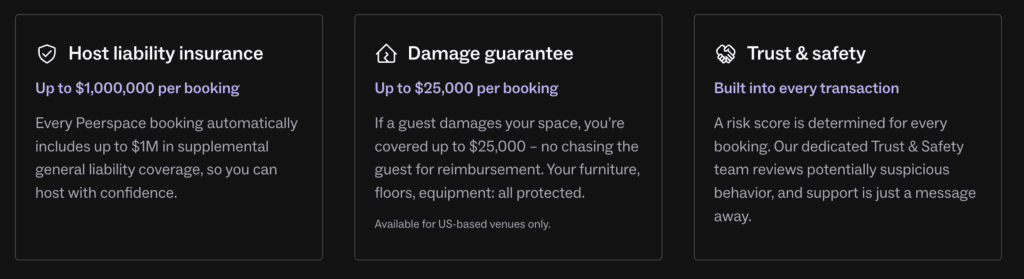
Protection helps you say yes to more bookings. Peerspace includes an industry-leading Property Damage Guarantee of up to $25,000 per booking, available for US-based venues, plus $1,000,000 in supplemental host liability coverage.
Hosts also choose which bookings to accept and set their own rules. Peerspace hosts can’t charge extra for basic amenities – like heating, AC, restrooms, or standard furniture – but can charge for add-ons like specialized equipment or rentals, photography services, catering, staffing and site visits.
Peerspace Host Protection Overview
Tagvenue does not appear to offer a standardized platform-wide security deposit policy or any insurance for hosts. Hosts may require their own refundable deposits and set the terms for collection and return, but these exchanges happen off-platform.
Source: Peerspace
Frequently asked questions
These questions come up a lot. Here are the quick answers.
FAQs for people booking spaces
Does Peerspace or Tagvenue offer spaces or packages with food and beverage included?
Yes. On Tagvenue, food-and-beverage packages and minimum-spend venues are very common. Peerspace also offers All Inclusive Venues with food and drink included, but you can also choose more flexible spaces where catering, drinks, and other add-ons are customized separately.
Does Peerspace or Tagvenue offer add ons like tables, chairs, AV equipment, etc.?
Peerspace hosts commonly offer bookable add-ons like tables, chairs, AV, and decor within the listing, though they can’t charge extra for basic amenities already shown. Tagvenue venues typically bundle equipment into their packages, but it can be hard to know exactly what’s included without asking the host.
Can I book a last-minute event on Peerspace or Tagvenue?
Yes. Peerspace supports an instant booking option for eligible spaces with as little as 24 hours’ lead time. Tagvenue uses an inquiry model, where venues can take up to two business days to accept.
That difference matters when time is tight. If your original venue falls through or you suddenly need a space for an event this weekend, waiting days for an inquiry to be confirmed may not be practical. In those situations, Peerspace is the clearer choice for finding and locking in a space quickly.
Is it risky to book a space you haven’t seen on Peerspace or Tagvenue?
Both platforms show photos and reviews. Tagvenue adds seating plans and layouts, while Peerspace goes further with videos, 3D floor plans, and reviews featuring photos from real events hosted in the space, giving you a more transparent sense of what to expect.
Peerspace also holds host payouts until after the event. That means you’re not handing over money months in advance and hoping the venue (and your deposit) is still around when your event date arrives.
If I’m planning a social gathering, should I look for venues on Peerspace or Tagvenue?
Both platforms can work for social gatherings, but they offer different kinds of spaces. Birthdays, family and friend gatherings, engagement parties, weddings, anniversaries, and other personal celebrations are among the most popular event types booked on Peerspace.
Tagvenue is a good fit if you’re looking for a traditional restaurant, hotel, or ballroom – akin to what you’d also be able to find on Yelp or Google Maps. Peerspace offers those kinds of venues too, along with more distinctive, one-of-a-kind options like rooftops, lofts, private homes, gardens, and other unique spaces that can make a personal celebration feel more memorable.
Source: Peerspace
FAQs for people listing their spaces
Can I list my space on Peerspace and Tagvenue at the same time?
Yes. Both platforms are free to list, and both let hosts display their venue brand name to help build name recognition. Tagvenue charges hosts up to $429/month for additional software.
How are overtime and additional guest charges handled on Peerspace and Tagvenue?
Peerspace bills overtime at 1-1.5 times the hourly rate, in 30-minute increments, and lets hosts charge for extra attendees. Tagvenue lets hosts add post-booking charges via Report Other Charges, which the guest reviews within 48 hours, with commission applied.
How do I know my space will be shown for the right types of events on Peerspace or Tagvenue?
Both platforms let guests search by event type. The bigger difference is the audience and inventory surrounding your listing.
Peerspace hosts often tell us they value the fit of the guests they receive, not just lead volume, and that they like being listed alongside other distinctive, high-quality spaces. That can be especially valuable if your venue offers something beyond a traditional restaurant, ballroom, or banquet space.
Tagvenue’s demand skews more toward corporate and traditional venue bookings.
Does Peerspace or Tagvenue help generate bookings during slower time slots?
Peerspace is the category leader in online venue rentals, and generates more bookings than any other platform, including Tagvenue. Since its inception, it has generated over $800 million in earnings for its hosts – and is on a path towards $1 billion. It is specifically designed to help hosts monetize underutilized times of the day and days of the week.
Peerspace’s by-the-hour model is designed to help hosts monetize smaller windows of availability, including off-peak and weekday slots that might otherwise go unused. For example, you could list your space for a two-hour baby shower, a three-hour birthday dinner, or another short-format event without giving up the full day.
Tagvenue Pro, by contrast, focuses on helping venues manage and follow up on incoming leads. That can make inquiry handling more efficient, but it doesn’t create the same inventory flexibility as Peerspace. Lead management helps you organize demand; Peerspace’s hourly model gives you more ways to turn unused time into bookable revenue.
Source: Peerspace
The bottom line
At the end of the day, the best platform is the one that makes planning or hosting feel easier, clearer, and more aligned with what you actually need. Compare the experience that matters most to you, then choose the marketplace that fits.