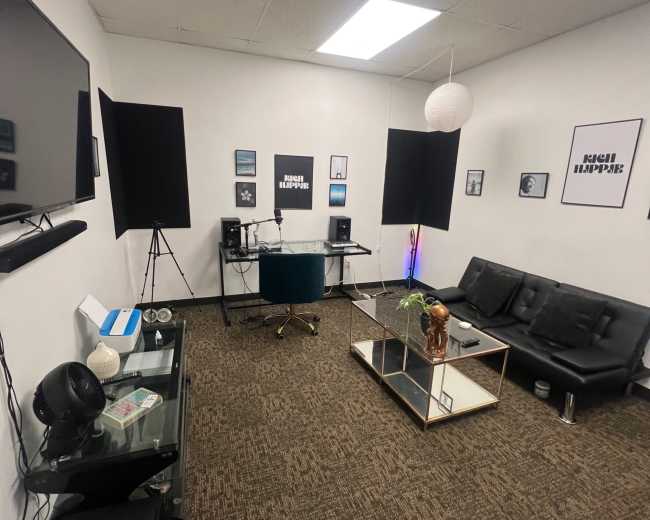
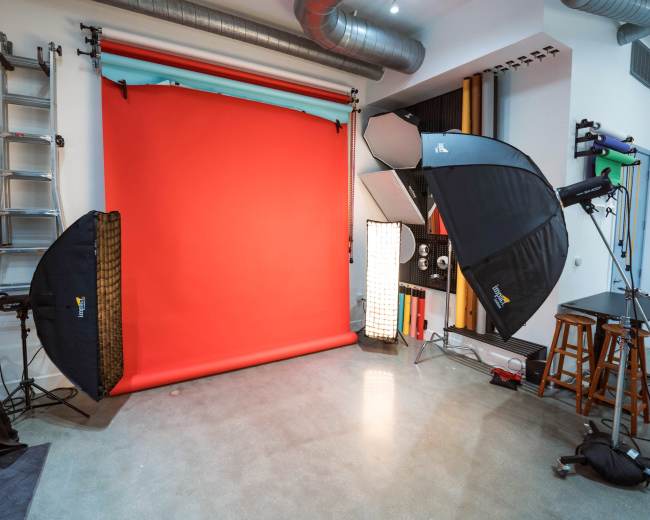
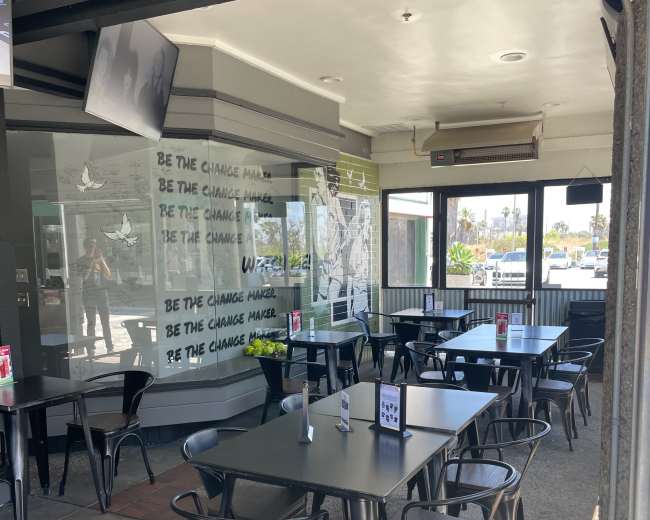
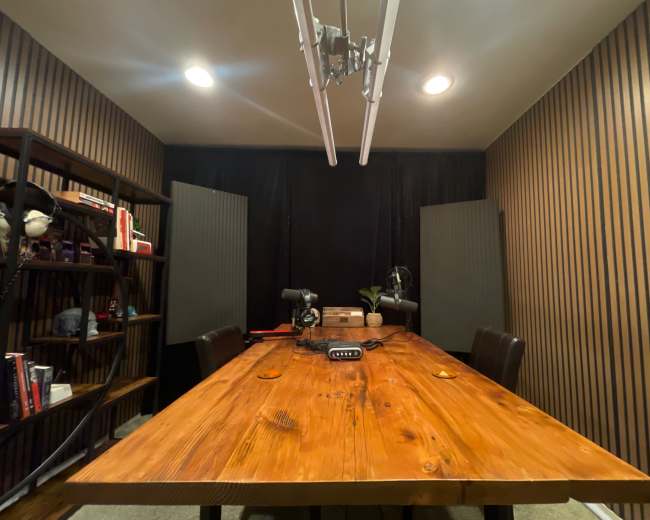
Rent a podcast studio in Long Beach, CA

Discover thousands of unique podcast studios for rent for your next recording.

Enter your activity
Long Beach, CA

How podcast rooms work on Peerspace

Peerspace is the easiest way to book unique for all kinds of productions including photo shoots, film shoots and music videos. We also have spaces for meetings and events.

The most locations

Every day we uncover new, inspirational spaces, including podcast rooms, perfect for your activity.

Professional hosts

Our network of helpful hosts respond quickly, and are well-versed in accommodating all types of productions, including film and photo shoots.

Hire by the hour

Only pay for what you need. Pay by the hour for your podcast room location without worrying about hidden fees or overtime.

Popular podcast studios

What should I look for in a plug-and-play studio?

A true plug-and-play podcast studio should reduce decision-making, not create more of it. If you still need to figure out audio routing, lighting, camera framing, or file export on your own, the space is not truly plug-and-play. When you compare a Long Beach podcast studio rental, look for these essentials first:
  • Audio quality first: The room should be quiet, acoustically treated, and built for spoken-word recording.
  • Video readiness: If you plan to publish on YouTube, TikTok, or Instagram Reels, make sure the lighting is flattering, the camera framing is clean, and the background fits your brand. You can explore video studios in Long Beach to compare spaces that are already set up for multi-platform content.
  • Included gear: Confirm exactly what's included in the rate, such as microphones, headphones, audio interface, cameras, lights, memory capture, and any monitor for remote guests or playback.
  • On-site support: If you don't want to troubleshoot during your session, ask whether someone can help with setup, levels, camera switching, and file handoff.
  • File delivery: Ask how you receive your audio and video files, how long delivery takes, and whether you leave with files the same day.
  • Comfort and logistics: Parking, restroom access, climate control, drinking water, easy check-in, and space for bags all make recording smoother.
  • Brand fit: The set should match the impression you want your show to make. A polished business interview can feel misaligned in a casual bedroom-style setup.
Before you book, ask these questions:
  • How many people can record comfortably in the room?
  • Is the room treated for echo and outside noise?
  • Are the microphones and cameras included in the listed rate?
  • Will someone be available if a technical issue comes up?
  • Can I hear and see an unedited sample from the space?
  • How are files delivered after the session?
Watch for these red flags:
  • Vague language such as creator-friendly without a real equipment list
  • Photos that look attractive, but don't show microphones, lights, or actual recording angles
  • No mention of room treatment, sound isolation, or noise control
  • Very short minimum bookings that leave no room for setup or troubleshooting
  • Hosts who can't clearly explain the process from arrival to wrap
The best podcast studio in Long Beach is usually the one that already solves sound, visuals, and workflow before you walk in. That lets you focus on the conversation instead of the setup.

Is renting cheaper than building a home podcast setup?

Usually, yes in the short term. Renting a podcast studio is often cheaper if you record occasionally, want polished video, or only need a professional setup for selected episodes. Building at home sounds less expensive at first, but the real cost is usually higher than expected. A workable setup often includes microphones, headphones, an interface, lighting, camera support, cables, backup storage, acoustic treatment, furniture, and the time required to make everything work together reliably. In Long Beach, podcast studio rental pricing varies widely based on the room, gear, support, and whether video is included. When you browse podcast studios you can compare rates and included equipment side by side, which makes it easier to weigh renting against building. That makes renting especially appealing when you don't record several times per week. Renting is usually the better financial move if:
  • Lower recording frequency: You record once or twice a month
  • Guest-focused episodes: You only need a polished setup for interviews or special conversations
  • Video production needs: You want multi-camera video without buying production gear
  • Testing a new show: You want to validate the format before making a large upfront investment
  • High-stakes sessions: You need a stronger visual impression for sponsors, launches, or milestone episodes
Building at home makes more sense if:
  • Higher publishing frequency: You record often and need constant access
  • Dedicated space: You already have a quiet room you can use consistently
  • Technical comfort: You're comfortable learning audio and video workflow
  • Simple format: Your show setup is stable and doesn't change much
  • Long-term control: You care more about ownership and repeatability than short-term convenience
For many creators, the smartest answer is a hybrid setup:
  • Home for regular episodes: This keeps long-term production costs lower
  • Studio for important recordings: This works well for guest interviews, branded content, launch episodes, and visual refreshes
If your question is whether renting a podcast studio saves money right now, the answer is often yes. If your question is whether building at home saves money after many episodes, that can also be yes. The deciding factors are recording frequency, production standards, and how much convenience matters to you.
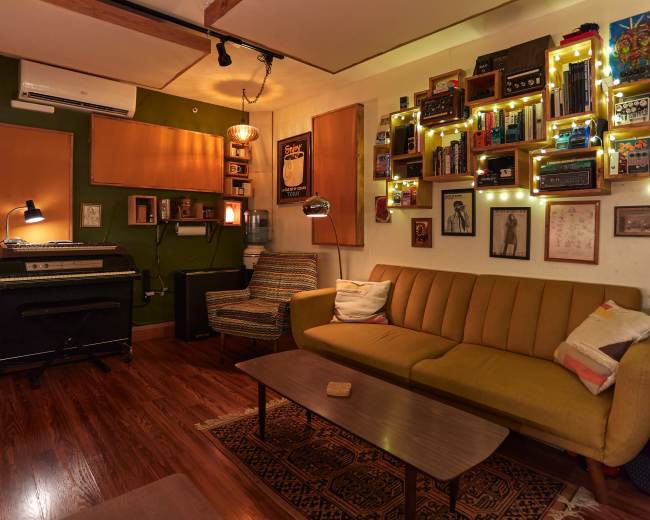
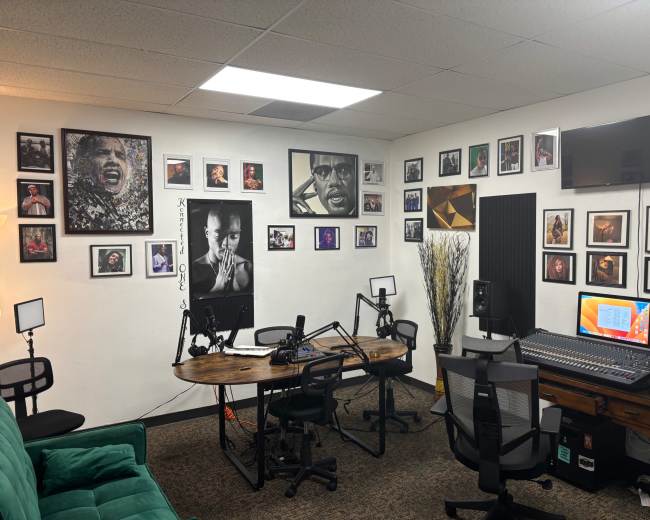
What makes a studio feel guest-ready on camera?

A guest-ready podcast studio feels intentional, calm, and credible. It signals that you value your guest's time and that the conversation will be easy to step into. That usually comes from a few simple details done well:
  • Clean visual frame: The background should look styled and deliberate, not cluttered or accidental
  • Flattering lighting: Guests shouldn't be dealing with harsh shadows, overhead glare, or uneven lighting
  • Balanced seating: Chairs should be comfortable, camera-friendly, and visually balanced in height and posture
  • Consistent equipment: Matching microphones, clean table styling, and tidy cables create trust fast
  • Personal space: Guests should have enough room for water, notes, phones, and natural body language
  • Arrival ease: Clear directions, easy parking, and smooth entry lower stress before recording starts
  • Off-camera hospitality: Water, tissues, a mirror, charger access, and a few quiet minutes to settle in all make a difference
A studio feels especially guest-ready when it answers a few silent questions right away:
  • Am I going to look good here?
  • Will this feel easy?
  • Does this show feel established?
  • Did they think through the details?
When the answer is yes, guests relax faster. Relaxed guests usually give clearer, more natural, and more memorable interviews. If you're looking for a space that already handles these details, consider an interview room in Long Beach that's designed with guest comfort and camera readiness in mind.

Which Long Beach areas are best for recording sessions?

The best Long Beach area for a podcast studio session depends on what you're recording. There's no single best neighborhood for every show. The right choice depends on audio control, visual style, and guest convenience. Here's a practical way to compare Long Beach areas:
  • Downtown: Best for the widest mix of creative studios, loft-style spaces, and flexible video looks. This area is strong for interview shows, video-first podcasts, and sessions where you also want clips or photos.
  • Belmont Heights and Naples: Best for warm, residential, coastal visuals. These areas can look great on camera, but it's smart to ask more questions about neighborhood noise and activity.
  • East Village and Waterfront: Best for polished, modern visuals. These areas can work especially well for professional, design-conscious, or personal-brand-focused shows.
  • California Heights and Zaferia: Best for character-rich creative spaces. These neighborhoods can be a strong fit if you want something more distinctive than a standard black-box studio.
  • Los Altos, Lakewood Village, and Old Lakewood City: Best for easier parking, more privacy, and a calmer arrival experience. These areas can be useful for longer sessions or guest-heavy recordings.
Use this guidance when choosing a location:
  • For pure audio quality: Prioritize the room itself over the neighborhood. If sound isolation is your top concern, look for recording studios in Long Beach that are specifically built for clean audio capture.
  • For visual brand identity: Let the neighborhood help guide the aesthetic
  • For guest convenience: Choose the area with the easiest parking, clearest access, and lowest arrival friction
If you're producing a recurring show, choose the area that's easiest to repeat, not just the one that looks best once. A reliable podcast studio setup is usually more valuable than a novel one.

Should I rent a venue or record at home, a park, or the beach?

It depends on what you're optimizing for. Home usually wins on convenience. A podcast studio rental usually wins on audio quality, credibility, and video polish. A park or beach can work when the setting is part of the concept, but outdoor recording almost always gives you less control. Here's the simplest way to decide:
  • Home: Best if you publish often, your format is simple, your room is quiet, and you don't need a major visual upgrade
  • Rented studio: Best if you're bringing in a guest, filming video, pitching sponsors, recording a milestone episode, or need the show to feel more established
  • Park or beach: Best if the outdoor setting is central to the idea and you're willing to trade control for atmosphere
In Long Beach, outdoor recordings usually come with a few predictable tradeoffs:
  • Wind noise: Even light wind can make spoken audio harder to use
  • Foot traffic: People, pets, and public activity can interrupt the recording
  • Lighting changes: Outdoor light shifts quickly and can make footage inconsistent
  • Limited privacy: Sensitive conversations are harder in public settings
  • Fewer staging surfaces: Guests and gear have fewer places to settle comfortably
  • Unexpected sound: Planes, traffic, music, dogs, and beach activity can all affect the take
If you're unsure, use this filter:
  • Choose home for consistency
  • Choose a rented studio for quality
  • Choose outdoors for concept
Many creators start looking for a podcast studio when a regular setup is no longer enough. That usually happens with a notable guest, a launch episode, a visual refresh, or any session where the stakes are higher than usual.

How much time should I book for setup, recording, and clips?

Book for the full production, not just the interview. A one-hour podcast recording rarely requires only one hour on-site. You also need time to arrive, settle in, test sound, frame cameras, coach your guest, capture extra content, transfer files, and leave without rushing. A realistic booking guide looks like this:
  • Two hours: Good for a solo audio episode in a truly turnkey space
  • Three hours: Good for a recurring two-person show with a simple setup
  • Four hours: Best for most guest episodes, especially if you want strong video and social clips
  • Five to six hours: Best for milestone episodes, branded interviews, panel conversations, or multi-look content days
A typical guest session often breaks down like this:
  • Arrival and setup: 20 to 30 minutes
  • Soundcheck and camera framing: 20 to 30 minutes
  • Guest arrival buffer: 10 to 15 minutes
  • Main recording: 60 to 90 minutes
  • Pickups and retakes: 10 to 20 minutes
  • Clips, thumbnails, and stills: 20 to 40 minutes
  • File transfer and wrap: 15 to 30 minutes
If you're recording extra vertical content, give yourself more time than you think you need. Short clips often create a lot of value after the episode goes live, but they're easy to rush when the booking is too tight. For larger tapings, such as a panel, audience session, or recording that functions more like a small event, add even more buffer for seating, resets, and guest flow. Pro tip: Build setup and teardown time into the reservation from the start. The cheapest extra hour is usually the one you book upfront, not the one you try to add when everyone is already tired and packing up. If you're unsure how long to book, a four-hour podcast studio reservation is usually the safest choice. It gives you space to breathe, improves the guest experience, and protects the quality of the final episode.
Updated July 19, 2026Our data is refreshed in real time using booking trends, verified guest reviews, and direct partner updates — with additional quality checks from our team.