What’s Like an Airbnb for a Wedding in Ohio? (2026)
-

Contributing Writer -

Lead Editor & Publisher

- April 26, 2026
- 19 min read
- Events
Source: Peerspace
Ohio makes “affordable” and “distinctive” weddings feel like the same thing, and that’s rare. A converted powerhouse on the Cuyahoga River, a timber-frame barn in Amish Country, a 19th-century church in Cincinnati’s Over-the-Rhine, a gallery loft in Columbus’s Short North: these aren’t compromises, they’re the draw. No waiting period for a marriage license and venue costs averaging below the national median make the logistics as appealing as the aesthetics.
That value is exactly what pulls couples toward Airbnb. A lakefront estate near Cleveland, a farmhouse outside Dayton, a cabin in Hocking Hills: the photos promise a ready-made celebration. The reality is harder. Ohio has no statewide framework for vacation rentals, so every city sets its own rules. Add Airbnb’s permanent party ban, and the distance between a listing photo and a legal wedding grows fast.
This guide covers what couples actually face when planning an Airbnb wedding in Ohio: where the platform creates friction, and why hourly venue rentals offer a cleaner path.
Can you use Airbnb for a wedding in Ohio?
Quick answer: It depends, but the risks are higher than most couples expect.
Ohio’s mix of rural properties and metro sprawl means some Airbnb hosts genuinely have the space for gatherings, especially on larger properties in Hocking Hills or the farmland corridors between cities. A willing host and a big backyard can feel like a solved problem, but the complication is structural.
Airbnb’s party ban, made permanent in 2022, prohibits “disruptive parties and events” at every listing worldwide. The platform’s machine-learning screening system scans booking signals such as group size, guest age, proximity to the listing, trip duration, and blocks reservations before confirmation. On a single New Year’s Eve, Airbnb’s anti-party technology blocked roughly 1,200 people across Ohio from completing entire-home bookings, with approximately 300 blocked in Columbus alone.
Ohio’s regulatory patchwork makes it worse. Without a statewide law governing vacation rentals, every municipality sets its own terms. Suburbs like Shaker Heights and Parma Heights have banned vacation rentals entirely.
A host’s “yes” may sound like a starting point. Whether the platform, the city, and the neighborhood association all agree is a separate question. And in Ohio, the answer changes depending on which zip code you’re in.

Where Airbnb falls short for weddings in Ohio
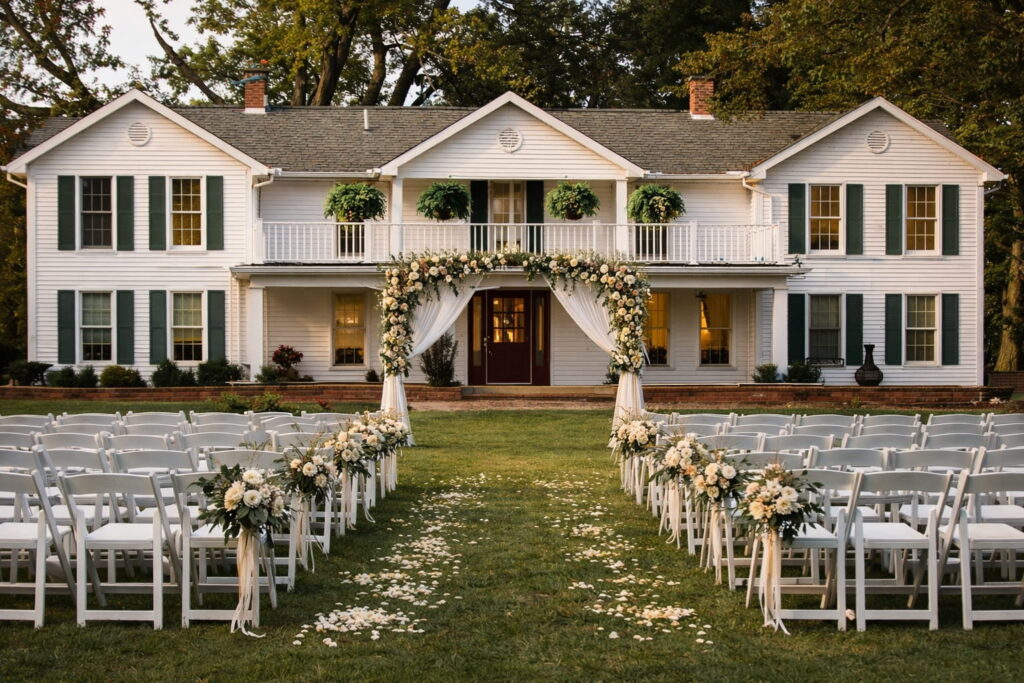
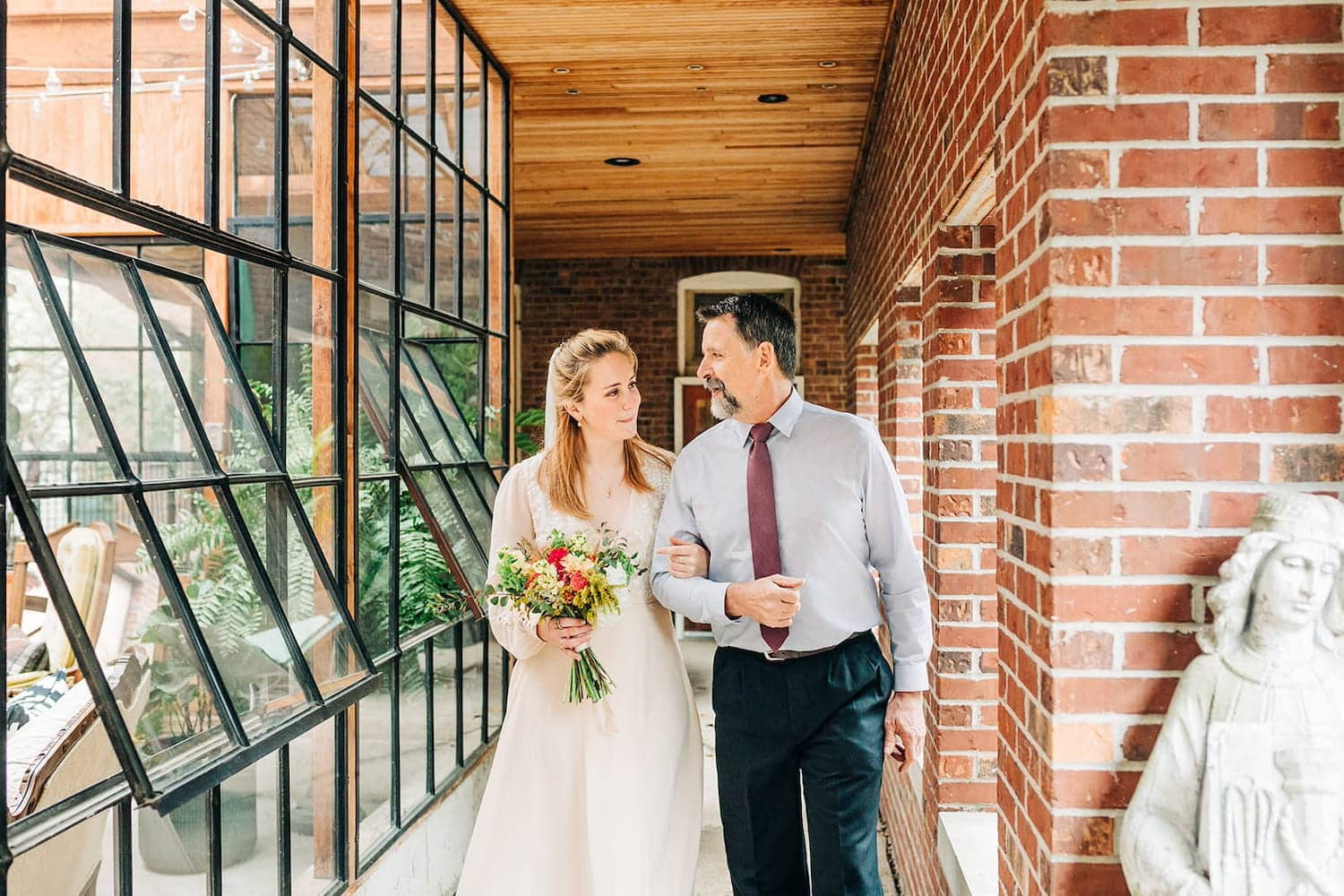
Ohio’s wedding appeal runs on variety: industrial lofts, century barns, lakefront estates, vineyard properties. But the residential listings that deliver those backdrops weren’t built for events, and the friction shows up in specific, predictable ways.
Your booking can vanish without a contract
A wedding venue contract creates mutual accountability. The venue holds your date, you commit a deposit, and both parties have enforceable obligations. Airbnb operates on a reservation model and reservations live under different rules.
“I looked into it but saw too many instances of cancelled reservations especially after sending out invites.” — Saydee, WeddingWire discussion thread “Airbnb Venue“
@tieranib_ Getting put out of an Airbnb on your wedding day is INSANEEEEEE! The limit is 6 people. & for a short period of time we got up to 7 & the owner who lives right across the street told us we had 30 minutes to leave or she was calling for the sheriffs office 😳 like be fr! It’s 9AM! No loud noise. & people were about to switch out. I have never been to Montgomery Texas before today & I lost definitely won’t be going back 😫 #fyp ♬ original sound – 𝚃𝚒𝚎𝚛𝚊𝚗𝚒♡
One viral TikTok captured a bride mid-hair-and-makeup getting told by the Airbnb host to vacate in 30 minutes after extra guests arrived. Airbnb refunded the booking. The wedding day was not refunded.
In Ohio, specifically in popular corridors like Hocking Hills and the Lake Erie wine country, a last-minute cancellation can not only ruin the day, it can also eliminate your options entirely during the most competitive windows.
You pay for overnight hours you don’t use
Airbnb prices by the night, often with minimum-night requirements and stacked fees including cleaning and service charges.
An Ohio couple whose ceremony starts at 4 p.m. and wraps by 10 p.m. still pays for a full 24-hour overnight window or longer, if the listing enforces a two-night minimum.
“The places that allowed weddings or events charged crazy fees like 6k!… Airbnb renters can cancel ur reservation at any time.” — Katie, WeddingWire discussion thread “Airbnb Venue“
A Hocking Hills cabin listed at $350–$500 per night carries a two-night minimum, putting the base cost at $700–$1,000 before Ohio’s state and local lodging taxes, fees, and surcharges drive it higher. And not a single dollar of that buys you a chair, a table, or any event infrastructure.
Hidden costs stack up fast
An Airbnb listing comes equipped for sleeping (beds, a kitchen for breakfast, a bathroom or two). A wedding requires way more: seating for your guest count, tables, sound, lighting, dance floor space, restroom capacity for a reception, power infrastructure for vendors, etc.
“The expenses have gotten out of control with all the rentals we’ve had to do… On hindsight, I wouldn’t have gone the AirBnB route.” — Melissa, WeddingWire discussion thread “Airbnb Venue“
Ohio’s weather sharpens the gap. Outdoor ceremonies between May and September face afternoon thunderstorms that can roll in with little warning, and winter weddings below freezing require heated tent rentals. Add portable restrooms for larger events, generator power for rural properties, liability insurance, etc., and the Airbnb that looked budget-friendly at first can match or exceed the cost of an event-ready venue that already includes those essentials.
No way to tour the space before committing
Listing photos show a property at its most flattering angle: wide lenses, golden-hour light, clutter hidden. A wedding demands spatial awareness: where does the ceremony go if it rains? Can 60 chairs fit in the yard? Is there a flat surface for a dance floor? Can a catering van reach the kitchen?
“We always conduct site visits to thoroughly understand the space we are working with. Seeing the space from multiple perspectives allows us to bring the day to life. Coordinating walkthroughs with other vendors also provides valuable insights, as it helps us see things from their point of view.” — Nicole Day, Ember & Stone Events
Airbnb doesn’t support pre-booking tours. Some hosts will arrange one, but the platform doesn’t facilitate or guarantee walkthroughs. For a couple driving three hours from Pittsburgh to a Hocking Hills cabin, or flying in from out of state, this could mean taking a leap of faith based on a gallery of curated images.
Vendors aren’t always welcome
Ohio’s culinary and vendor landscape runs deep — Cleveland’s Eastern European and Latin food traditions, Cincinnati’s German-rooted brewery culture, Columbus’s farm-to-table scene in the Short North. But accessing that vendor network depends on whether your venue allows outside caterers, bartenders, and DJs.
Many Airbnb hosts restrict outside vendors because the properties are configured for overnight guests, not for a catering crew arriving at 10 a.m. with warming trays and a sound system.
How to find a wedding venue in Ohio
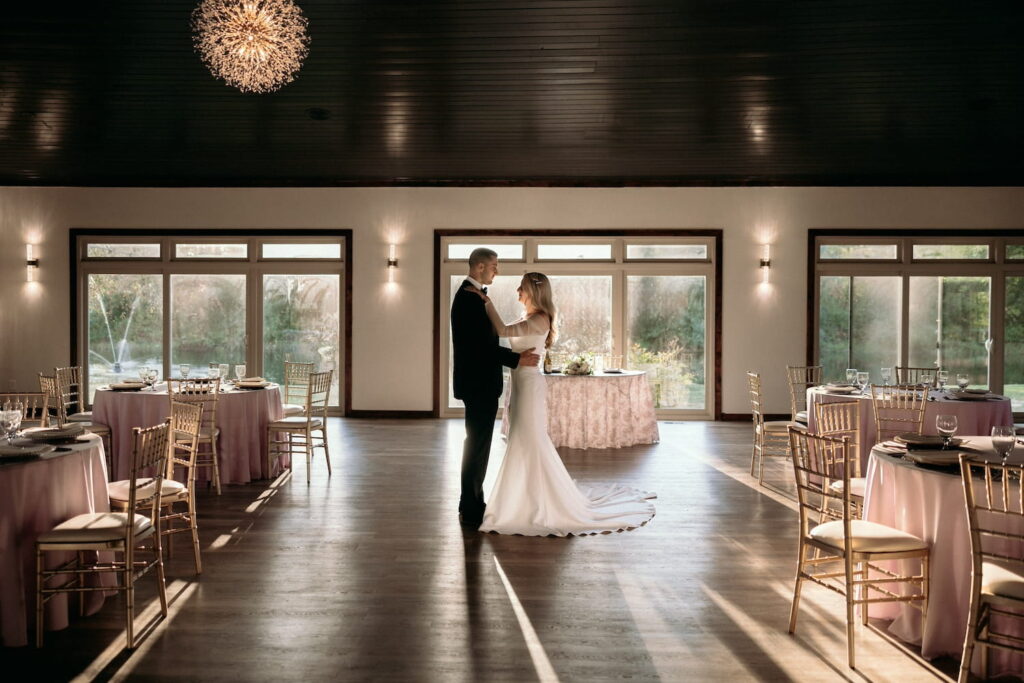
Ohio’s wedding identity shifts dramatically across a state that’s roughly the size of Virginia: from Lake Erie’s waterfront wine country to Cincinnati’s 19th century urban core to the forested ravines of Hocking Hills. The region you choose shapes your guest experience, vendor access, and seasonal availability more than any search filter.
Choose a region that matches your wedding style
Ohio is divided into corridors, each with a different architectural character and wedding aesthetic. Understanding which one fits your celebration narrows the search before you open a single listing.
For arts-district energy and creative spaces
Wedding venues in Columbus draw from the city’s gallery and warehouse culture. The Short North Arts District and Franklinton deliver industrial lofts with exposed brick, soaring ceilings, and gallery-white walls that become whatever your florist and lighting designer make them. Italian Village adds converted factory spaces with original timber. Columbus is Ohio’s fastest-growing metro, which means the vendor pool — caterers, florists, photographers — runs deep and competitive.
For industrial grit and lakefront drama
Wedding spaces in Cleveland pair the city’s industrial heritage with Lake Erie’s waterfront. The Flats district along the Cuyahoga River offers converted powerhouses and warehouse venues where exposed steel, brick, and river views create a backdrop that photographs with cinematic weight. Downtown Cleveland adds rooftop terraces and cultural institutions. Cleveland Hopkins International Airport sits 20 minutes from downtown, simplifying logistics for destination guests.
For historic architecture and brewery culture
Wedding locations in Cincinnati lean into one of the largest intact urban historic districts in the country. Over-the-Rhine’s German-era buildings create a setting that carries Old World weight without feeling staged. The neighborhood’s walkable brewery scene makes rehearsal dinners and post-wedding brunches effortless. Cincinnati also sits on the Kentucky border, giving destination guests hotel options in both states.
For affordability and aviation-city character
Rentals for a wedding reception in Dayton offer the most accessible pricing among Ohio’s metro areas, with converted industrial spaces that carry architectural character without metro-market premiums. The surrounding Miami Valley corridor delivers barn and farm venues within a 30-minute drive. Dayton is also centrally positioned between Columbus, Cincinnati, and Indianapolis, making it a strong logistics hub for guest lists that span the Midwest.
For nature-immersed micro-weddings
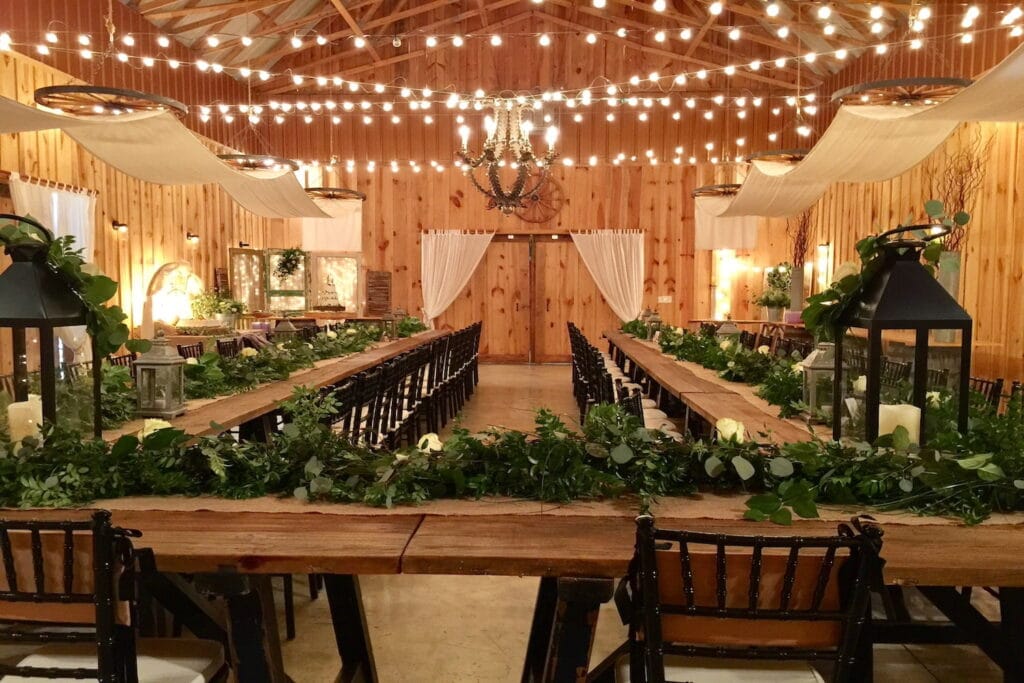
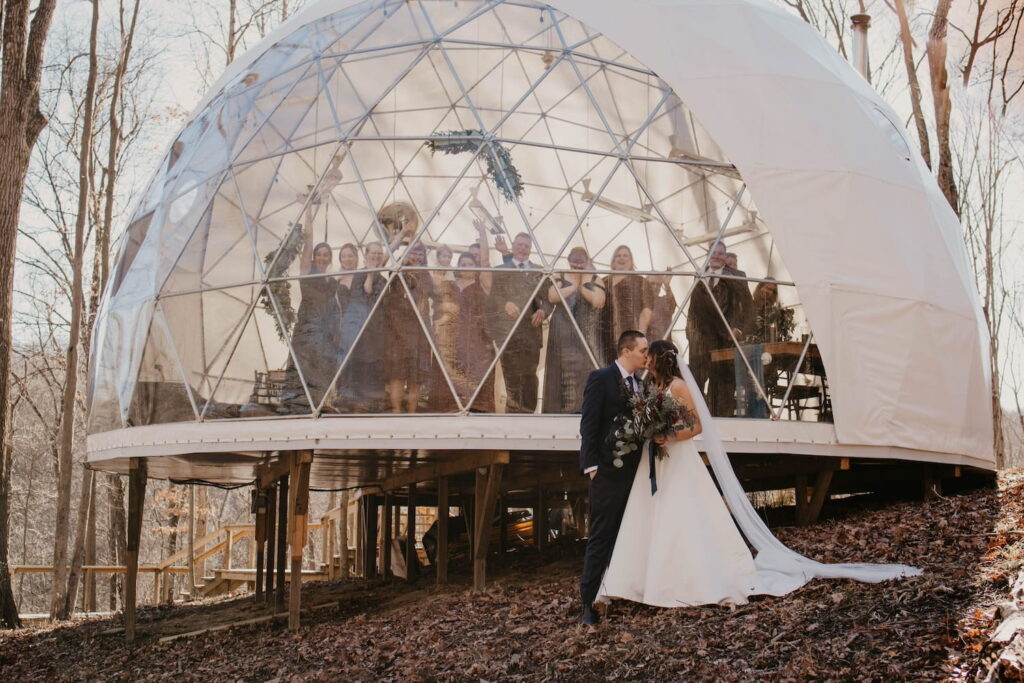
Outdoor wedding spaces near Hocking Hills offer what no Ohio city can match: forested ravines, waterfall backdrops, and properties spanning 75 to 140 acres where the nearest neighbor is a canopy of old-growth trees. This region anchors Ohio’s elopement and micro-wedding market, with cabin-based packages designed for celebrations under 50 guests.
Ohio wedding venue types to look for:
- Industrial lofts and converted warehouses (Short North, Franklinton, Flats)
- Barn and farmstead venues (Mad River Valley, Amish Country, Dayton corridor)
- Outdoor and garden spaces (Hocking Hills, Lake Erie shore, Columbus metro)
- Rustic wedding venues (statewide, especially southeast and central Ohio)
- Micro wedding venues (Hocking Hills, Amish Country, smaller metro spaces)
- Reception and banquet halls (Downtown Cleveland, Columbus, Cincinnati)
These are a few examples. Across Ohio, many event-ready venues are designed specifically for weddings, so you can match your space to your guest count, style, and logistics without retrofitting a residential property.
Look for hourly booking options
A wedding typically occupies a venue for hours, not a full day. Platforms that price by the hour let couples pay for that window alone, without subsidizing the idle hours before or after.
Hourly venues are often purpose-built for events. Restroom capacity, vendor access, furniture layouts, and parking come as part of the package rather than as separate rental line items you source yourself. That eliminates many of the “hidden cost” surprises that come with converting a residential property into a wedding venue.
Prioritize vendor flexibility
Ohio’s food culture varies by city: Cleveland’s pierogi and paprikash traditions alongside Latin-Caribbean flavors, Cincinnati’s goetta and craft beer scene, Columbus’s farm-forward Short North restaurants. A venue that opens the door to your caterer, bartender, DJ, and photographer gives you control over both quality and budget.
Working with wedding planners in Columbus, Cleveland, or Cincinnati can help coordinate vendor logistics, especially for couples planning from out of state.
Before committing, confirm that outside vendors are welcome, the kitchen supports professional catering, and the electrical infrastructure handles sound, lighting, and warming equipment.
Know Ohio’s marriage license process
Both applicants must appear in person at the probate court in any of Ohio’s 88 counties either where one applicant resides or where the ceremony will take place. The license costs $65, requires valid photo ID plus documentary proof of age, and has no waiting period: you can legally marry the same day it’s issued.
One distinction worth noting: Ohio does not allow self-solemnization. You’ll need a licensed minister registered with the Secretary of State, a judge, or a mayor to officiate.
Plan around Ohio’s seasons
September is statistically Ohio’s best wedding month: warm days in the mid-70s, low humidity, and the first hints of fall color at higher elevations. May offers similar reliability with spring blooms. October delivers peak foliage, but more unpredictable weather and higher demand. Summer weddings (July–August) bring heat and humidity into the low 80s with afternoon thunderstorm risk. Winter weddings offer better pricing and easier availability, but outdoor options narrow significantly below freezing.
For any outdoor Ohio wedding, insist on a venue with a covered backup or enough indoor capacity to relocate the full event on short notice.
How much does it cost to rent an Ohio wedding venue?
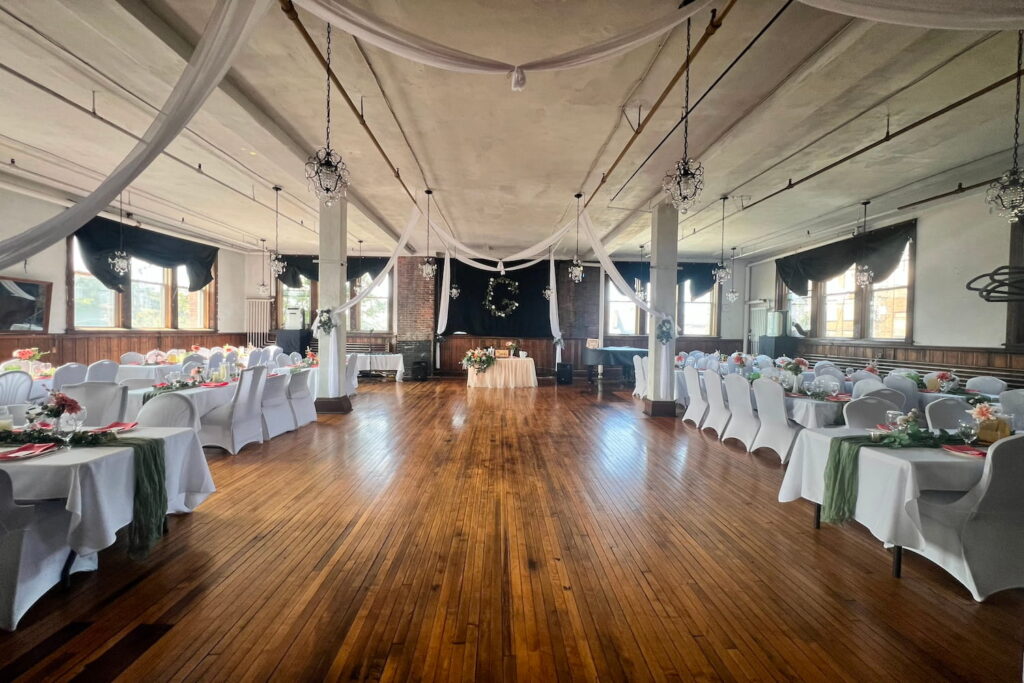
In Ohio, venue rental fees average around $10,510, about 14% below the national average of $12,200.
Platforms that price by the hour align the cost of a wedding venue with what couples actually need: a few hours for an event, not an overnight block.
According to our booking data, hourly rates vary across Ohio’s major metros:
- Columbus: $115 per hour on average, with larger venues reaching $425 per hour. The average wedding booking runs four hours with 38 guests, putting a typical rental between roughly $460 and $1,700
- Cleveland: $155 per hour on average, ranging from $118 to $218 per hour. The average booking runs four hours with 28 guests
- Cincinnati: $192 per hour on average, ranging from $174 to $275 per hour. The average booking runs four hours with 50 guests
- Dayton: $150 per hour on average. The average wedding booking runs eight hours with 75 guests
- Akron: $171 per hour on average, with bookings averaging five hours and 63 guests
Those rates cover the venue. Catering, photography, florals, and vendors are separate, but moving the venue line from five figures to three or four creates space in the budget that didn’t exist before.
Build your booking window in three phases
When you’re paying by the hour, the number of hours you reserve carries as much weight as the rate itself. Account for buffer time covering vendor arrivals, decor setup, audio checks, and end-of-night teardown.
A practical way to plan:
- Setup and load-in (60–120 minutes): Vendors arrive, decor goes up, tables and chairs get arranged, sound and lighting checks happen
- The wedding itself (4–6 hours): Ceremony, cocktail hour, reception, toasts, dancing
- Breakdown and cleanup (60–90 minutes): Vendor load-out, cleanup, final walkthrough with the host
For a four-hour Columbus booking at the average rate, that puts the venue portion of your wedding under $1,000, a fraction of what a traditional full-day rental charges. Even with setup and breakdown hours added, most couples land well under $2,000 for the space.
How Peerspace works better than Airbnb for weddings in Ohio
Airbnb helps travelers find a bed for the night. Our platform helps people find a space for a celebration. That distinction (overnight accommodation versus event infrastructure) runs through every aspect of the experience, from how hosts respond when you say “wedding” to how the pricing actually works.
Built for events, not overnight stays
Every listing on our platform exists for events, productions, and celebrations. Hosts expect vendors arriving with equipment, guests flowing through the space, setup windows, and cleanup time. That’s what the listing is there for: not a quiet overnight that happens to accommodate a ceremony.
“It was much easier to work with Peerspace compared to Airbnb! Airbnb often has restrictions that aren’t ideal for weddings, but with Peerspace, I could search for locations specifically designed to host events, which made a huge difference. The Peerspace listings are also more transparent with their details, which has been incredibly helpful!”, — Nicole Day, Ember & Stone Events
From our booking data, hosts have welcomed over 3,952 guests to wedding venues in Columbus with a 5-star average and roughly 99% saying they’d book again. Cincinnati hosts have welcomed 1,510 guests with a perfect 5-star average and 100% rebook rate. That’s not a coincidence. Every space on our platform is vetted for events before the first booking is made.
Hourly pricing changes the economics of wedding venue booking
Our venues charge by the hour, so the cost reflects the time your wedding actually runs, and not overnight hours sitting empty.
A four-hour booking at a Columbus venue averaging $115 per hour puts the venue line under $500. Set that against Ohio’s $10,510 traditional venue average, and the math redirects thousands toward catering, florals, a wedding photographer in Columbus or Cleveland, or a rehearsal dinner at one of Cincinnati’s OTR breweries.
Vendor-friendly policies with clarity up front
Because our spaces exist for events, vendor rules are part of the listing from the start. Many hosts welcome outside caterers, bartenders, DJs, and photographers, and the details are visible before you book.
“We chose a venue that would allow us to use our own catering because we didn’t want to be stuck with something we didn’t like and also any venue that required us to use their catering was ridiculously expensive and tacks on 18% gratuity on top of it.” — Rachel, WeddingWire forum: “Does your venue allow you to have an external caterer?“
In Ohio, where the food culture ranges from Cleveland’s Eastern European traditions to Cincinnati’s German-rooted brewery scene to Columbus’s farm-to-table movement, that flexibility is how a wedding menu reflects the couple rather than a catering contract.
Reviews from people who actually hosted events
Reviews on our platform come from people who ran events — weddings, receptions, celebrations — under the same conditions you’ll face: a guest count, a vendor schedule, a ceremony that needed to start on time, and a dance floor that needed to hold up through the last song.
“Casey and her husband are amazing human beings. I was blessed to have my wedding here and it did not disappoint. They took care of everything and offered support throughout the whole process. They were dependable and flexible. Highly recommend.” — Gustavo M., Peerspace Review
Every review here is from someone who ran an event in this space under the same conditions you will. Guests to manage, vendors to coordinate, music to balance, a timeline to hold. They’ve already stress-tested what you’re about to book and left a record of what they found.
Event-friendly features included
Our platform includes tools built for event coordination. This means you can filter venues by amenities (tables, chairs, AV, kitchens, outdoor space), message hosts with specific questions before committing, and review transparent hourly pricing upfront.
Bookings can also be shared through our invites feature, giving guests an RSVP link that keeps logistics organized — especially useful for Ohio weddings where guests may be driving from across the Midwest and need clear directions, parking details, and timeline information.
How to find an Ohio wedding venue on Peerspace
- Start on the website or app
Visit Peerspace.com or download the app (Apple App Store | Google Play Store).
- Search by location and event type
- Enter your Ohio city or region (Columbus, Cleveland, Cincinnati, Dayton, Akron)
- Select “Wedding” as your event type (or “Reception,” “Micro Wedding,” or “Party” to expand results)
- Filter by guest count, date, and budget
Narrow results using the filters:
- Attendees: Be precise. A venue listed for 40 will feel strained at 60, and Ohio’s mix of industrial lofts and barn spaces means capacity varies widely.
- When: Enter your full window including setup and breakdown, not just the ceremony start time.
- Price: Set a range that fits your venue budget. Columbus trends lower than Cincinnati, while Dayton offers the most accessible pricing statewide.
- Use event-focused filters to match your wedding
Filter by amenities and space characteristics:
- Space type: Loft, barn, gallery, warehouse, garden, outdoor, rooftop, farmstead
- Amenities: Tables and chairs, kitchen access, AV and speakers, outdoor space, parking, bridal suite or get-ready area
- Policies: Outside alcohol allowed, vendor-friendly, music rules, end time
- Read reviews from couples who hosted events
Scroll through reviews looking for mentions of weddings, receptions, rehearsal dinners, or celebrations. These reveal how the space performs under event conditions.
What to look for:
- Was the host responsive before and during the event?
- Did the space accommodate the group comfortably?
- Were there surprises around parking, vendor access, power, or cleanup?
- How did the space handle weather — is there a covered backup area or enough indoor capacity?
- Message the host before booking
A direct message confirms logistics and gives you a feel for the host’s communication style.
Questions worth asking:
- “We’re planning a wedding for [X] guests on [date]. Is your space a good fit?”
- “Are outside vendors (catering, bar, DJ, florist, photographer) allowed?”
- “Can we schedule a walkthrough before we book?”
- “What’s the earliest we can access the space for setup, and how does cleanup work?”
- “Is there a covered backup area in case of rain?”
- “What should guests know about parking, nearby hotels, or rideshare access?”
- Book and confirm the details
Once you’ve found the right space, book through the platform. You’ll receive confirmation with the venue address, host contact info, and day-of instructions.
Before your wedding:
- Confirm arrival time and access instructions
- Confirm your vendor schedule and load-in plan
- Confirm insurance requirements (Ohio venues commonly ask for $1M–$2M general liability)
- Share your booking details with key people (planner, MOH, vendor lead) using the invites feature
Plan the wedding, not the workaround
Ohio delivers what few states can at this price point: industrial lofts on riverfronts, century-old barns with hand-hewn timber, vineyard ceremonies along the Lake Erie shore, and a vendor pool deep enough to match any culinary tradition a couple brings to the table. What the state doesn’t deliver is a regulatory landscape where booking a residential property through Airbnb is a consistently safe bet for hosting an event.
Between the platform’s party ban, Ohio’s city-by-city patchwork of rules, and the structural gap between a home built for sleeping and a space built for gathering, the workarounds add up faster than the savings.
Hourly event venues close that gap. You book the space for the hours your celebration needs, bring your own vendors, and host in a place where events are the whole point — not a policy exception waiting to be flagged.
In this article
Get together somewhere better
Book thousands of unique spaces directly from local hosts.
Explore SpacesShare your space and start earning
Join thousands of hosts renting their space for meetings, events, and photo shoots.
List Your Space