What’s Like an Airbnb for a Farm in Georgia? (2026)
-

Contributing Writer -

Lead Editor & Publisher

- June 1, 2026
- 17 min read
- Events
Source: Peerspace
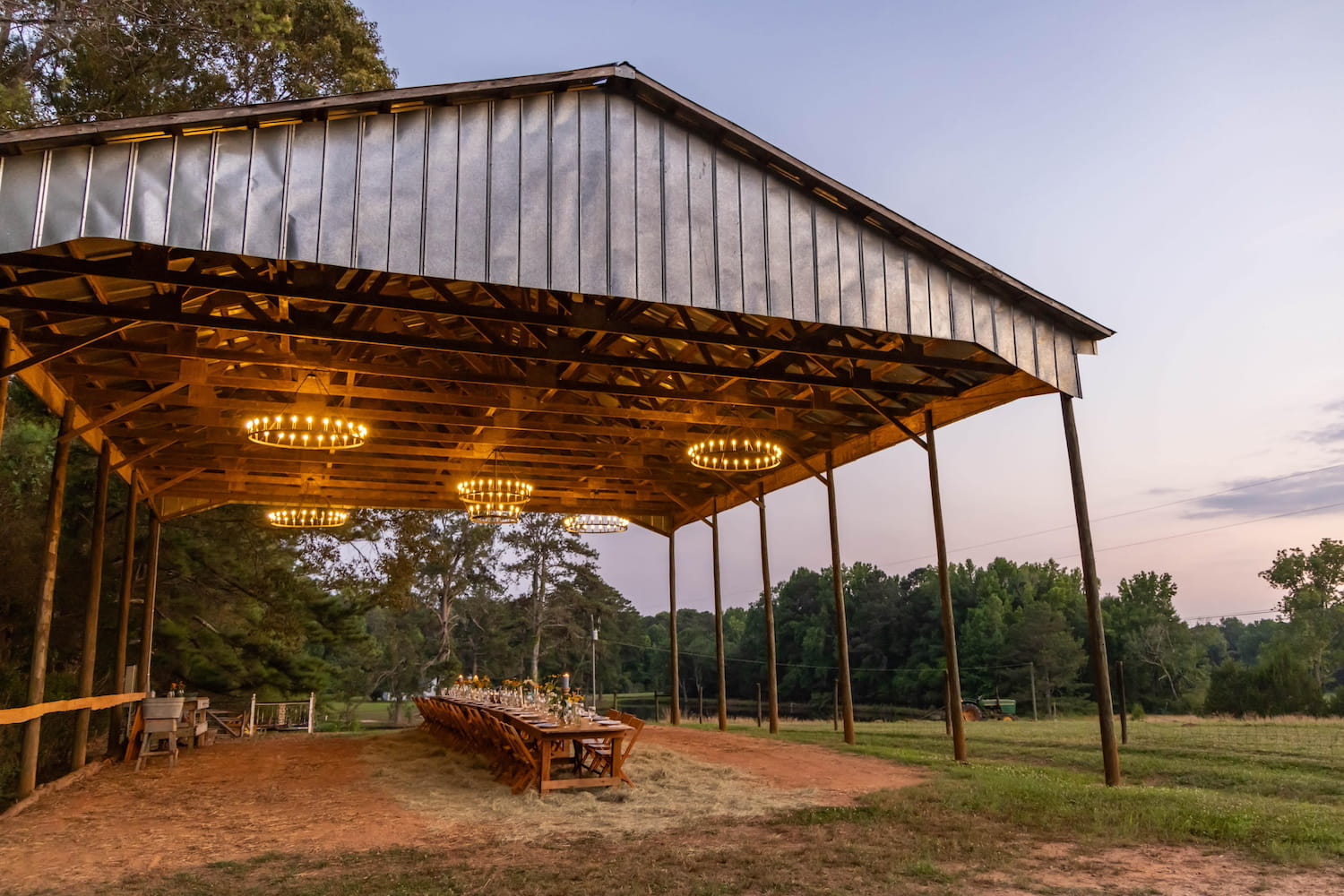
Georgia has more farms than most people realize, nearly all of which sit within an hour or two of Atlanta—or one of the other major metro areas. This is exactly why so many people make the drive out for a day or a full weekend.
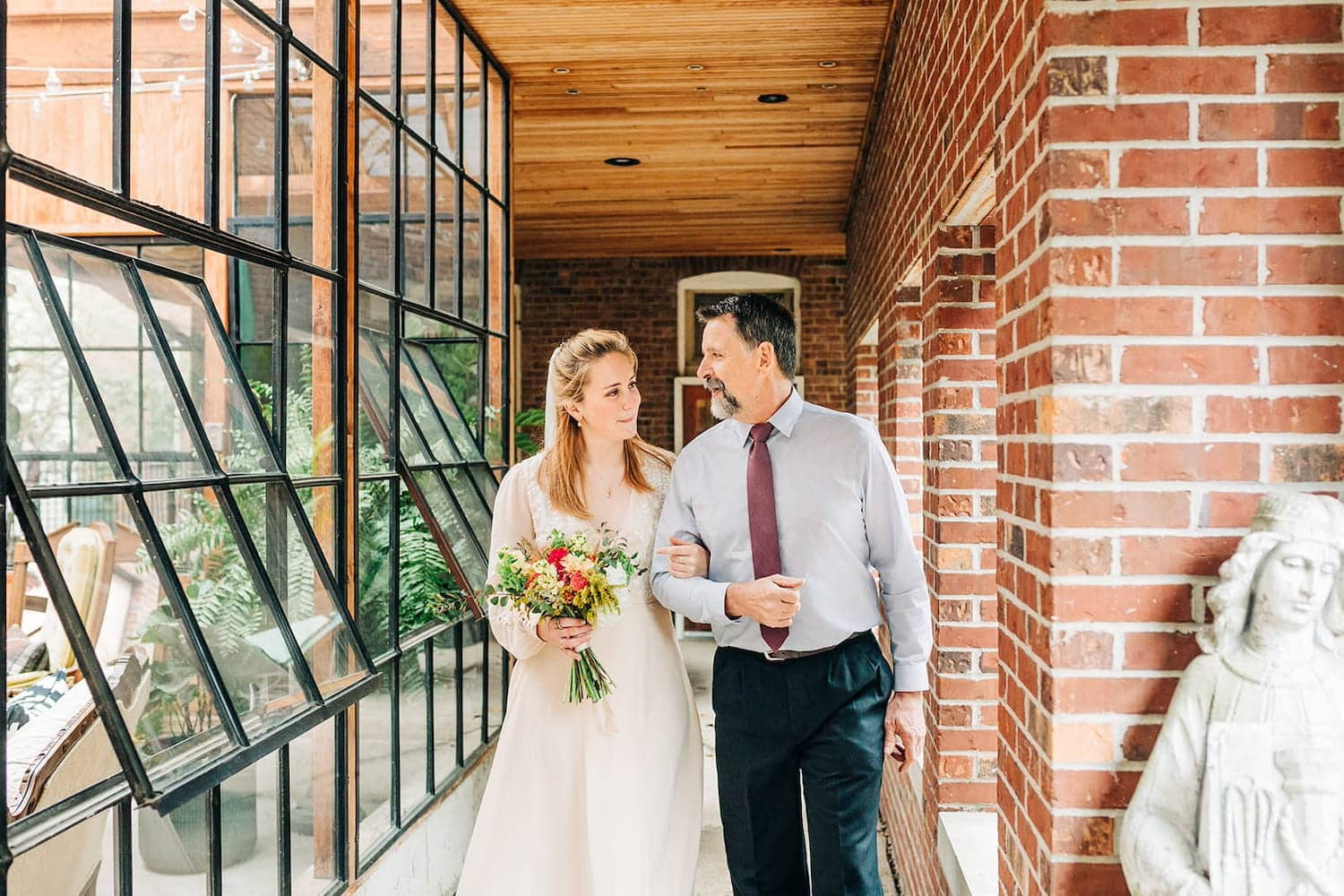
The reasons people rent farms vary just as much as the farms themselves. Some come for a relaxed weekend with friends, others to host a small wedding under the live oaks or shoot a brand campaign among the rows. Each of these occasions comes with its own set of needs, and not every booking platform is built to handle all of them equally well.
Learn where Airbnb works for renting a Georgia farm, where it tends to fall short, and how to find the right property for whatever you have in mind.
Can you use Airbnb to rent a Georgia farm?
Quick answer: It depends on what you’re planning.
If you want a quiet getaway, an overnight stay, or a small group sleeping on a farm together, Airbnb works. If you want to use the farm for an event (a wedding, a brand shoot, a family reunion, a corporate retreat), Airbnb gets risky fast.
Airbnb bans parties at every listing in the world. The rule covers any “disruptive gathering,” and it’s enforced by an algorithm that flags bookings before the host even sees them. Even small farm events might get caught.
Georgia adds its own layer on top. The state’s agritourism statute defines what counts as a working farm, but each county sets the actual event rules. Forsyth County, for example, only grants agritourism use permits to farms that are at least 20 acres and zoned agricultural. A regular farmhouse listed on Airbnb usually doesn’t qualify, which means a county can still shut your event down.
For a quiet stay, Airbnb is fine. For an event on the farm, it’s the wrong fit.

Where Airbnb falls short for renting a farm in Georgia
Airbnb is built for overnight stays, not day-use bookings or gatherings. For a Georgia farm event, that mismatch shows up in four specific ways.
Anti-party flags can block bookings
Airbnb has a global ban on parties at every listing in the world. The ban catches more than loud parties. A small wedding, a workshop, a team off-site, even a family dinner with too many cousins can read as a “disruptive gathering,” which violates the platform’s policy.
To enforce that, Airbnb also runs an AI system that screens bookings before they go through. The system looks at how many people are in your group, what day of the week it is, how close you live to the place, and how long you’re staying. A 10-person reunion on a holiday weekend at a farmhouse 90 minutes from Atlanta hits most of those signals.
“I understand they don’t want people to throw parties, but I don’t know why I was flagged as a party risk.” — Reddit user, r/AirBnB thread “Your reservation couldn’t be completed. Can anything be done?”
Even hosts who would happily welcome a small farm wedding never see the booking come through. Plenty of groups have also found themselves on the receiving end of a host cancellation a week before the event, after the host figured out the booking was actually a wedding.
You can only book by the night
Airbnb charges by the night, so the booking is a full 24 hours for events that only last a few hours.
Most Georgia farm Airbnbs in popular rural areas (Blue Ridge during apple-picking season, the Atlanta exurbs during fall) also have two-night minimums on weekends.
That means paying for two full nights to use one Saturday afternoon, and the booking can still get blocked by Airbnb’s anti-party screening before it confirms.
Some farms aren’t licensed for gatherings
Georgia runs an agritourism program that defines what counts as a real working farm, and on top of that each county sets its own rules for which properties can host events and which can’t.
A residential farmhouse listed on Airbnb usually isn’t a registered farm, which means the host’s confirmation doesn’t necessarily give the property legal authority to host your wedding, retreat, or shoot.
The county can step in even after you’ve booked, and the people most exposed are the guests who already paid for the venue.
Your booking offers no real guarantee
A traditional event venue gives you a signed contract that locks in your date months in advance. Airbnb doesn’t work like that. Hosts can cancel anytime.
“Airbnb gives its property owners a LOT of freedom to cancel on guests, so realize that a property owner can say yes right now, but then decide at any time that they don’t want to rent to you. A week ago or so, there was a bride on this forum who rented a property through VRBO (kind of similar), and then they cancelled on her 2-3 months before the wedding.” — Laura, discussion thread on Wedding Wire “Airbnb Wedding?”
Rural farm bookings in Georgia come with one more risk: there isn’t a backup farm down the road. If the host pulls out three days before, you’re not finding another barn or vineyard with the same look within an hour’s drive.
For a farm wedding, a brand shoot, or a family reunion, that’s the worst kind of risk.
How to find a farm in Georgia for your event
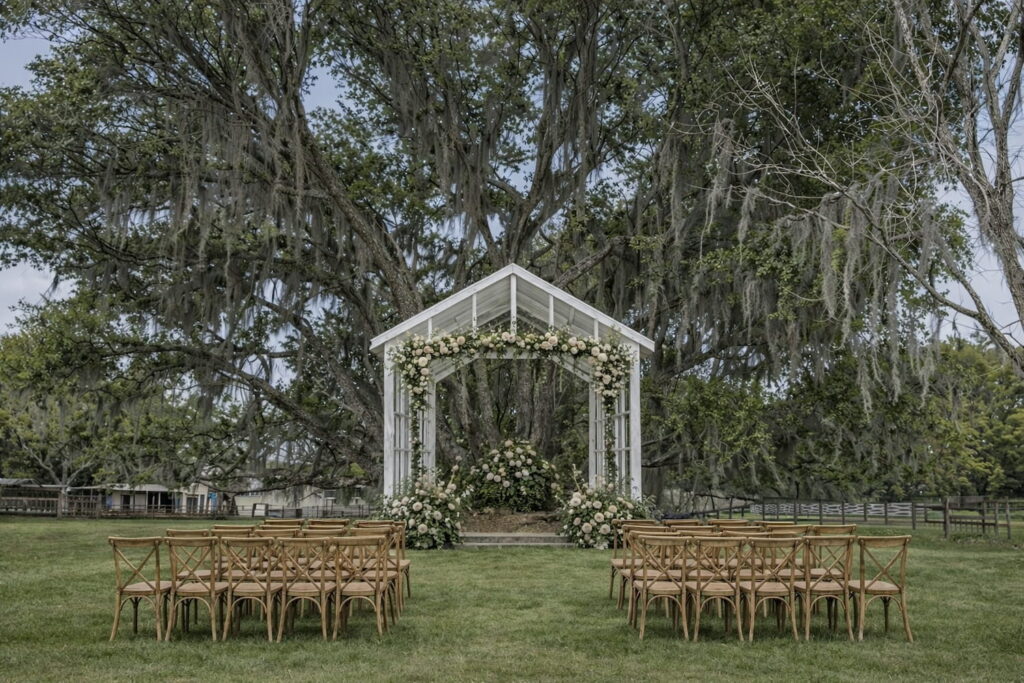
Georgia’s farm country isn’t all the same. The region you pick shapes the look, the logistics, and the price.
Most events booked at Georgia farms fall into a few buckets: weddings, brand shoots, family reunions, corporate retreats, and milestone parties.
The right region depends on what you’re hosting.
Pick the Georgia farm region that fits
Each rural region attracts a different kind of event.
Blue Ridge, Ellijay, and the North Georgia mountains
Rustic farms and wedding venues in Blue Ridge cover the apple country and small-batch vineyards spread across Fannin, Gilmer, and Lumpkin counties. The October light hits exactly how the photographers say it does. Best for fall weddings under the foliage, family reunions during apple-picking season, and brand shoots that need real orchards rather than the staged kind.
Ellijay and Gilmer County
Barn wedding venues in Ellijay cover the apple-and-cabin area south of Blue Ridge. Highway 52 runs past dozens of working orchards, vineyards, and small farms over a short drive. Best for fall weddings, apple-season family reunions, and shoots that want the harvest look.
Cherokee and Forsyth County exurbs
Farm venues in Cumming cover the Forsyth County side of the exurbs. Barn spaces in Canton round out the inventory in Cherokee County, where most of the working pasture inside an hour of Atlanta sits. Best for couples and corporate teams who want a country day without a long drive.
Athens and the Oconee River valley
In Athens, barn wedding locations sit a 15-minute drive from a walkable college town, which makes splitting the weekend easy: rehearsal in town, ceremony on a farm. Outdoor spaces nearby work for non-wedding bookings like rehearsal lunches, brand shoots, and Sunday gatherings. Best for couples who want a Friday night in town and a Saturday on a farm.
Augusta and the Savannah River corridor
Farms to rent around Augusta tend to skew older: Victorian houses, pond-side estates, and pecan-shaded properties near the Savannah River. Other rustic spots nearby cover the same kind of historic Southern look without the drive to Charleston. Best for weddings, family gatherings, and brand shoots that want a heritage backdrop.
Macon and Middle Georgia peach country
Outdoor spaces around Macon sit in peach and pecan country, with rates that run lower than the mountains or Atlanta. That helps when the budget has to cover catering, lodging, and tents too. Best for family reunions, smaller weddings, and Sunday gatherings around peach season.
Atlanta proper for metro outdoor space
Farm wedding venues inside the Atlanta metro cover the green pockets the city still has, pasture-edge backyards, garden estates, and barn-adjacent terraces. Outdoor spots in the city handle non-wedding bookings without the hour drive each way. Best for shorter farm-feel events that don’t need a destination trip.
Georgia farm styles to consider
Georgia’s mix of mountain orchards, horse country, peach country, and pine-flat plantations gives you more options than a regular event hall.
- Restored barns with exposed beams and wood floors (Atlanta exurbs, Blue Ridge, Coastal Plains)
- Farm wedding venues with ceremony lawns and reception barns (Cherokee, Forsyth, Fayette)
- Outdoor wedding venues with pasture or orchard backdrops (North Georgia, Middle Georgia)
- Micro-wedding venues for groups of 20 to 40 (Savannah)
- Mansions and estates with grounds for full-property takeovers (Buckhead, Cherokee, Savannah)
- Garden venues for seated outdoor ceremonies (Atlanta, North Georgia)
- Rustic event spaces with country character (statewide)
These are just starting points. Across Georgia, you’ll find farm venues ready for events at every price point and size.
Confirm capacity, parking, and weather backup
Rural Georgia farms need things most city venues don’t have to think about.
Before you book, ask about specifics:
- Standing vs. seated capacity: A farm tent seats differently than an indoor barn.
- Parking for 50+ cars: Farms with 200-foot driveways can bottleneck fast.
- Weather backup: Georgia thunderstorms hit hard in summer.
- Restrooms: Working farms may not have enough.
- Farm animal access: Some hosts allow petting-zoo time, some don’t.
- Sound limits and end times: Rural neighbors enforce these rules.
- BYOB and outside catering: Rural Georgia farms are usually flexible.
“Also, the best filtered water system mounted in the kitchen wall was a huge hit for our guests. I look forward to planning another event at this perfect 7 acre property equipped with a trampoline, jacuzzi, basketball court and plenty of parking. You definitely won’t be disappointed in renting” — Renee F., Peerspace review
Standing and seated capacity are usually different. Ask the host what makes sense for your specific group. A higher hourly rate with everything included usually beats a cheaper space where extras pile up after.
Tap into Georgia local farm know-how
Georgia’s farm scene has grown along with the state’s agritourism law. From top-tier wedding planners across the state to local event photographers in Atlanta, the vendor list runs deep, and a lot of them already work with our hosts, who tap into that network directly.
A Blue Ridge orchard owner has a short list of caterers who handle the mountain road. A Forsyth horse-farm host knows which photographers handle the equestrian look. A Savannah farm host knows which florists work well with the Lowcountry humidity.
When you message a host before booking, ask which vendors they recommend. That short list beats scrolling through a search engine.
Plan the drive and the timing
Georgia is bigger than it looks. Drive times from Atlanta to the rural belts around it:
- Atlanta to Blue Ridge/North Georgia mountains: 90 minutes to 2 hours
- Atlanta to Cherokee/Forsyth/Fayette exurbs: 45 to 60 minutes
- Atlanta to Macon/Middle Georgia peach country: 90 minutes
- Savannah to Coastal Plains/Lowcountry: 30 to 60 minutes
Cell service can drop in deep-rural Georgia (parts of the Blue Ridge, the southern Coastal Plains). For vendors loading in, build in buffer time. Sunset timing matters for outdoor ceremonies. November and December sunsets land around 5:30 p.m., so plan the schedule around that. Peak fall traffic on Highway 515 to Blue Ridge can add 30 to 60 minutes on October weekends, so message guests with a buffer in mind.
How much does it cost to rent a farm in Georgia?
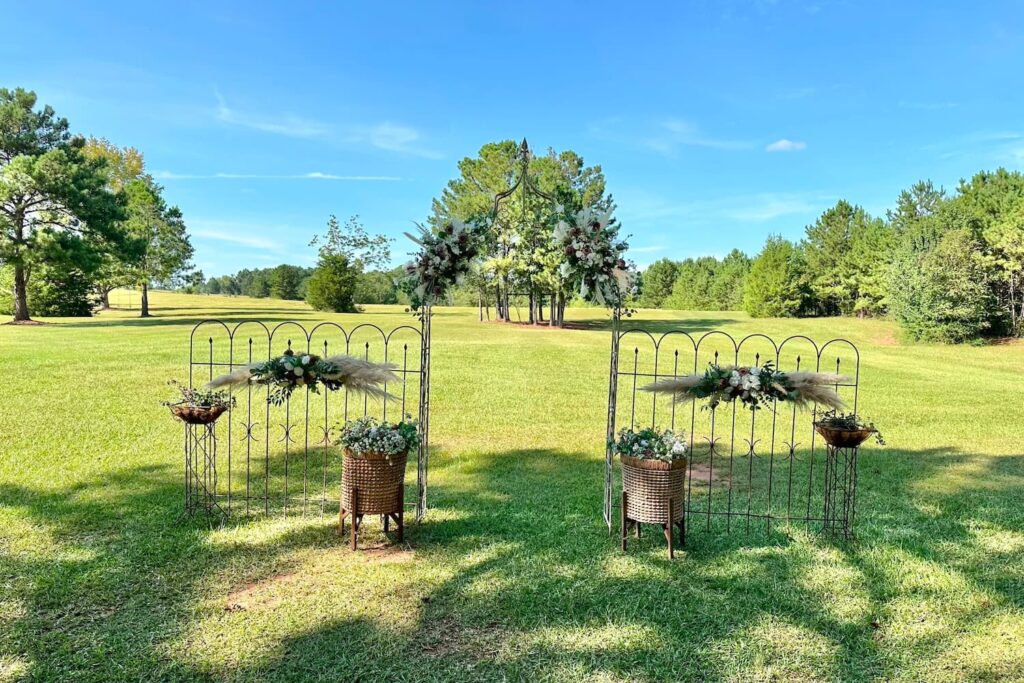
Farm wedding venues in Atlanta average $132 per hour.
That number covers a mix of restored barns, working farms, and full-estate takeovers. The actual price depends on which region you book, the season, and what’s included with the space.
Where you book changes the price
Farm and barn rates per hour vary across Georgia:
- Fayetteville: average $70/hour
- Augusta: average $73/hour
- Cumming: average $91/hour
- Athens: average $99/hour
- Marietta: average $105/hour
- Alpharetta: average $107/hour
- Blue Ridge: average $118/hour
- Atlanta: average $132/hour
- Canton: average $186/hour
- Ellijay: average $277/hour
The spread runs about 4x from the cheapest market (Fayetteville) to the priciest (Ellijay), and roughly 2x from the Atlanta citywide baseline to Ellijay at the top end. If the date is flexible, weekday and shoulder-season bookings shave more off the rate.
Group size drives the price
Headcount also moves the price. A 15-person farm-to-table dinner at a Cherokee farm costs way less than a 60-person wedding in a Blue Ridge orchard.
Based on our booking data, most Atlanta farm bookings run for around 35 guests over four-hour windows, with bookings usually starting between 3 p.m. and 4 p.m.
Cutting your guest list from 50 to 30 opens up more farm spaces at lower rates.
For smaller groups, a micro-wedding venue in Atlanta usually has nicer finishes and more host attention than a big farm built for 100.
The math works differently at smaller sizes.
Setup, cleanup, and weather buffer count too
Hourly bookings cover the whole time you have the space, not just when guests are there.
For a Georgia farm event, plan in three parts:
- Setup (1 to 2 hours): Unloading rentals, arranging seating, vendors loading in via the farm road
- The event (4 to 8 hours): Ceremony, dinner, shoot, dancing, whatever you came for
- Cleanup (1 to 2 hours): Breakdown, packing rentals, restoring the space
Planning the buffer time ahead helps you avoid overtime fees when an afternoon thunderstorm pushes the schedule.
How Peerspace works better for a Georgia farm event
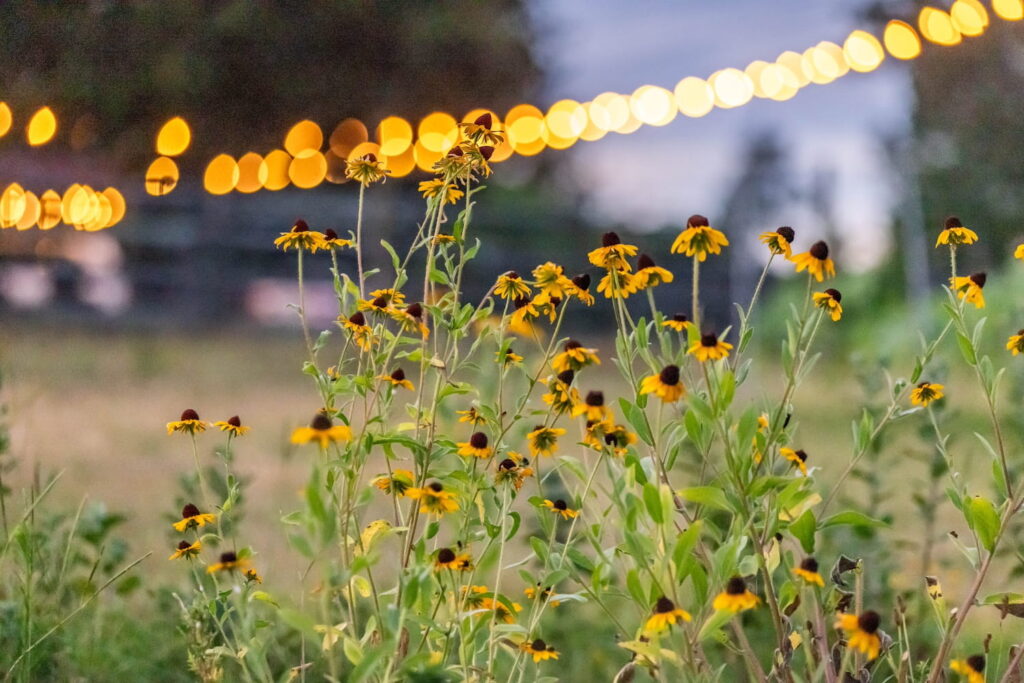
Airbnb is built for sleeping. We’re built for events. You book hours in farms designed for what you’re using them for: a focused window of ceremony, dinner, shoot, retreat, or workshop.
In a state where county permits draw a hard line between regular farmhouses and licensed agritourism sites, that difference matters.
Hosts expect events
Our hosts in Georgia list their farms specifically for gatherings, including weddings, outdoor photoshoots, reunions, and retreats. They expect groups, vendors, and music. That’s the whole point. No party ban, no automatic screening, no surprise cancellations because a permit got pulled.
“Melissa was wonderful to work with & made my wedding ceremony so special! Her flower farm is gorgeous & the barn/event space is so charming (our photographer called the foliage a ‘dream backdrop for photos’).” — Kylie O., Peerspace review
In Atlanta, our hosts have welcomed 9,887 guests to their farm wedding venues with a 4.81-star average and 98% rebook rate.
Those numbers come from hosts who actually understand how farm events unfold.
Hourly booking and clear pricing
Our hourly pricing model means a six-hour Georgia farm wedding costs exactly six hours.
“We wanted a rustic feel for our 40-person wedding but did not want to pay the cost of a traditional venue, and we stumbled across this gem!” — Lauren R., Peerspace review
When you book, you pay for the hours you use: the hourly rate plus any cleaning fee or extras the host has set, all shown before you book.
For couples splitting costs across two families or brand teams filing expense reports, that makes budgeting far simpler.
See the farm before you book
For a Georgia farm event, photos only show you so much. The orchard might be muddy after a thunderstorm. The driveway might bottleneck at 50 cars. The barn might have low ceilings. The light at 4 p.m. in October looks nothing like the listing photos taken in July.
Our hosts can set up a visit before you book. You walk the property, check the parking, see the rain plan, and figure out where the rentals load in. All before paying anything.
Airbnb doesn’t work this way. Their policy tells hosts to say no when guests ask to see the place first: “If someone asks to visit your place prior to booking, let them know it’s not possible.” For a farm event with vendors counting on a clear setup, it’s a lot to commit to without ever seeing the property.
A quick walkthrough at a Blue Ridge orchard or a Forsyth horse farm is the easiest way to know if a farm really fits your day.
Event-friendly tools built in
We built our platform around events. Our filters let you narrow down by what actually matters for a farm event: kitchen access, outdoor space, parking, sound systems, AV, and weather backup.
“The whole process of finding a venue, booking, and communicating with the person was so easy. I had a great experience with Peerspace. I had never heard of it before so was a little nervous at first, but so happy that I found it. I will definitely be using Peerspace again in the near future for the next event.” — Alisha Rivas, Trustpilot review
Once you book, our invites tool lets you share one link with the whole group (address, time, parking, what to bring) so the group chat can stick to outfit pics instead of “wait, where is the farm again?”
How to find a Georgia farm on Peerspace
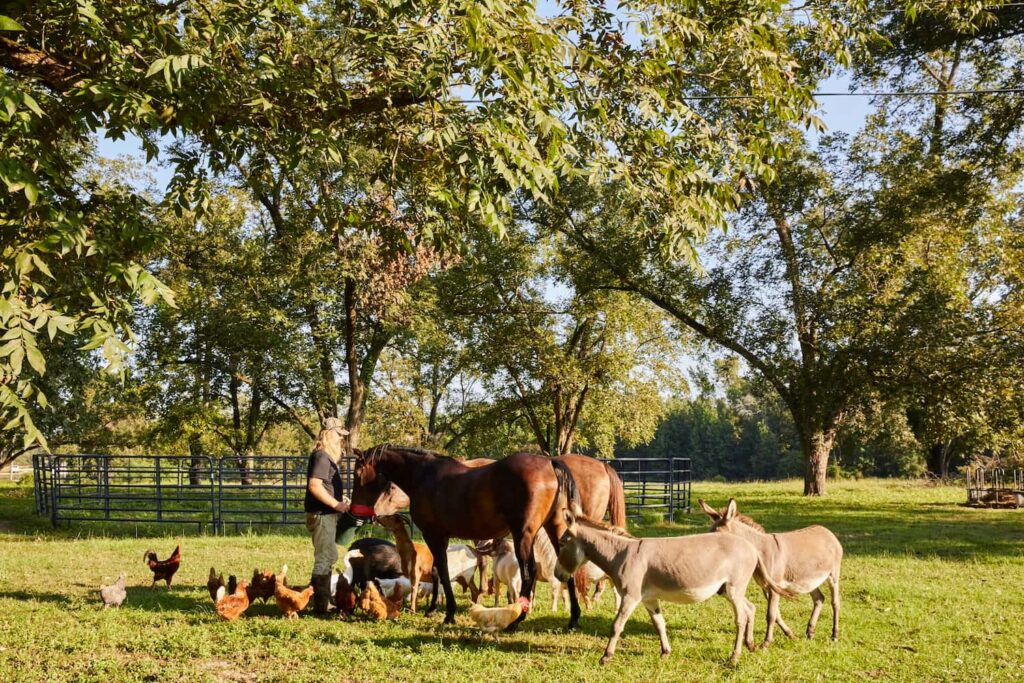
Here’s how to find and book a farm on Peerspace for your event in Georgia:
1. Open the website or app.
Go to Peerspace.com or download the app (Apple App Store | Google Play Store).
2. Search by location and use case.
- Type “Atlanta,” “Savannah,” “Macon,” or your specific Georgia city.
- Type what you’re hosting. “Farm wedding,” “barn,” “brand shoot,” “farm-to-table,” or just “farm” all pull up relevant venues.
3. Filter by group size, date, and budget.
- Guests: Be honest with the count. A space for 25 will feel cramped with 40.
- When: Check if it’s free for your specific window, including setup and cleanup.
- Price: Set a range that works for your full event budget.
4. Use the filters to narrow it down.
- Space type: Barn, farm, garden, mansion, photo studio
- What’s included: Kitchen, outside alcohol, speakers, tables/chairs, parking
- Outdoor: Pasture, orchard, garden, terrace, pavilion
- Style: Rustic, modern, vintage, bright, country
5. Read reviews from similar events.
Scroll through reviews looking for farm weddings, brand shoots, or family reunions. These tell you how the farm actually works on the day, not just how it looks in photos.
6. Message the host before booking.
A quick message helps you check the details. Questions worth asking on a Georgia farm:
- “We’re planning a [wedding / shoot / reunion / off-site] for [X] guests on [date]. Is your farm a good fit?”
- “What’s the parking layout? How many cars can fit?”
- “What’s your weather backup plan?”
- “Any restrictions on outside catering or BYOB?”
- “What’s the load-in road like for vendors?”
7. Book and confirm.
Once you’ve found the right farm, book through the platform. Before your event:
- Confirm arrival time and how to get in.
- Send your guests the invite with all the details.
- Reach out to the host with any last-minute questions.
Find your Georgia farm
Georgia earns its spot on the farm-event map by giving groups four totally different rural backdrops in one state.
The booking decision comes down to what the day actually needs. A regular farmhouse Airbnb works for sleeping. For an event on the farm (a wedding, a shoot, a workshop, a reunion), you need a space where the host expects groups, the agritourism permit is on file, and the parking actually fits your guest list. That’s where Peerspace excels.
In this article
- Can you use Airbnb to rent a Georgia farm?
- Where Airbnb falls short for renting a farm in Georgia
- How to find a farm in Georgia for your event
- How much does it cost to rent a farm in Georgia?
- How Peerspace works better for a Georgia farm event
- How to find a Georgia farm on Peerspace
- Find your Georgia farm
In this article
- Can you use Airbnb to rent a Georgia farm?
- Where Airbnb falls short for renting a farm in Georgia
- How to find a farm in Georgia for your event
- How much does it cost to rent a farm in Georgia?
- How Peerspace works better for a Georgia farm event
- How to find a Georgia farm on Peerspace
- Find your Georgia farm
Get together somewhere better
Book thousands of unique spaces directly from local hosts.
Explore SpacesShare your space and start earning
Join thousands of hosts renting their space for meetings, events, and photo shoots.
List Your Space