Rent a podcast studio in Arlington, VA

Discover thousands of unique podcast studios for rent for your next recording.

Enter your activity
Arlington, VA

How podcast rooms work on Peerspace

Peerspace is the easiest way to book unique for all kinds of productions including photo shoots, film shoots and music videos. We also have spaces for meetings and events.

The most locations

Every day we uncover new, inspirational spaces, including podcast rooms, perfect for your activity.

Professional hosts

Our network of helpful hosts respond quickly, and are well-versed in accommodating all types of productions, including film and photo shoots.

Hire by the hour

Only pay for what you need. Pay by the hour for your podcast room location without worrying about hidden fees or overtime.

Popular podcast studios

How much does renting a podcast studio in Arlington cost?

Most podcast studio rentals in Arlington start around $50 to $125 per hour, with cheaper self-serve options sometimes landing at $35 to $70 per hour and more polished video studios often ranging from $125 to $155 per hour. Premium production spaces in the broader Arlington and DC corridor can reach $200 to $400 per hour when they include stronger sound isolation, larger crew support, or higher-end camera packages. A quick way to think about podcast studio pricing in Arlington is by tier:
  • Budget-friendly: Best for solo hosts, simple audio sessions, or short interview recordings. These spaces usually offer a basic set, lighter support, and fewer extras.
  • Mid-range: Best for most creators. This is often the sweet spot for a polished two- to four-person recording with solid lighting, multiple microphones, and a more professional backdrop.
  • Premium: Best for branded shows, executive interviews, launch content, and podcasts where video quality matters as much as sound.
The hourly rate is only part of the real cost. The biggest pricing factors are usually:
  • Included gear: Microphones, headphones, cameras, lighting, and switching can change the rate quickly.
  • Support level: Self-serve rooms cost less than staff-assisted or fully engineered studios.
  • Minimum hours: Many spaces require two to four booked hours even if your episode takes less time to record.
  • Set complexity: A simple audio table is cheaper than a styled, camera-ready video set.
  • Guest count: A two-person setup usually costs less than a four-person roundtable.
  • Post-production: Editing, clipping, color correction, and file delivery can raise the total significantly.
To avoid budget surprises, ask for the full recording-day cost instead of focusing only on the hourly rate. Your total may include setup time, teardown time, parking, extra attendees, overtime, or add-ons like editing and social clips. Browse studios options to compare what different spaces include in their rates before committing. If you're deciding between renting a podcast studio and building a home setup, renting is often the smarter first move when you want professional polish without buying acoustic treatment, microphones, lighting, cameras, furniture, and backup gear. For a weekly show with a stable format, building at home may make sense later. For a launch, guest interview, or anything on camera, renting usually gives you a faster path to sounding credible and looking polished. Before you book, ask:
  • What's included in the rate?
  • How much time do I really need for arrival, setup, sound check, recording, and breakdown?
  • What happens if the session runs late?
  • Can I see the exact set or room I am booking?
A good Arlington podcast studio should make you feel like you're paying for confidence, not just square footage.

Are there beginner-friendly podcast studios with onsite support?

Yes. If you're new to podcasting, a beginner-friendly podcast studio with onsite support can make your first recording day much smoother. For first-time hosts, the hardest part is usually not the conversation. It's everything around it: mic placement, audio levels, headphone monitoring, camera framing, lighting, guest seating, and file capture. The best beginner-friendly podcast studios in Arlington reduce that stress with a clear workflow and real help on site. According to HVMANE Studios, Studio H offers both plug-and-play self-serve options and full-service visual engineer support, along with studio lighting, color-changing backdrops, multitrack audio, and room for up to four guests. That's the kind of setup that helps newer hosts focus on the episode instead of the equipment. When comparing beginner-friendly podcast studio options, look for these signals:
  • Onsite guidance: Someone is available to help with levels, microphone placement, and troubleshooting in real time.
  • Simple workflow: You know what happens when you arrive, record, wrap, and receive your files.
  • Guest-ready layout: The seating feels natural and comfortable for interviews, co-hosts, and first-time guests.
  • Visual support: If you want YouTube, TikTok, or LinkedIn clips, the studio should help you look as professional as you sound.
  • Low-friction booking: The rules, inclusions, and add-on fees are clear before you commit.
Before booking, ask:
  • Will someone be there when I arrive?
  • Can you help with microphone setup and level checks?
  • Do you monitor audio during the session?
  • Do I get raw files, edited files, or both?
  • How many guests can record comfortably without hurting sound quality?
  • Can I see a sample of a show recorded in this room?
Watch for these red flags:
  • Too much jargon: If the host can't explain the setup clearly, it may not be beginner-friendly.
  • No onboarding at all: Self-serve can work, but only if the instructions are extremely clear.
  • Unclear deliverables: You should know exactly what files you'll receive and when.
  • No proof of real podcast use: A nice-looking room isn't automatically a good recording room.
Pro tip: If you're new to booking a podcast studio, send the host your exact episode plan before you commit. On Peerspace, pre-booking inquiries aren't financially binding, so you can ask about engineer support, microphone count, camera setup, setup time, and file delivery before sending a booking request. It's also smart to keep only one live booking request open at a time so you don't accidentally get confirmed in multiple spaces. If you're still exploring options, browse options in the area to get a better sense of what different studios offer before reaching out.

Which Arlington studios are set up for video podcasting?

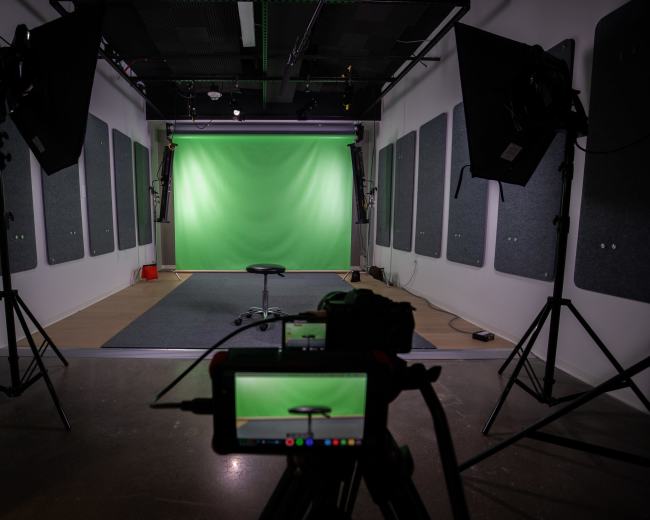
The best video podcast studio options in Arlington are the ones built for both clean sound and strong on-camera presentation. For video podcasting, a quiet room isn't enough. A strong podcast studio also needs controlled lighting, camera-ready furniture, a clean or branded background, and a workflow that supports interviews and social clips. If you're specifically looking for spaces designed with on-camera work in mind, you can check out rentable video studios to compare what's available. A useful regional benchmark comes from Podville Media, which highlights adaptive studios with modular sets, 4K cameras, and teleprompters. Even though Podville is part of the broader DC market, it matters for Arlington shoppers because Arlington podcast studio searches often compete directly with nearby DC options. In practice, that means your expectations should be shaped by the regional standard, not just Arlington city limits. When evaluating a video podcast studio, prioritize these features:
  • Camera-ready sets: The room should look intentional before you ever hit record.
  • Lighting control: Soft, flattering light matters more than many creators expect.
  • Multiple camera angles: This is especially important for interviews and roundtables.
  • Backdrop flexibility: The set should support your brand instead of forcing every show into the same look.
  • Teleprompter or monitor options: These help with intros, sponsor reads, and executive messaging.
  • Audio isolation: A beautiful set does not help if HVAC noise, hallway traffic, or street rumble ruins the audio.
The right room also depends on your format:
  • Solo thought leadership show: You need flattering lighting, a clean background, and easy direct-to-camera framing.
  • Two-person interview show: You need balanced seating, strong microphone placement, and at least two camera angles.
  • Four-person panel: You need more space, more microphones, cleaner sightlines, and a tighter lighting plan.
  • Branded corporate series: You may want a more refined set, teleprompter access, and room for a producer.
When you review listings, ask for more than marketing photos. Ask for:
  • A sample clip from the exact room
  • A list of included cameras and how many angles are recorded
  • Whether lighting is already dialed in or customized each session
  • Whether live switching is available
  • Whether short-form social clips can be delivered
One important reality check: some Arlington spaces are better described as flexible creator studios or general production rooms than true podcast studios. That doesn't make them a bad fit. It just means you should confirm they're genuinely ready for seated conversation content, not just photo shoots or generic video work.

Which Arlington neighborhoods work best for podcast recording?

The best neighborhood for a podcast studio depends on your priorities: convenience, noise control, parking, and the kind of guest experience you want to create. If your top priority is easy access for co-hosts, clients, and out-of-town guests, Courthouse, Rosslyn, and Crystal City are usually strong choices. These areas tend to work well for business podcasts, interview shows, and any recording day where Metro access, garages, and a polished professional feel matter. If Crystal City is on your shortlist, you can search interview rooms to see what's available in that specific area. If your priority is a more creative or lifestyle-driven vibe, Clarendon can be appealing. It often fits creator content, personality-driven shows, and casual interviews. The tradeoff is that busy retail and nightlife areas can bring more ambient noise, so the building and room matter a lot. If your priority is quieter surroundings and easier parking, more residential-feeling pockets such as Waverly Hills and nearby lower-traffic areas can work well. These spots may be better for focused audio capture and a less hectic arrival experience, though transit access may be less seamless for every guest. A simple way to match neighborhood to recording style:
  • Corporate interviews: Rosslyn, Courthouse, and Crystal City often make the most sense.
  • Creator brands and lifestyle content: Clarendon can work well if the room is properly isolated.
  • Quieter recording days: Residential-adjacent areas may be worth prioritizing over the busiest commercial strips.
Neighborhood should only be your first filter. A quiet block can still hide a bad recording room, and a busy district can still contain an excellent podcast studio. Once you shortlist an area, check the room itself for:
  • Street exposure: Corner windows and ground-floor visibility can mean more outside noise.
  • Building type: Office buildings and dedicated studios often perform better acoustically than casual lounge spaces.
  • HVAC noise: This is one of the most common hidden audio problems.
  • Elevator and hallway traffic: This matters even more during business hours.
  • Parking and loading: This becomes important if you're bringing lights, cameras, or multiple guests.
If you're choosing between a small podcast studio and a larger flexible event space for a panel taping, Arlington's commercial neighborhoods may offer more lounge-style inventory, while quieter pockets often work better for straightforward seated recording. Choose the neighborhood for the arrival experience, then choose the room for the sound.
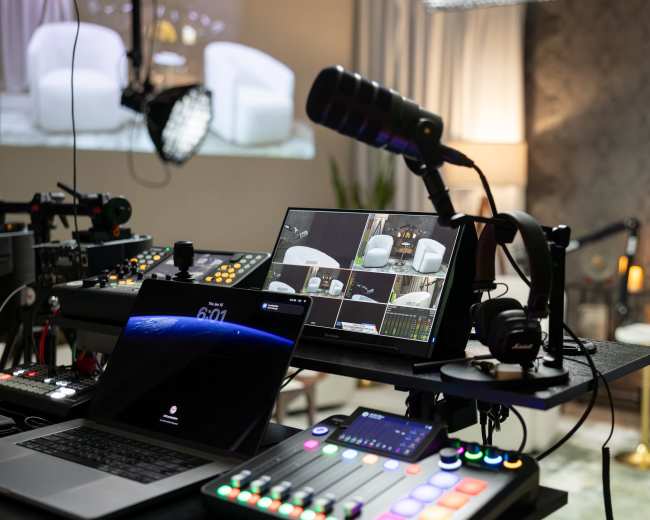
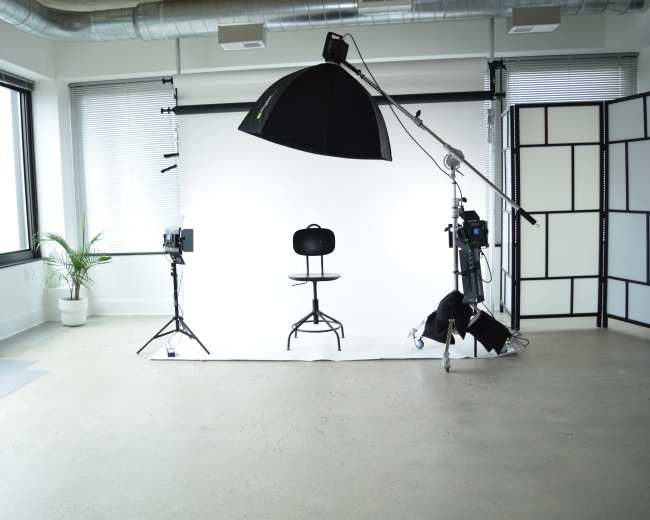
Is renting a studio better than recording at home or a park?

For most people, yes. Renting a studio is usually the better option if you care about consistency, credibility, and a smoother production day. A home setup can work if you already have a quiet room, decent acoustic treatment, reliable gear, and a simple format. A park can work if the outdoor setting is essential to the concept and you're intentionally embracing ambient sound. But if your goal is professional audio, polished video, and a guest-ready experience, a podcast studio usually wins. Here's the practical comparison:
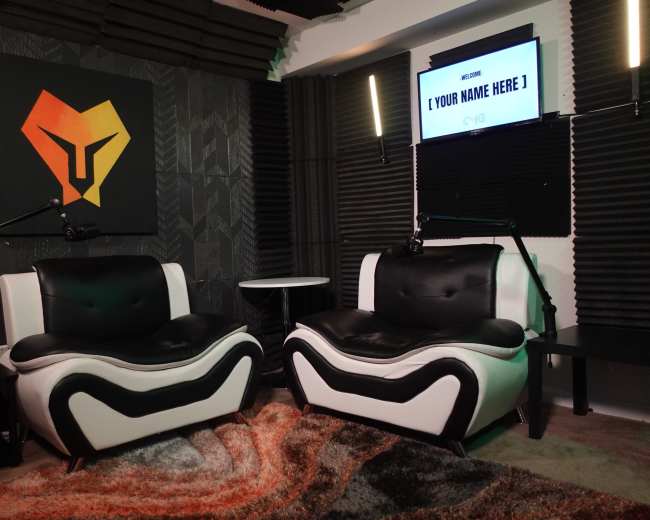
  • Studio rental: Best for interviews, branded shows, video podcasts, first-time hosts, and any session where technical issues would be costly.
  • Recording at home: Best for solo audio, tighter budgets, and hosts who already know their gear and room.
  • Recording in a park: Best only when the outdoor setting is central to the concept and you can accept wind, traffic, voices, and inconsistent sound.
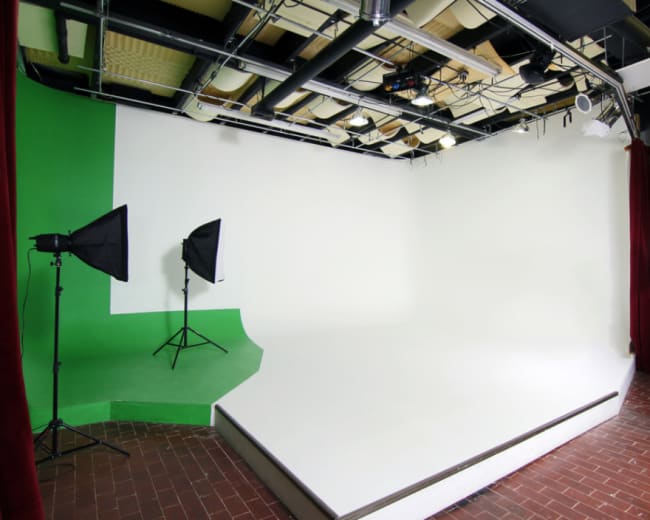
Why renting a podcast studio often feels worth it:
  • Better credibility: Stronger acoustics and microphone placement create instant polish.
  • Better visuals: Lighting and set design matter if you're filming.
  • Better guest experience: A dedicated environment signals that the conversation matters.
  • Better efficiency: You spend less time setting up, troubleshooting, and fixing avoidable problems in editing.
The hidden costs of not renting a studio are easy to underestimate:
  • At home: Echo, neighbors, pets, appliances, delivery buzzers, and distracting backgrounds can all hurt the result.
  • At a park: Wind, sirens, leaf blowers, people walking through frame, and weather can quickly ruin a take.
  • In either setting: More post-production time and a higher risk that a great conversation becomes unusable.
Renting is especially worth it when:
  • You're launching a show: First impressions matter.
  • You're hosting clients or executives: The setting should match the importance of the guest.
  • You want social clips: Video needs to feel intentional, not accidental.
  • You're still testing the format: Renting lets you avoid buying gear before you know what your show actually needs.
A home setup becomes more attractive when your podcast is stable, mostly audio-only, and your room sound is already solved. Until then, renting is often the fastest way to create a show that sounds like the version you have in your head. If you're ready to compare options, check out recording studios to find a space that fits your format and budget.

Do I need permits to record a podcast in Arlington offices?

Usually, no special permit is needed for a small private podcast recording inside an office in Arlington, but you still need to confirm building approval and any production-specific requirements. In practice, the biggest questions are usually not about the recording itself. They're about the building, the lease, insurance, and how much your setup affects common areas or daily operations. Check these layers before recording day:
  • Building permission: The property manager or tenant may need to approve the activity.
  • Lease rules: Some office leases restrict production activity, visitor counts, signage, or after-hours access.
  • Insurance requirements: Offices may require proof of coverage, especially if outside vendors or extra gear are involved.
  • Crew size and footprint: A two-person podcast is very different from a multi-camera video crew with lighting cases.
  • Common area impact: Loading, parking, elevators, and lobby use can trigger extra approvals.
  • Public-facing elements: Exterior filming, amplified sound, alcohol service, or public attendance can change the rules quickly.
A useful rule of thumb:
  • Low-risk situation: A small private recording inside an office suite with no audience, no exterior filming, and minimal gear.
  • Higher-risk situation: A branded shoot with multiple cameras, extra crew, building signage, food service, alcohol, or public guests.
Before you book or plan the session, ask:
  • Has this office hosted recording sessions before?
  • Is building management aware of the plan and okay with it?
  • Are there restrictions on crew size, access hours, or gear?
  • Do we need a certificate of insurance?
  • Can we use elevators, loading zones, and common areas for setup?
  • Are there county, building, or management rules that apply to filming or events here?
Take these red flags seriously:
  • Overly broad assurances: If someone says permits or approvals are never needed, that's usually too simple to trust.
  • No building check: Even if the recording seems minor, building rules still matter.
  • Growing production scope: Once a small podcast starts looking like a full production or event, the approval requirements can change.
The short version is this: for a straightforward office-based podcast recording in Arlington, you may not need a special permit for the office use itself, but you should still confirm building approval, insurance, and any production-related requirements before recording day. If the logistics of using an office feel complicated, you may find it simpler to explore interview filming locations in Arlington where production use is already built into the space.
Updated July 16, 2026Our data is refreshed in real time using booking trends, verified guest reviews, and direct partner updates — with additional quality checks from our team.