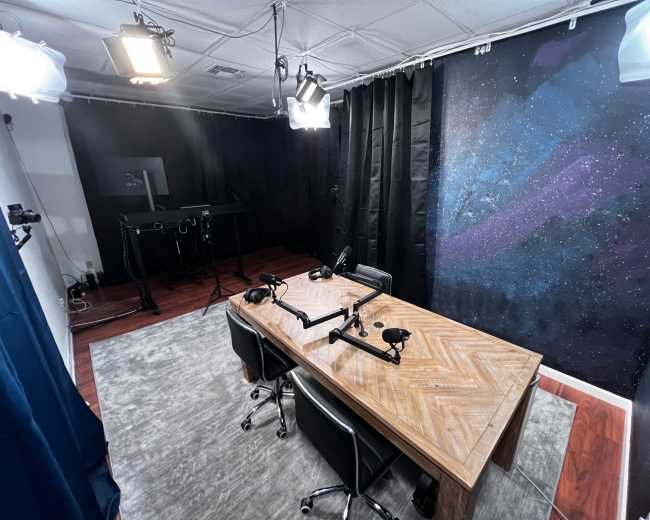
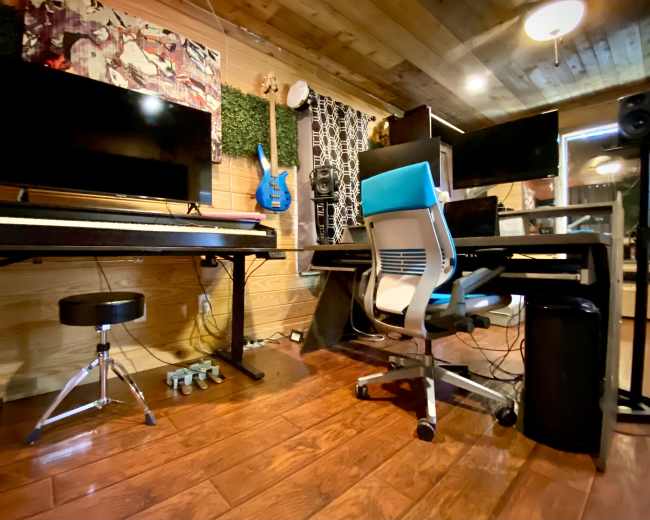
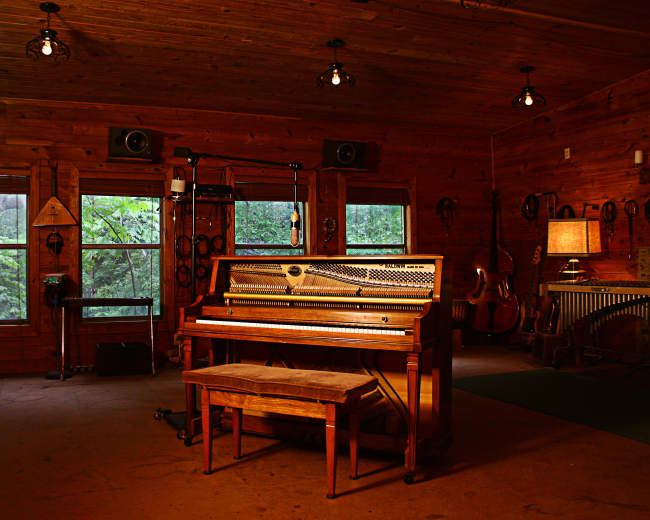
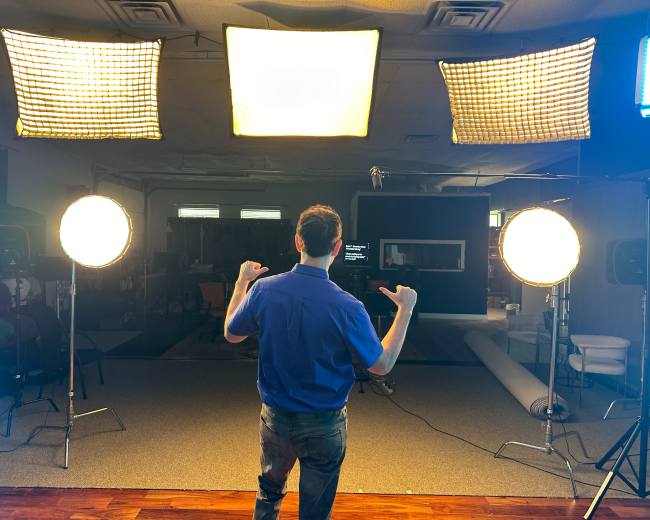
Rent a podcast studio in Austin, TX

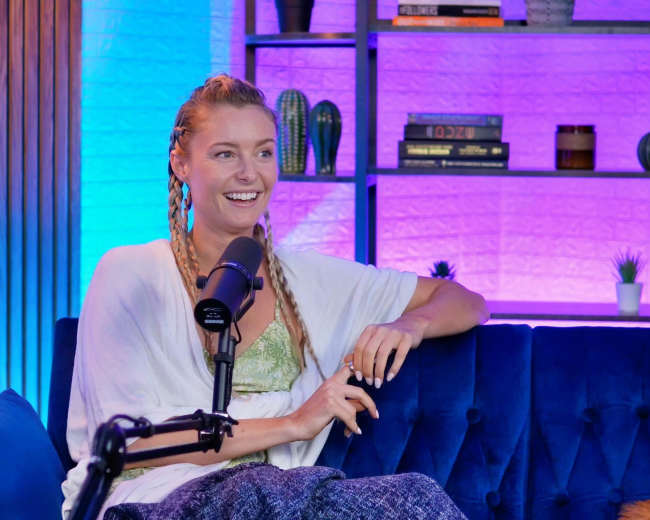
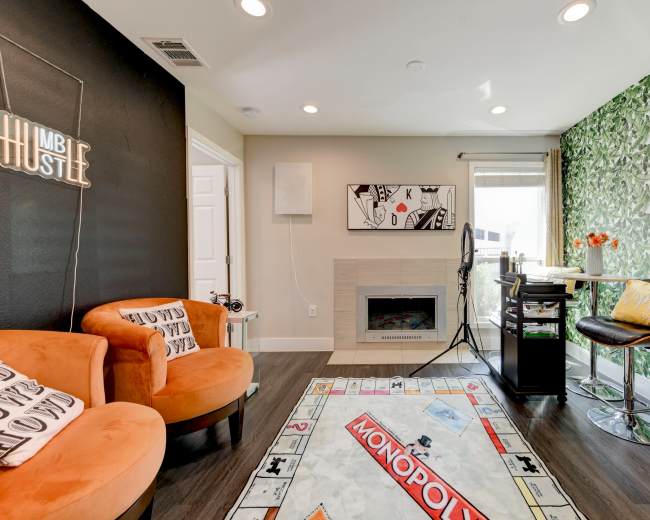
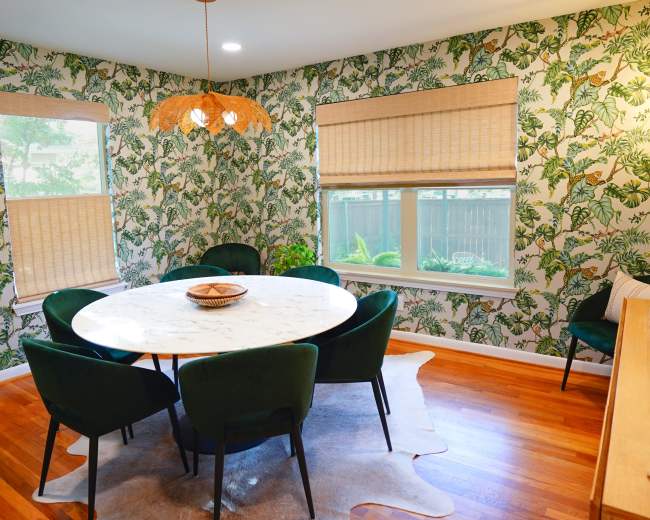
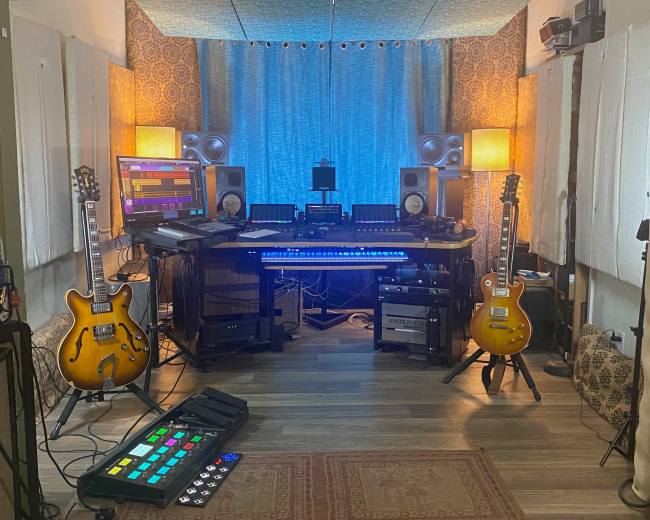
Discover thousands of unique podcast studios for rent for your next recording.

Enter your activity
Austin, TX

How podcast rooms work on Peerspace

Peerspace is the easiest way to book unique for all kinds of productions including photo shoots, film shoots and music videos. We also have spaces for meetings and events.

The most locations

Every day we uncover new, inspirational spaces, including podcast rooms, perfect for your activity.

Professional hosts

Our network of helpful hosts respond quickly, and are well-versed in accommodating all types of productions, including film and photo shoots.

Hire by the hour

Only pay for what you need. Pay by the hour for your podcast room location without worrying about hidden fees or overtime.

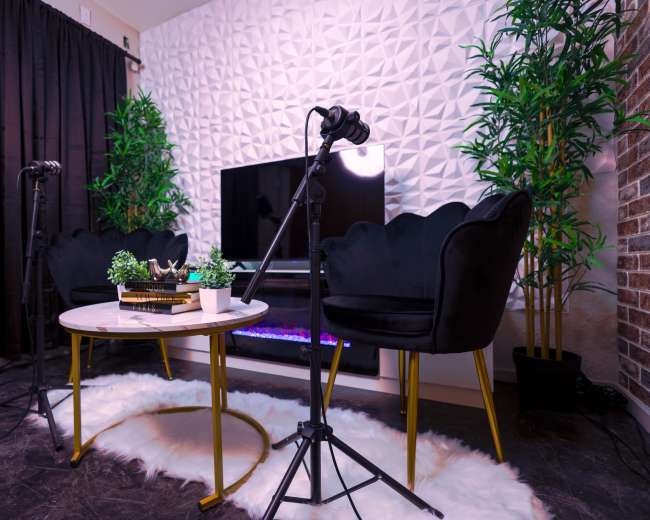
Popular podcast studios

Do I need an engineer at a podcast studio, or can I record on my own?

You can absolutely record on your own in a podcast studio if the room is designed for self-serve use. The real question is not whether you're technical enough. It's whether the setup removes enough friction that you can focus on being a good host. In Austin, podcast studio rentals usually fall on a spectrum. Some are true walk-in, hit-record spaces. Others are producer-led rooms built for people who want zero technical stress. That distinction matters because one of the biggest pain points for first-time renters is not creativity. It's feeling intimidated by gear, routing, levels, cameras, and file management. A simple rule of thumb is this:
  • Record on your own if: Your format is simple, your guest count is low, you're comfortable doing a quick soundcheck, and the podcast studio is already wired for success with mics, headphones, camera framing, and clear instructions.
  • Book an engineer if: It's your first session, you're recording video, you have multiple guests, you're bringing in a high-value guest, you need same-day files, or you know technical stress will pull you out of performance mode.
Before you book a podcast studio rental, ask these questions:
  • Onsite support: Is anyone available if a mic cuts out, a camera stops recording, or a file does not save correctly?
  • Recording workflow: Do I press record myself, or does someone start and monitor the session?
  • File delivery: Will I receive raw audio and video files, a live-switched cut, or both?
  • Setup time: Is soundcheck included in my booking window, or do I need to reserve extra time for it?
  • Room complexity: Is this a beginner-friendly podcast studio, or is it designed for people who already know studio workflows?
If your goal is confidence, not just cost savings, hiring an engineer for your first one or two sessions is usually money well spent. It gives you a clean quality baseline, helps you learn the workflow, and lets you decide later whether you want to go self-serve. Your content format matters too:
  • Audio-only interview show: Self-recording can be very doable if you have one guest and a simple setup. If you're focused purely on sound quality, you can explore recording studios in Austin to find a room that fits your format.
  • Video podcast production: Engineering support becomes much more valuable because you're no longer just capturing a conversation. You're producing a reusable content asset for YouTube, LinkedIn, Instagram Reels, and short clips.
For most first-time renters in Austin, the smartest move is to choose the least stressful path that still fits your budget. If the thought of levels, camera cards, lighting, and backups makes you tense before you even arrive, book the engineer. Your audience will hear the difference in how relaxed you sound.

What makes a podcast room truly video-ready?

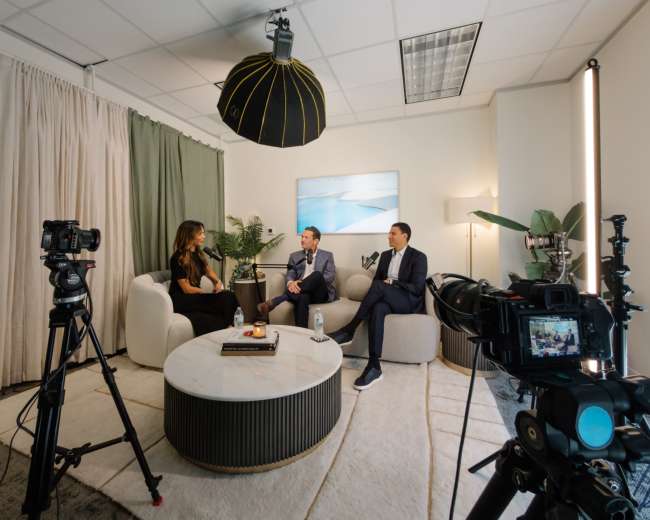
A truly video-ready podcast studio is not just a room with cameras in it. It's a space where audio, lighting, framing, comfort, and brand presentation all work together so your show looks intentional instead of improvised. That matters because many creators in Austin are not renting a podcast studio just to capture audio. They want a full content package: long-form episodes, short clips, social teasers, guest promos, and stills. A video-ready room has to support production, not just recording. Here's what actually makes the difference:
  • Clean audio first: Great-looking video will not save bad sound. The room should be treated well enough to reduce echo, HVAC hum, traffic bleed, and harsh reflections.
  • Lighting that flatters people: You want soft, even lighting that works across skin tones and avoids deep shadows, forehead glare, and under-eye darkness.
  • Intentional framing: Chairs, table height, camera angle, background depth, and eyeline should all feel natural on screen.
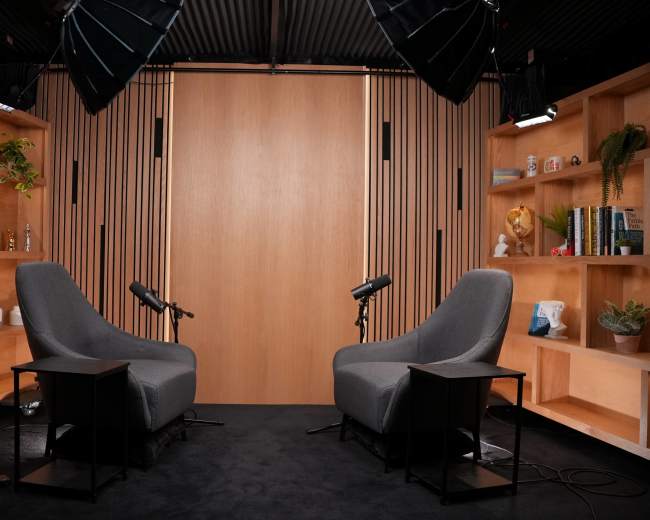
  • A background with personality: The set should look polished and on-brand without distracting from the conversation. Shelves, texture, plants, art, branded signage, or customizable backdrops can make a big difference.
  • Multiple camera options: If you want dynamic clips, you need more than one static wide shot. Multi-angle coverage gives editors more to work with and helps conversations feel alive.
  • Controlled visuals: A room can look beautiful in photos and still fail on video if it has reflective surfaces, mixed color temperatures, messy cords, or bright windows with no glare control.
  • Comfort for hosts and guests: Squeaky chairs, awkward stools, bad posture, and cramped mic placement show up fast on camera.
When you're vetting a video podcast studio, ask for specifics instead of broad claims:
  • Camera setup: How many cameras are included, and do I get separate files or one switched edit?
  • Lighting control: Is the lighting adjustable for mood and skin tone, or is it just fixed overhead light?
  • Set flexibility: Can I swap chairs, move decor, or choose a different backdrop to better fit my brand?
  • Clip readiness: Does the setup work for both full episodes and vertical social clips?
  • Visual proof: Can you show me actual footage from the room, not just listing photos?
Watch for common red flags:
  • One-camera setup sold as a full video studio: That may be fine for a basic interview, but it's not the same as a room built for video podcast production.
  • Echo in sample footage: If you can hear the room in the sample, your audience will hear it too.
  • Harsh ring-light look: That usually reads more like quick creator content than a polished show.
  • Beautiful room, but weak set design: A nice room is not automatically a strong on-camera set.
A useful mental shift is this: a video-ready podcast studio is part studio, part set, and part workflow system. If the space helps you look polished, sound clear, and leave with usable content for multiple channels, it's truly video-ready. If it only gives you a place to sit in front of a camera, it's just video-capable. To compare spaces that are purpose-built for on-camera work, look for video studios for podcast production and review their setups before committing.

What extra costs should I ask about before I book?

Ask for the full working total, not just the hourly rate. In Austin, podcast studio pricing can range from about $25 per hour for a basic room to $300 per hour for a premium setup, but the real total depends on what's included around the session. Here are the extra costs people most often miss:
  • Engineering or producer support: Some podcast studio rentals include onsite help. Others charge separately for setup, monitoring, troubleshooting, or file handoff.
  • Video add-ons: A room may include audio, but charge more for extra cameras, live switching, camera operators, or video file delivery.
  • Editing and clipping: Raw files are one thing. Edited episodes, short clips, captions, thumbnails, and color correction are another.
  • Setup and breakdown time: If your booking is two hours long but you need 20 minutes to settle in and 20 minutes to wrap, your useful recording time shrinks quickly.
  • Overtime: Running late can get expensive, especially if you assume you can squeeze in one more segment.
  • Custom set styling: Branded signage, backdrop swaps, special lighting looks, or furniture changes may cost extra.
  • Guest count or crew size: Some studios price for a certain number of people and charge more if you bring a team, makeup artist, photographer, or clients.
  • File transfer and storage: Large video files, hard drive handoff, same-day delivery, or cloud uploads can carry separate fees.
  • Parking and building access: Free parking is a major value add in Austin. If it's not included, ask what your guests should expect.
  • Insurance or documentation: Brand shoots, sponsored content, and larger productions sometimes require proof of insurance or added paperwork.
  • Cleaning or reset fees: This is more common in broader event spaces, but it's still worth confirming if you're bringing food, props, or a larger crew.
The best way to avoid surprises is to ask these five questions before you book:
  • Included services: What's included in the hourly rate?
  • Excluded costs: What does my quoted total not include yet?
  • Common add-ons: What do most podcast clients end up paying for?
  • Overtime policy: How is overtime handled?
  • File delivery: What does file delivery look like, and is it included?
A lower-cost podcast studio can still end up costing more than a premium one if you add an engineer, video support, editing, parking, and overtime. On the other hand, a higher hourly rate may be a better value if it already includes lighting, multi-camera capture, basic engineering, and easier logistics. Pro tip: If you book through Peerspace, build setup, soundcheck, guest arrival, and breakdown time into your reservation from the start. Sketch out a podcast recording session, and then research what different spaces include. Then, budget your time accordingly. That buffer is usually cheaper than feeling rushed or getting hit with overtime after the session.

Which Austin areas are best for parking and easy access?

The best area depends on what you mean by easy. In Austin, easy parking and easy access are not always the same thing. Some neighborhoods are better for driving and load-in. Others are better if your guests are staying downtown, taking rideshares, or coming from different parts of the city. Here's a practical way to think about it when choosing a podcast studio location:
  • North Austin and the North Lamar corridor: Usually a strong choice if you care most about driving convenience, easier parking, and simpler arrival for local guests.
  • East Austin, including areas around Tillery and East 5th: Often a good middle ground. You stay relatively central, but many spaces feel more accessible than downtown.
  • Downtown Austin: Best if centrality matters more than free parking. If your guest is visiting from out of town, staying at a hotel, or relying on rideshare, downtown can be very convenient. If everyone is driving, it's usually the highest-friction option.
  • South Austin and South Lamar: Often a solid compromise for teams coming from different directions. These areas can feel easier than downtown while still being familiar and well connected.
The easiest way to choose is to identify your likely pain point first:
  • If everyone is driving: Lean north or east and prioritize onsite parking.
  • If you're recording with out-of-town guests: A more central location may reduce overall stress, even if parking costs more.
  • If you're bringing gear: Focus on load-in, stairs, elevator access, and how close you can park to the door.
  • If you're filming video: Quiet arrival matters too. Busy downtown blocks can add noise, delays, and visual clutter.
Before you confirm the booking, ask the host or studio manager:
  • Parking details: How many spaces are actually available, and are they reserved or first come, first served?
  • Load-in flow: Can we unload near the entrance?
  • Building access: Are there stairs, an elevator, door codes, or limited-hours entry?
  • Guest arrival: Is the location easy to find on the first try?
  • Noise context: Is the room on a quiet block, or near heavy traffic, trains, or nightlife?
If your show includes clients, executives, or guests you really want to impress, convenience is part of the production value. Even a beautiful podcast studio loses some of its appeal if your guest circles for parking, arrives flustered, and starts the session stressed. In Austin, the smoothest recording often starts with the easiest arrival. Browse options so you can compare locations, parking details, and neighborhood context before you commit.

Should I rent a podcast studio or record at home or in a park?

If your podcast matters to your brand, guest experience, or content pipeline, a podcast studio is usually the best choice. Home can work for testing ideas and solo episodes. A park is almost never the best option unless outdoor ambience is the entire concept of the show. Here's the simplest breakdown:
  • Choose a podcast studio if: You want reliable quality, cleaner video, easier guest management, less technical stress, and content you can confidently publish across platforms.
  • Choose home if: You're still experimenting, recording solo, have a quiet treated room, and don't mind handling your own setup and troubleshooting.
  • Choose a park if: You're intentionally making a field recording or documentary-style episode and you are willing to accept noise, weather, and interruption risk.
A lot of people assume home is the budget option and a podcast studio is the luxury option. Sometimes that's true. But not always. In Austin, podcast studio rentals span a broad price range, including accessible hourly options. Once you factor in what it costs to buy or improve mics, headphones, lighting, cameras, acoustic treatment, editing time, and reshoots, a studio can be the more efficient choice. That's especially true if you only record a few times a month and want each session to count. Home recording usually breaks down in predictable ways:
  • Appliance noise: Refrigerator hum and HVAC sound can ruin an otherwise good take.
  • Room sound: Echo from hard walls makes audio feel amateur quickly.
  • Lighting issues: Bad lighting makes even a strong interview look less polished.
  • Tech problems: Internet hiccups, software issues, and file mistakes are common.
  • Guest comfort: Many guests feel awkward recording at a kitchen table or in a makeshift room.
Outdoor recording is harder still. A park gives you atmosphere, but it also gives you wind, traffic, sirens, bystanders, battery anxiety, and almost no control. Unless the environment is part of the story, it usually adds more risk than value. A podcast studio also solves something people don't always say out loud: confidence. Many Austin creators aren't just looking for equipment. They want a space that makes the work feel legitimate, polished, and easier to execute. That fits Austin's broader creative culture as well. Opportunity Austin highlights the city's collaborative environment for innovation and storytelling, which helps explain why so many local podcasters prefer spaces that feel creator-friendly and production-ready. If you're torn, use this quick test:
  • Low stakes: Home
  • High stakes: Podcast studio
  • Nature ambience as the concept: Park
  • Guest interviews, video clips, or branded content: Podcast studio
  • Practice reps and pilot episodes: Home
For most creators, the best progression is not either-or forever. It's home for rough drafts, a podcast studio for publishable episodes, and outdoor recording only when the setting is part of the story. If you're ready to move beyond home recording and want a dedicated space for guest interviews, you can book a filmed interview space that handles the technical setup so you can focus on the conversation.
What should I bring to a podcast room rental in Austin?

Bring less gear than you think and more preparation than you think. If you're renting a podcast studio, the goal is not to show up like a full production house unless you truly are one. The goal is to arrive calm, prepared, and easy to work with so your booking time goes toward recording instead of scrambling. Here's a smart packing list for most podcast studio rentals in Austin:
  • Your episode plan: Bring a clear rundown, opening line, segment structure, sponsor reads, call to action, and key questions.
  • Guest details: Have the correct name spelling, title, bio points, pronunciation notes, and anything sensitive you want to avoid or emphasize.
  • Brand assets: Bring logos, intro music, lower-third copy, or reference visuals if the studio is helping with video or branded set elements.
  • A laptop or tablet: Useful for notes, research, scripts, and quick edits to your outline.
  • Chargers and cables: Bring power for your own devices even if the podcast studio supplies recording gear.
  • A backup drive: Especially useful if you're leaving with large video files.
  • Water and simple throat support: Choose quiet, easy options. Avoid crunchy snacks, noisy cups, or anything that leaves residue on your lips or teeth.
  • A spare top: Very worth bringing if you're filming. Coffee spills and Austin heat happen.
  • Simple on-camera wardrobe: Solid colors usually read better than tiny stripes, loud patterns, or reflective fabrics.
  • Light grooming basics: Pack powder, a comb, lip balm, and whatever helps you feel camera-ready without needing a full vanity setup.
  • Any signed releases you need: Important if you're filming guests for branded or commercial use.
If the room is video-first, also think visually:
  • Avoid noisy accessories: Bangles, large earrings, and anything that hits the mic or table can get picked up.
  • Avoid squeaky items: Shoes, chairs, and fidgety fabrics can create distracting noise.
  • Match the set: If the studio has a darker cinematic vibe, neon athletic wear may clash unless that is part of your brand on purpose.
A few things people often forget, but should not:
  • A timing plan: Know what gets cut first if you run behind.
  • Pickup lines: Make a quick list of intros, transitions, and sponsor lines you can rerecord cleanly at the end.
  • Guest arrival instructions: Share parking info, entry code, suite number, and a phone number for day-of coordination.
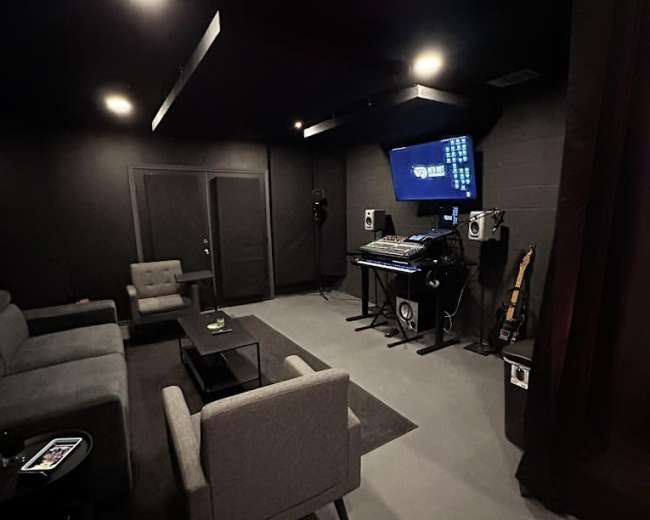
  • A clips checklist: If you want short-form content, identify the moments you know you need before the conversation starts. If your session is built around producing clips, reels, and multi-format assets, it may also be worth looking into content houses for multi-format production that are designed for exactly that kind of workflow.
And a few things you usually don't need to bring unless the listing tells you to:
  • Extra microphones: A true podcast studio should already have them.
  • Extra lights: Most podcast studio rentals include a lighting setup.
  • Camera bodies: These are usually part of the room package if video is offered.
  • Stands and sandbags: Not necessary unless you're adding your own custom production gear.
  • A giant emergency gear bag: In most cases, it adds stress more than value.
What you bring should mostly support your performance, your brand, and your workflow. The best sessions feel effortless on camera, but that ease is almost always prepared. Show up with a clear plan, the right files, a guest-ready attitude, and one backup shirt, and you'll already be ahead of most first-time renters.
Updated July 19, 2026Our data is refreshed in real time using booking trends, verified guest reviews, and direct partner updates — with additional quality checks from our team.