Rent a podcast studio in Baltimore, MD

Discover thousands of unique podcast studios for rent for your next recording.

Enter your activity
Baltimore, MD

How podcast rooms work on Peerspace

Peerspace is the easiest way to book unique for all kinds of productions including photo shoots, film shoots and music videos. We also have spaces for meetings and events.

The most locations

Every day we uncover new, inspirational spaces, including podcast rooms, perfect for your activity.

Professional hosts

Our network of helpful hosts respond quickly, and are well-versed in accommodating all types of productions, including film and photo shoots.

Hire by the hour

Only pay for what you need. Pay by the hour for your podcast room location without worrying about hidden fees or overtime.

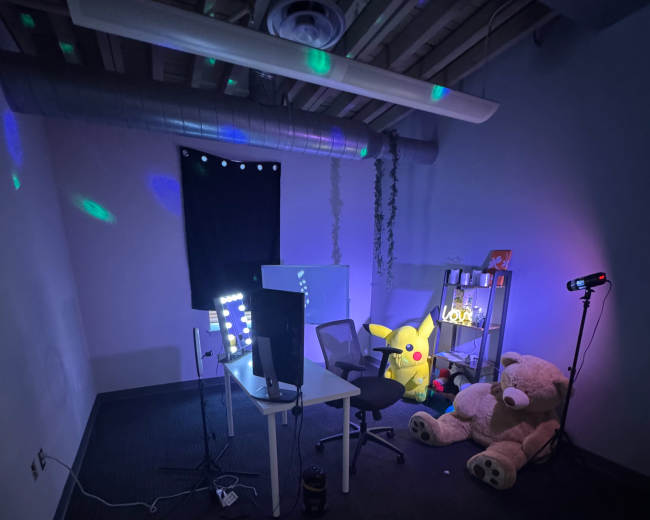
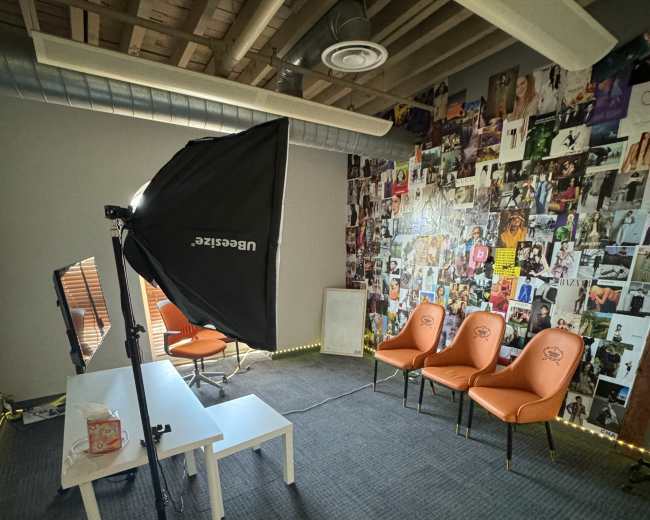
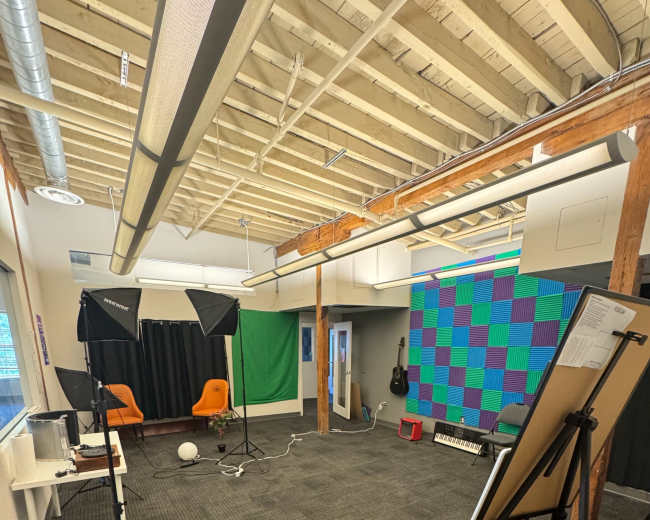
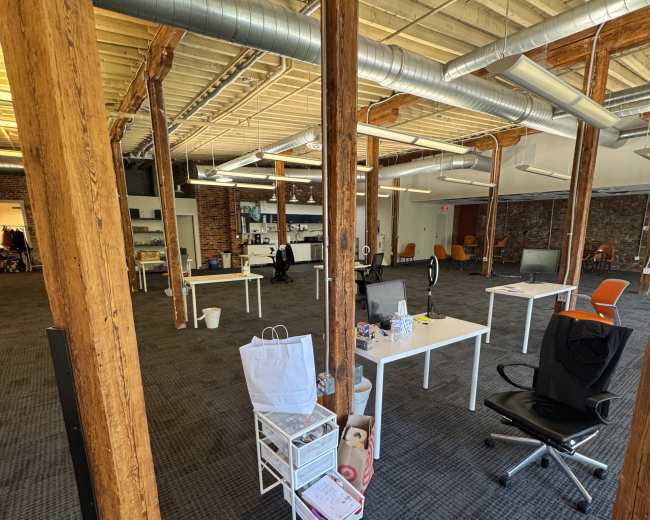
Popular podcast studios

What does it cost to rent a podcast studio in Baltimore?

A podcast studio in Baltimore typically costs about $45 to $210 per hour. The final price depends on whether you need audio only, video podcasting, included gear, and on-site support. Most Baltimore podcast studio rentals fall into three broad tiers:
  • Budget-friendly: Usually the most affordable option and best for solo recording, simple audio sessions, or creators who are comfortable running their own setup.
  • Mid-range: Often includes a better-looking set, stronger sound treatment, improved lighting, and a smoother guest experience.
  • Premium: Usually designed for multi-camera video podcasting, larger guest counts, more microphones, and technical help during the session.
Your total session cost is usually shaped by more than the posted hourly rate. The biggest pricing factors are:
  • Studio type: Audio-only rooms usually cost less than a video-ready podcast studio.
  • Included gear: A room with cameras, lights, multiple microphones, and monitoring usually costs more than a basic setup.
  • Staff support: If you want an engineer, camera operator, or producer, expect the rate to increase.
  • Minimum booking time: Many studios require one-hour or two-hour minimums, and some require longer blocks.
  • Editing and delivery: Some podcast studio rentals include only the room, while others offer file delivery, editing, and publishing support for an added fee.
A simple two-hour audio session may stay near the lower end of the market. A filmed interview with multiple guests usually lands in the middle. A branded, multi-camera production with technical support can move to the premium end quickly. Before you book, ask these questions so you can compare podcast studio pricing accurately:
  • What's included: Confirm whether microphones, headphones, cameras, lighting, and file delivery are part of the base rate.
  • Who runs the session: Ask whether the studio is self-serve or whether someone will handle levels, switching, and troubleshooting.
  • What happens after recording: Find out whether you receive raw files only or whether editing is available for an extra fee.
  • How time is counted: Make sure setup, sound check, guest arrival, and breakdown are included in the hours you reserve.
  • What extra fees exist: Ask about overtime, extra attendees, add-on gear, editing, and after-hours access.
If your main goal is keeping costs down, a simple audio-first podcast studio and a batch-recording session usually offer the best value. If your goal is polish, social clips, and a strong on-camera brand, paying more for a ready-to-roll studio often saves time and stress later. Browse Baltimore studios to compare pricing and amenities across all three tiers.

Can I find a fully equipped podcast studio for video podcasting?

Yes. Baltimore has podcast studio options that are built for both audio recording and video podcasting, which is increasingly important for creators who want content for YouTube, Instagram, TikTok, and brand channels. A fully equipped podcast studio for video should ideally include:
  • Clean audio capture: Enough microphones for every speaker, plus headphones and monitoring.
  • Camera coverage: At least two camera angles for interviews, and more if you want dynamic edits.
  • Lighting: Soft, flattering lighting that works well on camera.
  • Acoustic control: Sound treatment that reduces echo and keeps the room from sounding hollow.
  • A finished set: Seating, table layout, and a background that looks intentional on video.
  • Technical support: Someone who can help with setup or troubleshoot if something goes wrong.
  • Fast file handoff: A clear process for receiving your footage and audio after the session.
When you compare listings, don't rely on the phrase "fully equipped" alone. Ask for specifics:
  • How many cameras are included: Two cameras is very different from four.
  • How many people can be miked at once: This matters even if your usual format is small.
  • Whether each speaker gets a separate audio track: Separate tracks make editing much easier.
  • Whether lighting is already dialed in: Some studios include lights but still expect you to position them yourself.
  • Whether an engineer stays during the session: This is especially helpful if you're new to video podcasting.
  • Whether the studio supports vertical clips: That matters if you want social-ready content in addition to long-form video.
A podcast studio can look great in photos and still create production problems if it lacks enough power, space for stands and tripods, or basic guest comfort. Common red flags include:
  • Styled photos, but no real podcast setup shown
  • No mention of microphone count, camera count, or engineer support
  • A visually appealing room with no proof of sound treatment
  • No sample clips, past recordings, or behind-the-scenes images
  • A large capacity claim with no explanation of how many people fit on mic comfortably
If you need a space specifically designed for on-camera work, you can find video studios in Baltimore to narrow your search to rooms with proper camera setups and lighting. Pro tip: If you're comparing podcast studio listings on Peerspace, message the hosts before you book. Ask for the exact microphone count, camera count, whether an engineer is included, and how much time you should reserve for setup, sound check, and breakdown. That quick step usually shows you which spaces are truly plug-and-play and which ones still require a lot of DIY work.

How many guests can comfortably fit in a recording session?

For most Baltimore podcast studio bookings, two to five people on mic is the practical sweet spot. Some studios support up to six microphones, but comfort, camera framing, and sound quality matter more than the maximum number a room can technically hold. A podcast studio may fit six people, but that doesn't always mean six people will sound good, look good on camera, and have enough space for a relaxed conversation. Once you add chairs, tables, microphone stands, cameras, lights, and possibly a producer, the room can feel full quickly. A more realistic way to judge capacity looks like this:
  • Solo or one-on-one interview: Almost any true podcast studio should handle this well.
  • Three to four people on mic: This is the most common and easiest group format to book.
  • Five people on mic: Usually possible, but you should confirm table size, microphone placement, and camera framing.
  • Six or more people: This starts to feel more like a panel and usually requires a larger content studio or hybrid production space.
It also helps to separate people on mic from total people in the room. If you're bringing a producer, photographer, videographer, makeup artist, or brand teammate, ask about total occupancy rather than guest seating alone. Before you book, ask these practical questions:
  • How many people can be on mic at once?
  • How many people can be in the room total?
  • Does every seat have a dedicated microphone?
  • Can cameras frame everyone without awkward cropping?
  • Is there a space for waiting, gear bags, or off-camera team members?
If you're planning a roundtable, a filmed panel, or a session with a small audience, a standard podcast studio may not be enough. In that case, you may want to consider interview filming locations to find larger spaces designed for multi-person, on-camera conversations. A few red flags are worth watching for:
  • Lounge seating shown in photos, but no microphones visible
  • Event capacity listed, but no recording capacity explained
  • No wide-angle photos showing how the set fits real people
  • A claim that the space works for groups, but no mention of multi-mic support
If you're unsure, ask the host for a room photo taken from the recording position. That usually gives a much clearer picture of whether your session will feel polished and comfortable or cramped and chaotic.
Are there free or low-cost podcast studio options in Baltimore?

Yes, but free and low-cost podcast studio options are more limited than paid rentals, so it helps to go in with realistic expectations. If you want a free starting point, Enoch Pratt Free Library offers access to a Sound and Video Production Studio through the Teen Center at the Central Library. That can be especially useful for younger creators, students, and first-time podcasters who want to test audio and video production without paying for a commercial studio right away. Some creators may also be able to offset production costs through funding. The Baltimore Office of Promotion & The Arts offers the Creative Baltimore Fund, which may be relevant if your podcast connects to arts, culture, community storytelling, or creative work in Baltimore City. If you're not eligible for a free option, low-cost commercial podcast studio rentals still exist. In many cases, the most affordable listings work best for short, audio-first sessions. A low-cost approach usually works best when you:
  • Batch multiple episodes into one visit
  • Split the cost with a co-host
  • Choose an off-peak booking time
  • Skip editing add-ons
  • Bring your own producer if the studio allows it
The tradeoff is usually one or more of the following:
  • Less support: You may need to manage your own recording flow.
  • Simpler visuals: Budget options may be functional, but not especially camera-ready.
  • Fewer extras: Editing, publishing, and engineering may cost extra.
  • Access limits: Free resources may have age, membership, scheduling, or program restrictions.
A smart strategy is to use podcast studio time only for the sessions that benefit most from it. For example, you might book a studio for guest interviews, launch episodes, or video-heavy content and record solo episodes at home. If you're comparing free, low-cost, and premium options, ask yourself whether you're mainly trying to save money or save stress. Sometimes the cheapest option is exactly right. Other times, paying a little more for a podcast studio with better sound, lighting, and workflow is the better value.

Which Baltimore neighborhoods are best for booking a podcast studio?

The best Baltimore neighborhood for a podcast studio depends less on prestige and more on the kind of recording day you want. Guest convenience, parking, visual style, and building logistics usually matter more than the neighborhood name alone. Here's a practical way to think about common areas:
  • Downtown: Best for central access, a polished business feel, and easier coordination for guests coming from different parts of the city. If you want a professional audio setup in this area, you can browse recording studios in Downtown Baltimore to see what's available.
  • Fells Point: A strong choice for creator-friendly spaces, video podcasting, and visually styled rooms that can also support social content. Creators focused on video can find video studios in this area for spaces with camera-ready setups.
  • Canton and the Canton Industrial Area: Often a good fit if you want larger creative studios, hybrid photo and video capability, or more production flexibility. You can explore recording studios in Canton to compare options in this area.
  • Woodberry and nearby creative pockets: Great if you want more character, a less corporate feel, or a studio with an artsier backdrop.
  • Near-city options such as Dundalk or surrounding areas: Worth considering if parking, value, or larger square footage matters more than a central address.
For most renters, neighborhood choice comes down to five things:
  • Guest convenience: Central locations often make scheduling easier for clients, founders, and busy professionals.
  • Parking: Easy parking can have a major impact on how relaxed your guests feel when they arrive.
  • Set style: Some neighborhoods lean polished and commercial, while others feel more industrial, creative, or lifestyle-oriented.
  • Noise and logistics: Not every trendy area gives you the quietest recording environment or the easiest load-in.
  • Budget: Moving slightly outside the city core can sometimes get you more space and more features for the same price.
When you compare Baltimore podcast studio options, ask yourself:
  • Where are your guests coming from?
  • Does anyone need easy parking or rideshare access?
  • Do you want a polished studio day or a more relaxed creative session?
  • Do you also plan to shoot social clips, photos, or promo video?
  • Do you want restaurants or coffee nearby for a pre-show meetup?
A smart shortlist usually includes one central option, one creative option, and one value option. That gives you a better comparison of convenience, vibe, and budget than choosing a podcast studio based on photos alone.

Should I rent a podcast studio or record at home?

It depends on what you value most. If your main priority is low cost, recording at home usually wins. If your priority is better sound, a stronger guest experience, and easier video production, renting a podcast studio usually wins. A podcast studio is usually the better choice if you:
  • Want professional sound right away: You don't have to solve room echo, noisy HVAC, or makeshift acoustic treatment on your own.
  • Plan to record guests: A dedicated studio usually feels more professional and comfortable than inviting people into your home.
  • Need video: Studios make clean framing, lighting, and branded visuals much easier.
  • Are launching a show or leveling up a brand: First impressions matter for founder-led, business, and client-facing podcasts.
  • Don't want to become your own engineer: The hidden cost of home recording is often your time, troubleshooting, and post-production effort.
Home recording usually makes more sense if you:
  • Mostly record solo episodes
  • Publish often and need the lowest possible cost per episode
  • Already have a quiet room and decent gear
  • Are comfortable handling setup, testing, file management, and troubleshooting
  • Care more about consistency than video production
The biggest difference is usually technical responsibility. At home, you're responsible for room sound, microphone technique, monitoring, levels, backup recording, lighting if you film, and cleanup in post. In a podcast studio, much of that is already handled, or at least much easier to manage. A hybrid model works well for many creators:
  • Use a podcast studio for: Guest interviews, launch episodes, brand partnerships, and video-heavy content.
  • Use home recording for: Solo updates, quick weekly episodes, or lower-stakes recordings.
Before you decide, ask yourself:
  • Whether you're avoiding a studio because it's too expensive or because you haven't priced the real cost of DIY
  • Whether your guests would feel more comfortable in a dedicated recording space
  • Whether you need short-form video clips from each session
  • How much time you want to spend learning gear and fixing problems
  • Whether your podcast is a casual side project or part of your brand growth
If your show is becoming more public-facing, guest-driven, or video-first, a podcast studio often pays for itself in quality, confidence, and time saved. If you're still testing your concept and building the habit, home recording can be a smart place to start.
Updated July 6, 2026Our data is refreshed in real time using booking trends, verified guest reviews, and direct partner updates — with additional quality checks from our team.