What’s Like an Airbnb for a Farm in Florida? (2026)
-

Contributing Writer -

Lead Editor & Publisher

Source: Peerspace
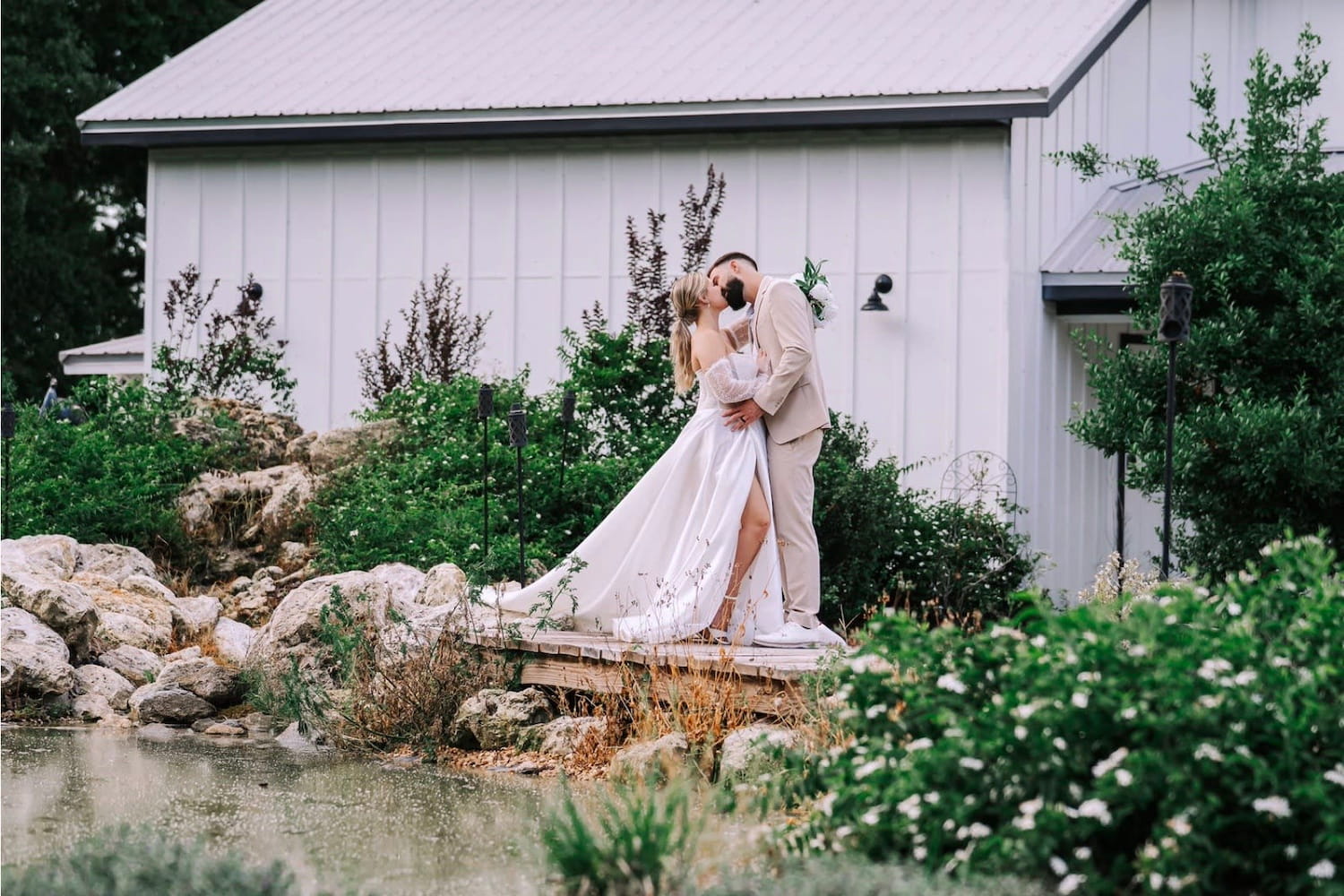
In Florida, there are working farms in places people don’t always picture. Citrus rows in Polk County. Strawberry fields outside Plant City. Horse country across Marion County. A lot of this rural land sits an hour or so from a Florida city, which is part of why so many groups visiting one make a weekend out of it.
People rent farms for all kinds of stuff — a weekend away with friends, a small wedding under the live oaks, a brand shoot in the citrus rows, or a reunion under a pavilion with the cousins running everywhere. The needs vary, and not every booking platform handles them.
This guide walks through where Airbnb works for renting a Florida farm, where it doesn’t, and how to land on the right place for what you have planned.
Can you use Airbnb to rent a farm in Florida?
Quick answer: It depends on what you’re using it for.
For a quiet getaway, an overnight stay, or a small group sleeping over, Airbnb works fine. Florida has plenty of farm listings built around exactly that.
When the farm is the venue for an event, though, things get rough. Airbnb has a global ban on parties and large gatherings at every listing in the world. The wording covers any “disruptive gathering,” and an algorithm enforces it before the host even sees your request. Even small farm events can get caught.
Florida adds a state-specific layer — an agritourism program that protects working farms from local restrictions, but only when the property is actually registered as one. A regular farmhouse on Airbnb usually isn’t, which means the host saying yes doesn’t always give the place legal cover for your wedding or shoot. The county can still step in.
For a peaceful weekend stay, Airbnb is fine. For an event on the farm, it’s the wrong tool.

Where Airbnb falls short for renting a Florida farm
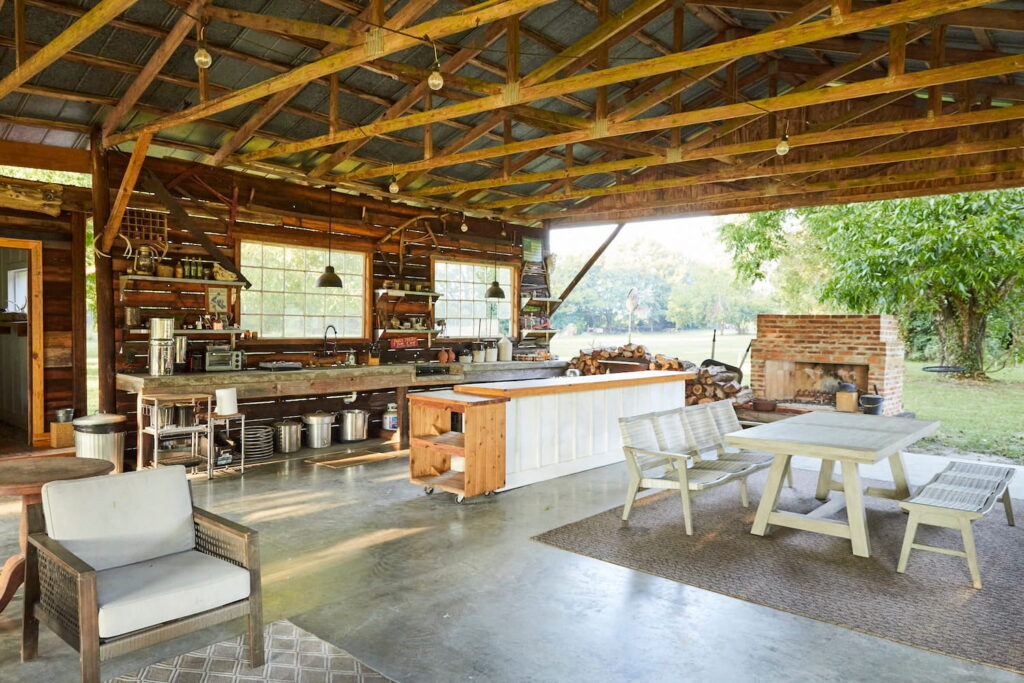
Airbnb was built for travelers looking for a bed, not groups looking for a venue. For a Florida farm event, that mismatch shows up in four ways.
The party ban catches more than parties
Airbnb’s worldwide ban on parties and gatherings and a screening system that reads every booking request before the host can respond can kill the vibe before it even starts. It looks at the group size, the day of the week, how far the booker lives from the property, and how short the stay is. A 30-person reunion on Memorial Day weekend at a farmhouse 45 minutes from town hits most of those flags at once.
“We experienced a ‘party block’ over Memorial Day weekend. I had a guest ask if I could help him with his booking, as it was not going through. He was trying to book on Friday for a 2-night stay Saturday, and Sunday. I got a message from Airbnb that he was a party risk so he was blocked from booking. The request was for a family of 6, and the guest had 2 five-star reviews. Identity was verified. There was nothing I could do.” — Debra559, Airbnb thread “Airbnb ‘party blocks’ getting out of control”
Loud parties aren’t the only thing the algorithm worries about. A small wedding, a workshop, a team retreat, even a family dinner with a few too many cousins can read as a gathering. Hosts feel that pressure too, since their listing is the one on the line. Plenty of them cancel close to the date when they figure out the booking is leaning toward an event.
You can only book by the night
A brand shoot might run eight hours. A farm-to-table dinner takes four. A workshop wraps before lunch. But Airbnb only charges by the night, so a five-hour use turns into a 24-hour booking. A lot of Florida farm Airbnbs in popular rural spots (Marion County during horse-show weekends, Plant City during strawberry season) also stack two-night minimums on weekends.
The math gets ugly fast. A four-bedroom Lake Wales farmhouse can run $400 a night during peak harvest weekends. Two nights becomes $800 for what’s actually a six-hour photoshoot. Most groups end up paying for hours nobody is using, plus the booking can still get blocked by the screening system before it confirms.
Residential farms aren’t licensed for gatherings
A farmhouse on Airbnb is a home. A working Florida farm with an event permit is a business. The two sit on different sides of zoning, insurance, and occupancy rules.
Florida’s agritourism law shields registered working farms from local bans, but only when the property is genuinely operating as one. A residential farmhouse on a few acres usually doesn’t qualify. Counties around Hernando, Polk, and Marion have spent years sorting out which venues sit on the right side of that line, and news coverage shows ongoing disputes between farm-event venues and neighbors over noise and traffic.
What that means for the renter: the fire marshal can pull occupancy on the day of, parking enforcement can show up on the county road, a neighbor’s complaint can shut the night down by 9 p.m. None of that lives in the Airbnb listing. Farms that operate as licensed agritourism venues clear those questions before the booking is signed.
Your booking offers no real guarantee
A traditional venue gives you a contract that locks the date in months ahead. Airbnb doesn’t. Hosts can cancel. The platform itself can cancel if it decides the booking smells like a gathering. Rural Florida farm bookings carry one extra risk on top of that: there isn’t a backup farm next door. If the host pulls out three days before, you’re not finding another barn or grove with the same look inside an hour’s drive.
“Airbnb gives its property owners a LOT of freedom to cancel on guests, so realize that a property owner can say yes right now, but then decide at any time that they don’t want to rent to you. A week ago or so, there was a bride on this forum who rented a property through VRBO (kind of similar), and then they cancelled on her 2-3 months before the wedding.” — Wedding Wire user, discussion thread “Airbnb Wedding?”
For a farm wedding, a brand shoot, or a reunion, that’s the worst-case scenario. The strawberry-season weekend can’t slide to a Tuesday in November. The campaign date is locked in. The reunion crew booked flights eight months ago.
How to find a farm in Florida for your event
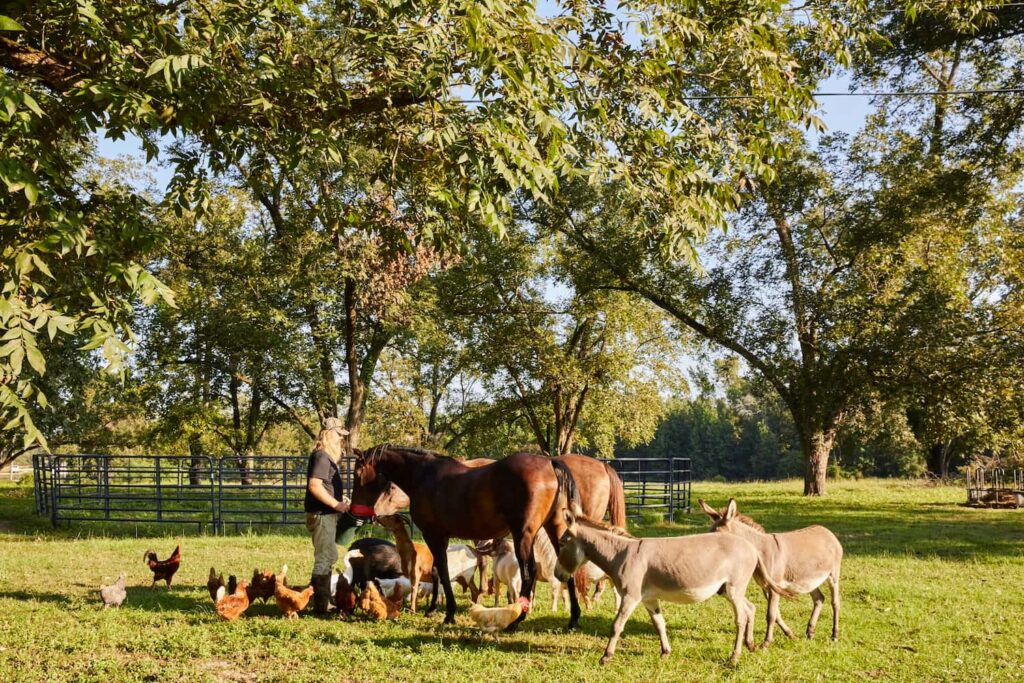
Florida farm country isn’t one place with one look. The region you pick changes the photos, the logistics, and the rate. Most events at Florida farms fall into a handful of buckets: professional gatherings, family events, and milestone celebrations. The right region depends on what you’re hosting.
Pick the Florida farm region that fits
Each rural region pulls a different kind of event.
Central Florida and the Orlando area
Farm wedding venues in Orlando stretch into citrus country around Lake Wales, the strawberry fields east of Plant City, and the lake-and-cypress land of Polk County. Peak season runs October through April, when the humidity drops and the citrus is in full color. Best for Central Florida barn weddings, brand teams shooting fall and winter campaigns, and reunions that need easy access from Orlando International.
Tampa Bay and the strawberry country
Tampa-area barn venues sit inside a rural belt that runs east through Plant City and north into Pasco County. The look is farmhouse, with strawberry fields in winter and live-oak canopies year-round. Best for brand shoots that want a working-farm backdrop, smaller weddings under 60 guests, and corporate retreats from Tampa Bay tech companies.
South Florida and the Redland
Farm venues in Miami reach south into the Redland, where mango farms, avocado canopies, and horse properties sit half an hour from Coral Gables. The look is unlike anything else in the state. Royal palms, banana plants, and tropical fruit trees take the place of the live oaks of the north. Best for couples after a Caribbean-tropical wedding, photographers shooting lifestyle campaigns, and families wanting a destination feel without leaving the state.
North Florida and the Jacksonville exurbs
Jacksonville-area barn venues sit inside a budget-friendly rural belt that runs west into Baker County and south toward St. Augustine. The look is pine flats, Spanish moss, and southern plantation. Best for couples on a tighter budget, family reunions that want lower per-person costs, and any group that wants a true Old Florida feel.
Florida farm styles to consider
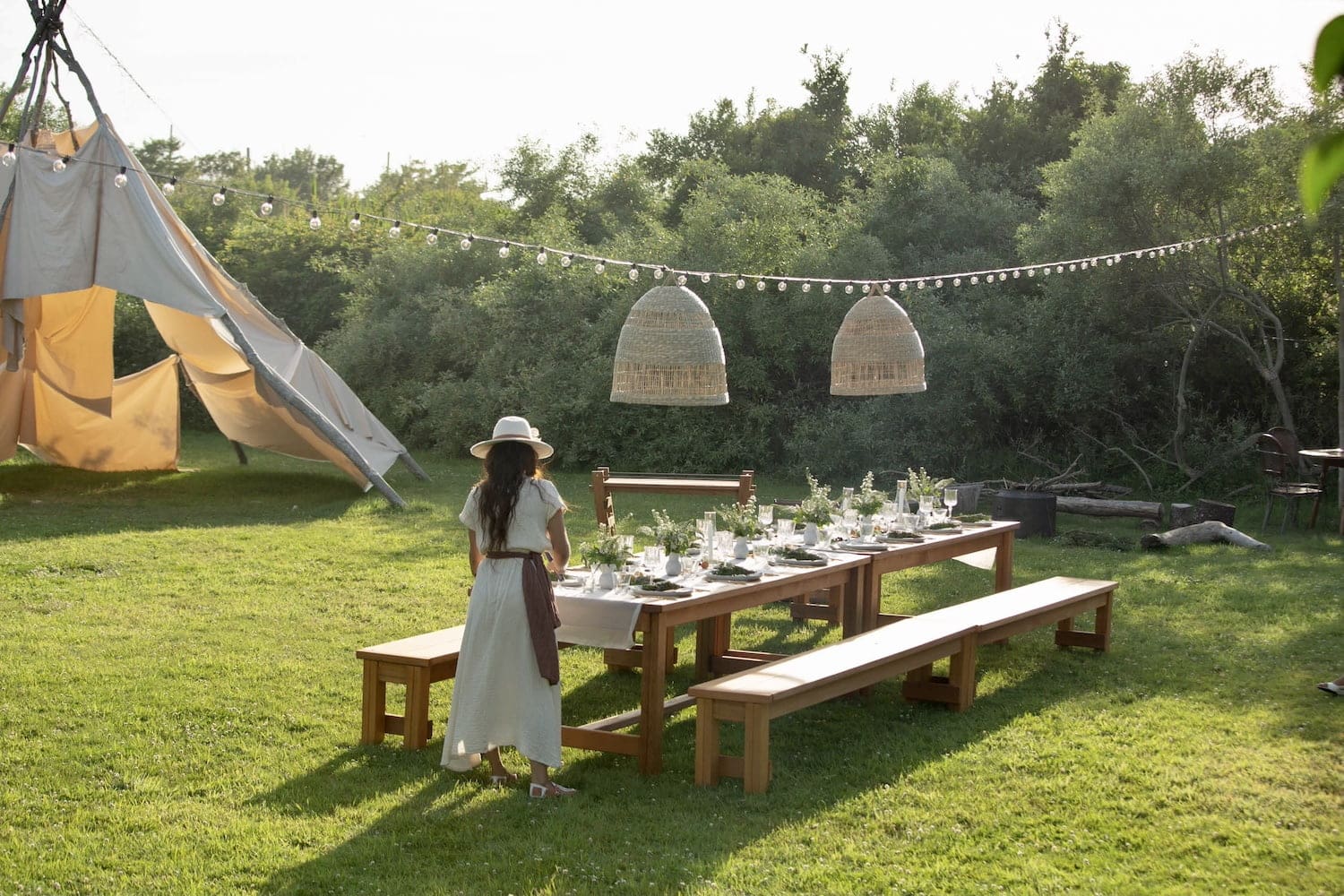
Florida’s mix of citrus groves, horse country, tropical fruit farms, and pine-flat plantations gives you more options than a regular event hall.
- Restored barns with exposed beams and wood floors (Central FL, Tampa Bay, North FL)
- Farm wedding venues with ceremony lawns and reception barns (Orlando, Lake Wales, Plant City)
- Outdoor wedding venues with pasture or grove backdrops (Central FL, South FL Redland)
- Outdoor event spaces for non-wedding gatherings (statewide)
- Micro-wedding venues for groups of 20 to 40 (Orlando, Miami)
- Photo studios and shoot locations for brand and lifestyle shoots (statewide)
- Mansions and estates with grounds for full-property takeovers (Coral Gables, Coconut Grove, Winter Park)
- Garden venues for seated outdoor ceremonies (South FL, Central FL)
- Tampa Bay barns with live-oak canopies (Plant City, Pasco County)
- Jacksonville-area farm spaces with pine-flat acres (Baker County, St. Augustine exurbs)
These are starting points. Across Florida, you’ll find farm venues ready for events at every price point and group size.
What kind of event are you throwing on the farm?
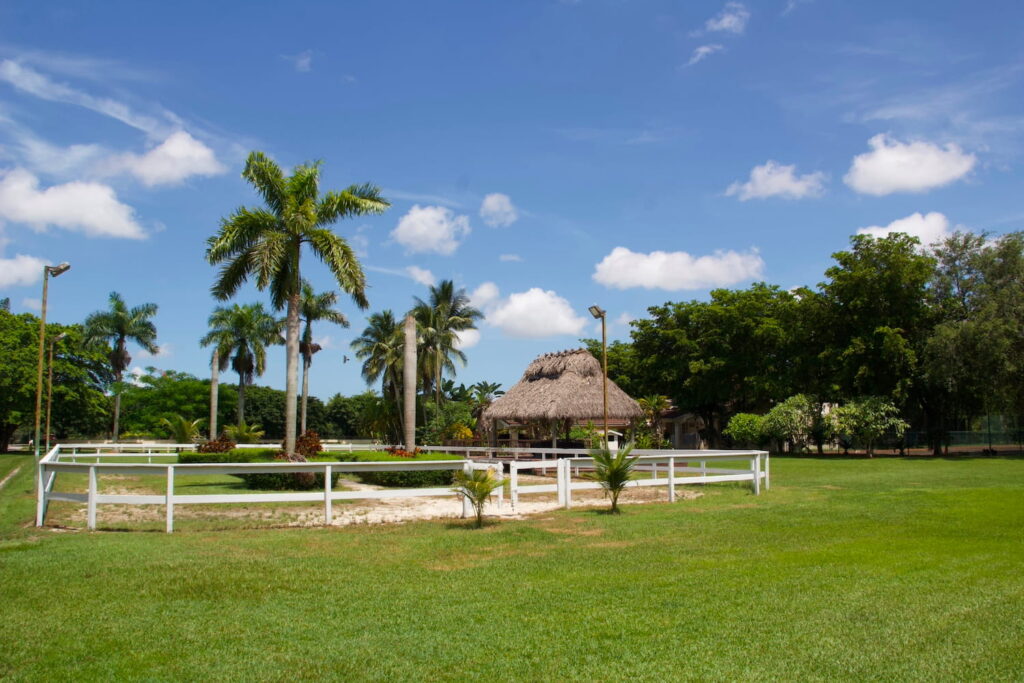
The setup shifts based on what you’re hosting. Each event type below works as its own farm booking.
Weddings and rehearsal dinners
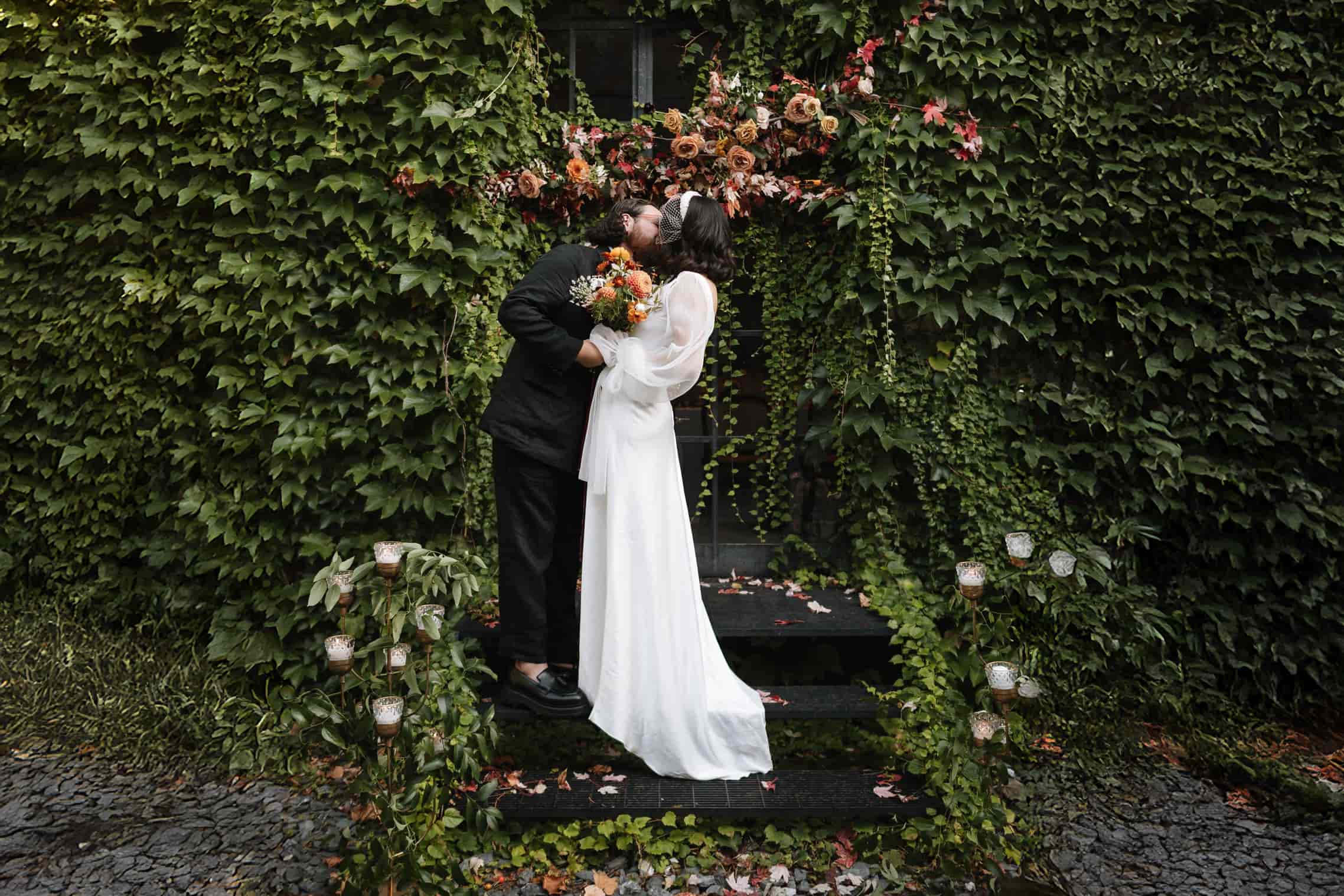
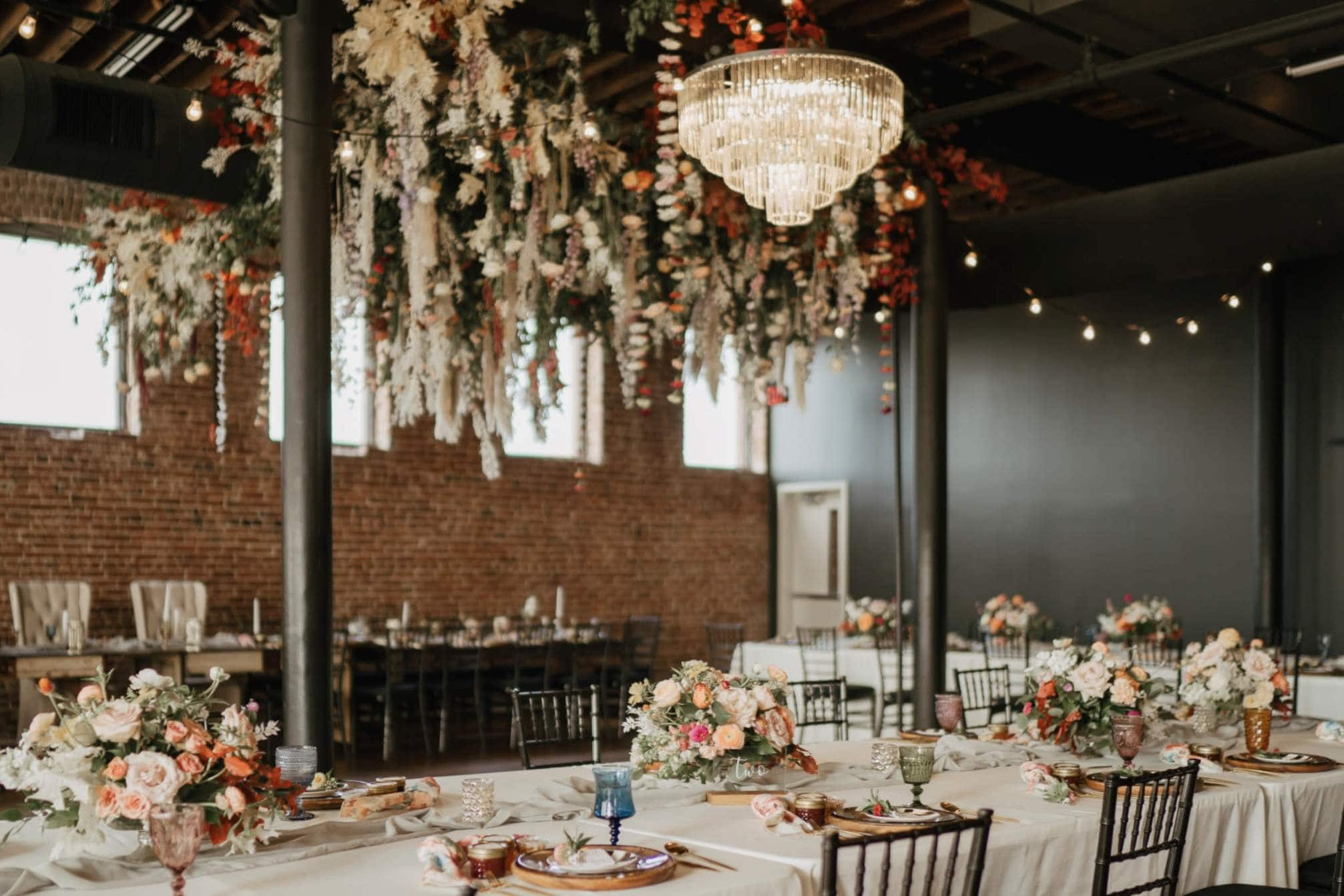
Farm weddings cover the ceremony, dinner, and dancing all in one place. Plan the timing around Florida sunsets, which come early November through January. Most couples work backward from the wedding date on a planning timeline, with the venue locked first. Rehearsal dinners book separately at a smaller barn.
Bachelorette parties and bridal showers
Bachelorette parties work well at a farm when the bridal group leans rural over rooftop. A long-table dinner at a citrus farm. A vineyard tasting. A brunch in a Plant City barn. The average bachelorette runs around $1,135 per guest, and a farm booking usually comes in cheaper than a hotel.
Photoshoots and brand activations
Photo shoots on a farm range from open citrus groves to barn interiors with great natural light. Florida’s farm backdrops work for fall and winter campaigns when northern photographers fly south. Lifestyle, food, fashion, and brand teams all book by the hour, with photoshoot ideas covering baby and family sessions, fashion, and boudoir.
Family reunions and milestone gatherings
Family reunions work better at a farm than at most city venues for groups of 30 to 50. Working farms with covered pavilions, picnic tables, and parking for 40 cars handle that headcount well, and most allow outside catering and BYOB. Hosting a reunion usually starts with locking the date and venue, then sorting committee, food, and invites.
Corporate dinners and team off-sites
Corporate events have been pulling leadership dinners and team off-sites away from hotel ballrooms onto farm properties. A barn turns into a clean farm-to-table dinner without much setup. Outdoor corporate retreats like ranch lunches, winery tastings, and team activities all fit a farm setting.
Workshops and farm-to-table experiences
Cooking classes and farm-to-table spots run year-round across Florida farms. Think tropical fruit tastings in summer, citrus workshops in winter, and herb-and-flower workshops in spring. Hosts often have local chefs and farmers they connect groups with.
Birthday parties
Birthday parties on a farm work for 40-to-60-person dinners without the full wedding setup. A 50th under the live oaks. A 30th with a string-light dinner in a citrus grove. A kid’s outdoor birthday with the petting-zoo crew on call. The adult birthday format splits cleanly into luxury, themed, and budget-friendly categories, and a farm setting can pull off all three.
Engagement parties
Engagement parties work well at a farm with long tables for the 25-to-50-person guest list that usually shows up. Photographers love the natural light and the lack of fluorescent ballroom light, and the BYOB-friendly hosts make catering simpler than a hotel. Engagement party ideas lean into themes like family-style dinners, garden cocktails, and casual outdoor receptions that fit a farm naturally.
Holiday and seasonal events
Holiday parties fit the seasonal stuff farms do well. Pumpkin-patch parties in October. Friendsgiving dinners under string lights in November. Company holiday parties in barns the week before Christmas. For corporate teams, Christmas party entertainment like gingerbread competitions, mixology stations, and food trucks all work in a farm setting where office noise rules don’t apply.
Wellness sessions and yoga blocks
Retreat spaces handle the slow-pace wellness format on a farm. Sunrise yoga at a citrus farm. A breathwork session in a pasture. A small group session under live oaks. The setup is light, and most working farms are already used to the rhythm.
If you’re still working out the format, a party planning checklist helps keep the timeline straight.
Confirm capacity, parking, and weather backup
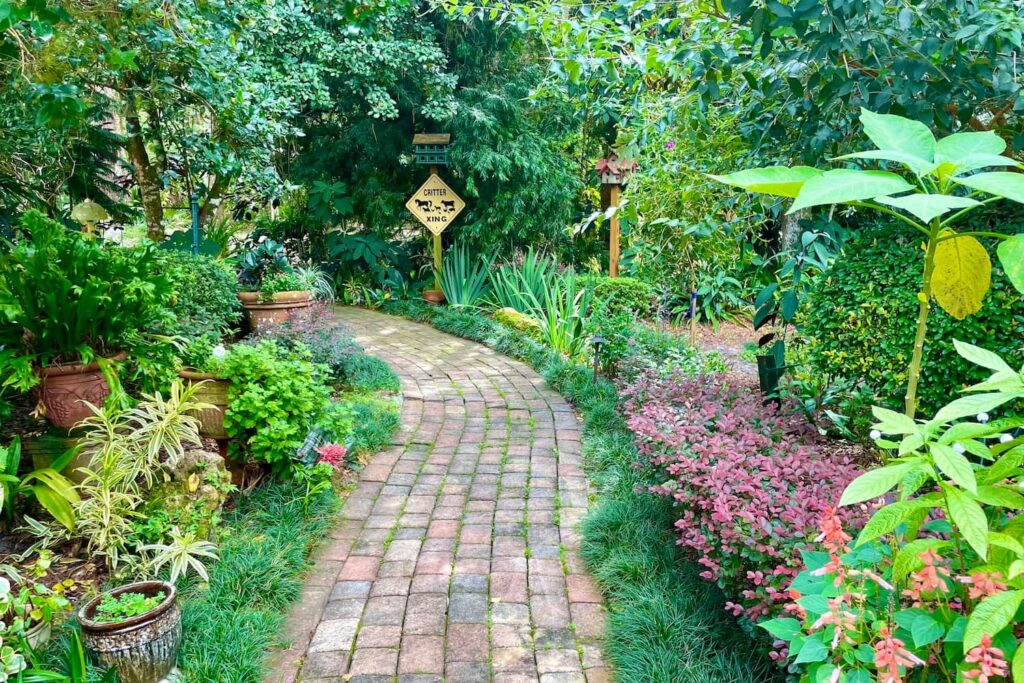
Rural Florida farms ask different questions than city venues. Before you book, check on:
- Standing vs. seated capacity (a farm tent seats differently than an indoor barn)
- Parking for 50+ cars (long driveways can bottleneck on a busy entry)
- Weather backup (Florida thunderstorms hit hard in summer; hurricane season runs June through November)
- Restrooms (some working farms don’t have enough for a 50-guest event — ask about trailer rentals)
- Farm animal access (some hosts include petting zoo time, some don’t)
- Sound limits and end times (rural neighbors enforce these even without city ordinances)
- BYOB and outside catering (rural Florida farms tend to be flexible)
“This venue was everything we dreamed our wedding would be. It had every amenity we could have wanted, even down to farm-fresh eggs in the morning. The dock and lake made a stunning backdrop for our photos against the changing colors of the leaves and the campfire made for…” — Cassie F., Peerspace review
Standing and seated counts almost always differ. Ask the host what makes sense for your specific group. A higher hourly rate that includes everything usually beats a cheaper rate where the extras pile up afterward.
Tap into Florida farm know-how
Florida’s farm-event scene has grown in step with the state’s agritourism law. From event planners in Orlando to lifestyle photographers in Miami, the vendor list is deep, and a lot of those vendors already work with Peerspace farm hosts.
Hosts feed groups straight into that network. A Plant City barn owner has caterers who know how to load in down the farm road. A Redland host knows which photographers handle the harsh noon light. A Marion County horse-farm owner knows which florists work with the equestrian look. When you message a host before booking, ask which vendors they’d recommend. That short list usually beats scrolling through a search engine.
Plan the drive and the timing
Florida is bigger than it looks on a map. Drive times from each main city to the surrounding rural belt:
- Orlando to Lake Wales/Polk County citrus: 50 to 75 minutes
- Tampa to Plant City/Pasco County: 30 to 45 minutes
- Miami to the Redland: 45 to 60 minutes
- Jacksonville to Baker County/St. Augustine exurbs: 30 to 60 minutes
Cell service drops in deep-rural Florida (parts of Marion County, the eastern Panhandle, the back roads of the Redland). Build buffer time for vendors loading in. Sunset timing matters for outdoor ceremonies — November and December sunsets land around 5:30 p.m., so plan around that. Hurricane season runs June 1 through November 30, and most farm hosts have a stated hurricane policy. Confirm yours before signing the booking.
How much does it cost to rent a farm in Florida?
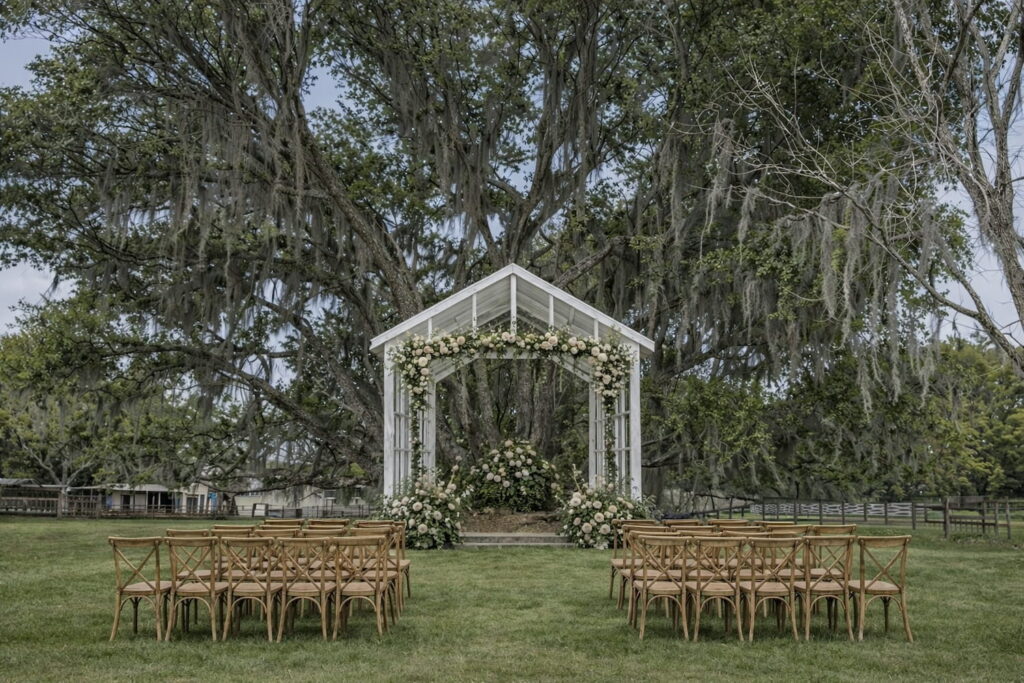
Farm wedding venues in Orlando average $120 per hour.
That number covers a mix of restored barns, working farms, and full-estate takeovers. The actual price depends on which region you book, the season, and what’s included with the space.
Where you book changes the price
Where you book matters a lot. Farm and barn rates per hour vary across Florida:
- Ocala: Average $50/hour
- Jacksonville: Average $76/hour
- Sarasota: Average $83/hour
- Wellington: Average $85/hour
- Plant City: Average $118/hour
- Orlando: Average $120/hour
- Tampa: Average $155/hour
- Clermont: Average $163/hour
- Homestead: Average $240/hour
- Naples: Average $275/hour
- Miami: Average $278/hour
The spread runs about 5.5x from the cheapest market (Ocala) to the priciest (Miami), and roughly 2.3x from the Orlando citywide baseline to Miami at the top end. If the date is flexible, weekday and shoulder-season bookings shave more off the rate.
Group size drives the price
A 15-person farm-to-table dinner at a Plant City barn costs far less than a 60-person wedding at a Marion County horse farm.
Based on our booking data, Orlando farm bookings run around 43 guests, with most starting between 5 p.m. and 6 p.m. Cutting your guest list from 50 to 30 opens up more farm spaces at lower rates.
For smaller groups, a micro-wedding venue in Orlando usually has nicer finishes and more host attention than a big farm built for 100. The math works differently at smaller sizes.
Setup, cleanup, and weather buffer count, too
Hourly bookings cover the whole time you have the space, not just when guests are there.
For a Florida farm event, plan in three parts:
- Setup: Unloading rentals, arranging seating, vendors loading in via the farm road
- The event: Ceremony, dinner, shoot, dancing, whatever you came for
- Cleanup: Breakdown, packing rentals, restoring the space
Planning the buffer time ahead helps you avoid overtime fees when an afternoon thunderstorm pushes the schedule back.
How Peerspace works for a Florida farm event
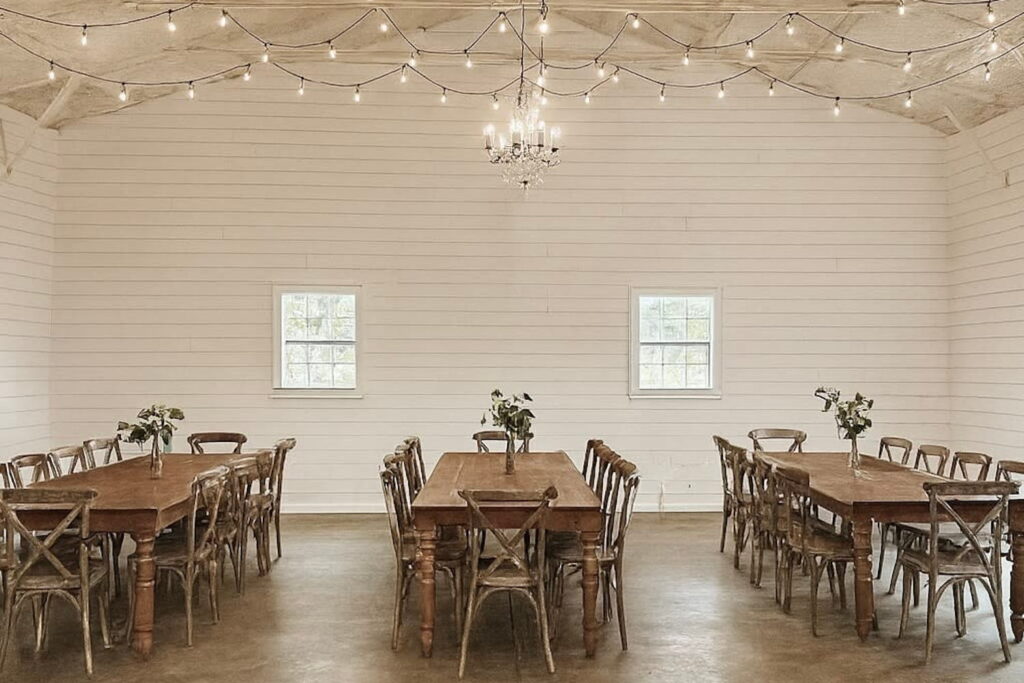
Airbnb is built for sleeping. We’re built for events. You book hours in farms designed for what you’re using them for: a focused window of ceremony, dinner, shoot, retreat, or workshop. In a state where county permits draw a hard line between regular farmhouses and licensed agritourism sites, that distinction matters.
Hosts expect events
Every host on our platform lists their farm with events in mind. They expect groups, vendors, and music. That’s the whole point of being on the platform. No party ban, no automated screening flagging a group of 30 as a risk, no surprise cancellations because a permit got pulled.
In Orlando, our hosts have welcomed 1,406 guests to their farm wedding venues with a 4.88-star average and a 97% rebook rate. Tampa barn hosts have welcomed 1,940 guests with five-star ratings and 100% rebook. Miami farm venues have hosted 1,650 guests at five stars. That’s what happens when both sides of the booking know what they’re showing up for.
Hourly booking and clear pricing
You book by the hour. A six-hour barn wedding in Lake Wales costs six hours. A four-hour brand shoot in the Redland costs four. No overnight fee, no awkward checkout the morning after, no paying for bedrooms nobody slept in.
Rates are shown before you book: the hourly rate plus any cleaning fee or extras the host has set. No hidden charges surface later. For couples splitting costs across two families or brand teams filing expense reports, that makes the spreadsheet much cleaner.
You can book at 18
Our minimum age to book is 18. There are no automatic blocks based on how young the booker is or how close they live to the property. And there’s no algorithm flagging younger guests as risks.
For Florida groups, the venue — or age — is never the gating factor.
See the farm before you book
For a Florida farm event, photos only show you so much. The pasture might be muddy after a thunderstorm. The driveway might bottleneck at 50 cars. The barn might have low ceilings the photos hide. The 4 p.m. October light looks nothing like the listing photos shot at noon in July.
Our hosts can set up a visit before you book. You walk the property, check the parking, talk through the rain plan, and figure out where the rental truck pulls in. All before paying anything.
Airbnb works the other way around. Their policy tells hosts to say no when guests ask to see the place first: “If someone asks to visit your place prior to booking, let them know it’s not possible.” That’s fine if you just need a place to sleep. For a farm event with vendors counting on a clean setup window, it’s a lot to commit to without ever stepping on the property.
A quick walkthrough at a Lake Wales citrus farm or a Redland mango grove is the easiest way to know whether the place fits the day you have planned.
Hosts who know Florida farm logistics
Our Florida farm hosts run events all year. A lot of them connect groups directly with local vendors: caterers who know the kitchen layout, photographers who know how to handle harsh noon light, rental companies who’ve delivered down the farm road before. Questions about hurricane backup plans, parking flow, or last-minute schedule changes get answered in a chat instead of a support ticket.
“The venue exceeded our expectations. It was super charming, a waterfront tropical paradise.” — Anonymous, Peerspace review
That kind of responsiveness is hard to find on a platform where one algorithm flag can wipe out the booking. On ours, the host runs the show and the booking is straightforward. You’re renting a farm for a defined window, with terms you can both read.
Event-friendly tools built in
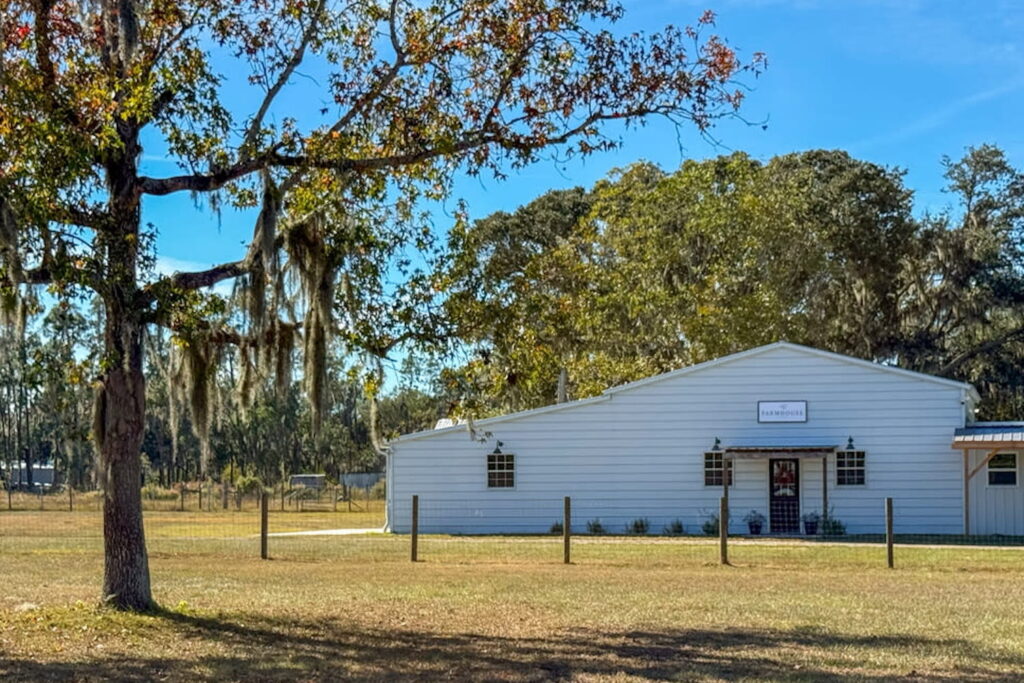
We built the platform around events. Our filters let you narrow by what actually matters for a farm day: kitchen access, outdoor space, parking capacity, sound systems, AV, and weather backup.
“The whole process of finding a venue, booking, and communicating with the person was so easy. I had a great experience with Peerspace. I had never heard of it before so was a little nervous at first, but so happy that I found it. I will definitely be using Peerspace again in the near future for the next event.” — Alisha Rivas, Trustpilot review
Once you book, our invites tool lets you share one link with the whole group (address, time, parking, what to bring) so the group chat can stick to outfit pictures instead of “wait, where is the farm again?”
How to find a Florida farm on Peerspace
Here’s how to find and book a farm on Peerspace for your event in Florida:
1. Open the website or app.
Go to Peerspace.com or download the app (Apple App Store | Google Play Store).
2. Search by location and use case.
- Type “Orlando,” “Miami,” “Tampa,” “Jacksonville,” or your specific Florida city
- Type the kind of event. “Farm wedding,” “barn,” “brand shoot,” “farm-to-table,” or just “farm” all surface relevant venues
3. Filter by group size, date, and budget.
- Guests: Be honest with the count. A space rated for 25 will feel cramped with 40 people inside it.
- When: Check availability for your specific window, including setup and cleanup time.
- Price: Set a range that fits your full event budget, not just the venue line.
4. Use the filters to narrow it down.
- Space type: Barn, farm, garden, mansion, photo studio
- What’s included: Kitchen, outside alcohol, speakers, tables/chairs, parking
- Outdoor: Pasture, garden, terrace, pavilion
- Style: Rustic, modern, vintage, bright, tropical
5. Read reviews from similar events.
Scroll for reviews that mention farm weddings, brand shoots, or family reunions. Those tell you how the space actually performs on the day, not just how it photographs in the listing.
6. Message the host before booking.
A short message helps you sanity-check the details. Questions worth asking on a Florida farm:
- “We’re planning a [wedding / shoot / reunion / off-site] for [X] guests on [date]. Is your farm a good fit?”
- “What’s the parking layout? How many cars can fit?”
- “What’s your weather backup plan?”
- “Any restrictions on outside catering or BYOB?”
- “What’s the load-in road like for vendors?”
7. Book and confirm.
Once you’ve found the right farm, book through the platform. Before your event:
- Confirm arrival time and access instructions.
- Send your guests the invite with all the details.
- Reach out to the host with any last-minute questions.
Find your Florida farm
Florida earns its place on the farm-event map by giving groups four totally different rural backdrops in one state: a Lake Wales citrus grove ceremony where the trees do the decorating, a Plant City barn rehearsal dinner with strawberry fields running to the road, a Redland mango farm brand shoot with banana plants in the frame, and a Marion County horse-farm reunion under live oaks dripping with Spanish moss.
The booking decision lands on what the day actually needs. A regular farmhouse Airbnb works for sleeping. For an event on the farm (a wedding, a shoot, a workshop, a reunion), a farm where the host expects groups, the agritourism permit is on file, and the parking really does fit 50 cars, takes the variables (that shouldn’t be variables) out of the day.
Browse farm wedding venues in Orlando, or start with Tampa, Miami, or Jacksonville to find what fits.
In this article
In this article
Get together somewhere better
Book thousands of unique spaces directly from local hosts.
Explore SpacesShare your space and start earning
Join thousands of hosts renting their space for meetings, events, and photo shoots.
List Your Space